



Does Tungsten Wire Mesh React with Air? A Technical Overview
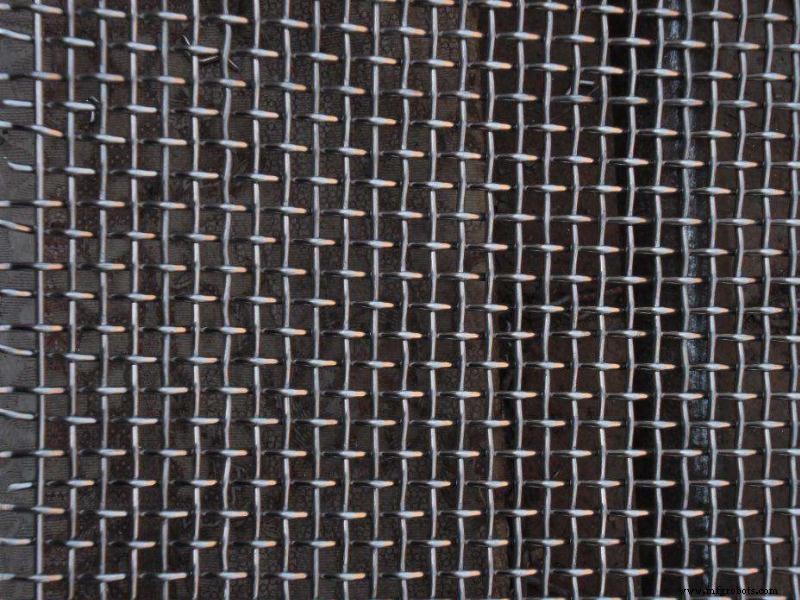
Does Tungsten Wire Mesh React with Air?
Tungsten wire mesh is a pure tungsten product known for its high melting point (3,400 °C), hardness, strength, resistivity, low vapor pressure, and excellent high‑temperature resilience. These attributes make it ideal for applications such as electromagnetic shielding nets, vacuum furnace grids, RF shielding, and light‑wave filtering.
Under normal conditions, tungsten wire mesh exhibits outstanding physical and chemical stability and does not react with atmospheric oxygen. However, when exposed to elevated temperatures in air, its appearance changes from steel gray or silver‑white to dark gray‑black. At around 400 °C, oxidation begins, and as the temperature climbs, the reaction intensifies, eventually forming tungsten trioxide (WO₃).
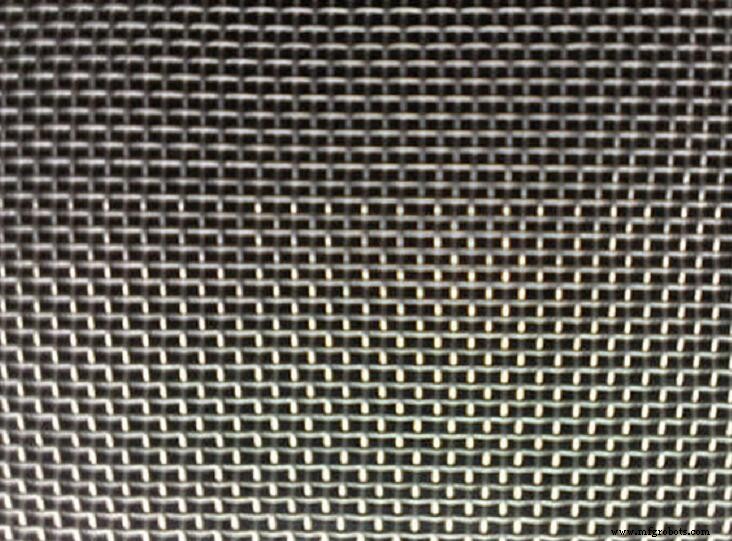
Will the Tungsten Wire Mesh React with Air?
WO₃ is a light‑yellow orthorhombic crystalline powder with a chemical formula of WO₃, a specific gravity of 7.16 g/cm³, a melting point of 1,473 °C, and a boiling point of 1,750 °C. At 850 °C, it sublimes noticeably, deepening in color, and turns green upon melting.
The crystal structure of WO₃ varies with temperature: triclinic at –50 °C to 17 °C, monoclinic from 17 °C to 330 °C, orthorhombic between 330 °C and 740 °C, and tetragonal above 740 °C.
Continuous heating in an aerobic environment degrades the mesh’s toughness, increasing brittleness and making it susceptible to breakage under impact or vibration. In contrast, tungsten wire mesh retains its high‑temperature properties in a vacuum; its melting time is governed mainly by the evaporation rate of tungsten, reducing the likelihood of failure.
Conclusion
We hope this article clarifies the behavior of tungsten wire mesh in air and high‑temperature environments. For further information on tungsten and other refractory metals, visit Advanced Refractory Metals (ARM), a leading global supplier headquartered in Lake Forest, California.
ARM supplies high‑quality refractory metals and alloys—including niobium, molybdenum, tantalum, rhenium, tungsten, titanium, and zirconium—at competitive prices.
Metal
- Tungsten in Modern Warfare: Key Military Applications
- Tungsten Wire History: From Edison’s Carbon Filaments to Modern AKS Alloys
- Optimizing Tungsten Powder: Key Performance Drivers
- Top Applications of Tungsten: From High‑Strength Alloys to Advanced Electronics
- Tungsten in Alloy Design: Applications in Steel, Carbide, and Heavy Materials
- Top Applications of Tungsten Wire in Modern Industry
- Understanding Dopants and Wire Recrystallization in Tungsten and Molybdenum
- Gold-Plated Tungsten Wire: Key Applications and Their Advantages
- Enhance Cleanroom Quality with Motoman’s Advanced Particle‑Control Robots
- Impact of Air Trapping in Hydraulic Systems: Effects & Solutions