



Tungsten Alloy Spherical Fragments: Design, Performance, and Tactical Applications
Tungsten Alloy Spherical Fragments
Tungsten alloy spherical fragments are advanced kinetic projectiles that combine high‑performance explosives, dense tungsten alloy cores, and a metal casing. Their primary destructive power comes from the kinetic energy of the fragments, making them the preferred choice for air‑defense, surface‑attack, and armor‑penetrating warheads.
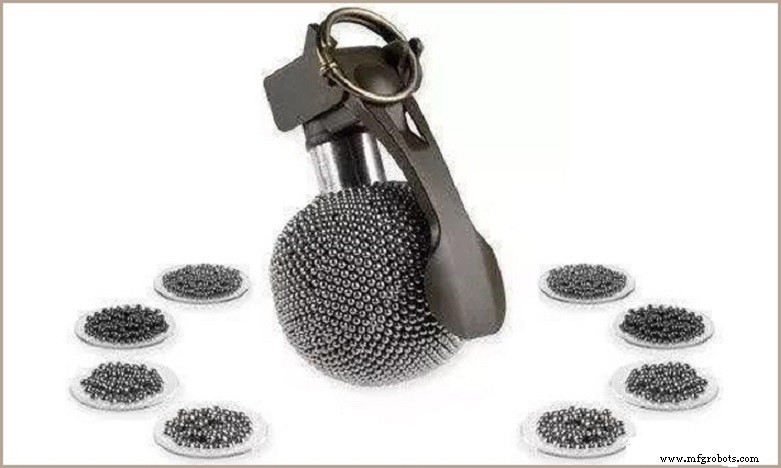
Tungsten Alloy Spherical Fragments
The tungsten alloy provides the fragments with exceptional density, hardness, and wear resistance. This allows them to retain speed, deliver high kinetic energy, and penetrate armor with minimal energy loss.
How Tungsten Alloy Spherical Fragments Work
During detonation, the explosive generates a high‑temperature, high‑pressure gas that deforms the metal shell, causing it to fragment into numerous tungsten cores. The expanding detonation gases accelerate these cores until the gas pressure drops below the fragment velocity, after which the fragments separate from the gas cloud and travel at nearly constant speed.
Performance Characteristics
Lethality is measured by the kinetic energy transferred to a target and the fragment’s ability to penetrate armor. In a fixed diameter range, smaller fragments transfer energy more efficiently. Experiments on steel targets have shown that tungsten alloy spherical fragments exhibit a constant attenuation coefficient over long distances, and their drag coefficient scales linearly with initial velocity.
Fragmentation rates depend strongly on core diameter. Small cores fragment rarely, whereas larger cores can fragment at rates up to ~50%. Even after the minor mass loss and deformation that occur during detonation, the fragments retain a high penetration capability over extended flight ranges. Within a given speed envelope, penetration depth increases linearly with velocity.
Key Takeaways
Tungsten alloy spherical fragments combine kinetic energy, high density, and durable material properties to deliver reliable armor‑penetrating performance in modern weaponry. For further insights into tungsten alloys and other refractory metals, visit Advanced Refractory Metals (ARM), a leading global supplier headquartered in Lake Forest, California.
ARM offers a full range of high‑quality refractory metals—niobium, molybdenum, tantalum, rhenium, tungsten, titanium, and zirconium—at competitive prices.
Metal
- Tungsten Alloy: The Ultimate Forklift Counterweight Solution
- Tungsten Alloy Wafers: Applications, Benefits, and Industrial Uses
- Tungsten Copper Alloy vs Tungsten Nickel‑Iron Alloy: A Technical Comparison
- Spherical Tungsten Powder Production Techniques: Methods, Advantages, and Industry Applications
- Premium Tungsten Alloy Fishing Sinkers: Advanced Design & Performance
- Tungsten Alloy Bullets: The Eco‑Friendly, High‑Performance Alternative to Lead
- Tungsten‑Copper vs. Molybdenum‑Copper Alloys: Key Differences & Applications
- Tungsten Alloy in Modern Weaponry: Applications, Properties, and Global Resources
- Lead‑Free Tungsten Alloy Radiation Shielding Plate – Superior X‑Ray and Gamma Protection
- Military Tungsten Alloy Fittings: Unmatched Density, Strength, and Heat Resistance