



Securing Autonomous Vehicles: Insights from Charlie Miller and the Industrial Internet Consortium
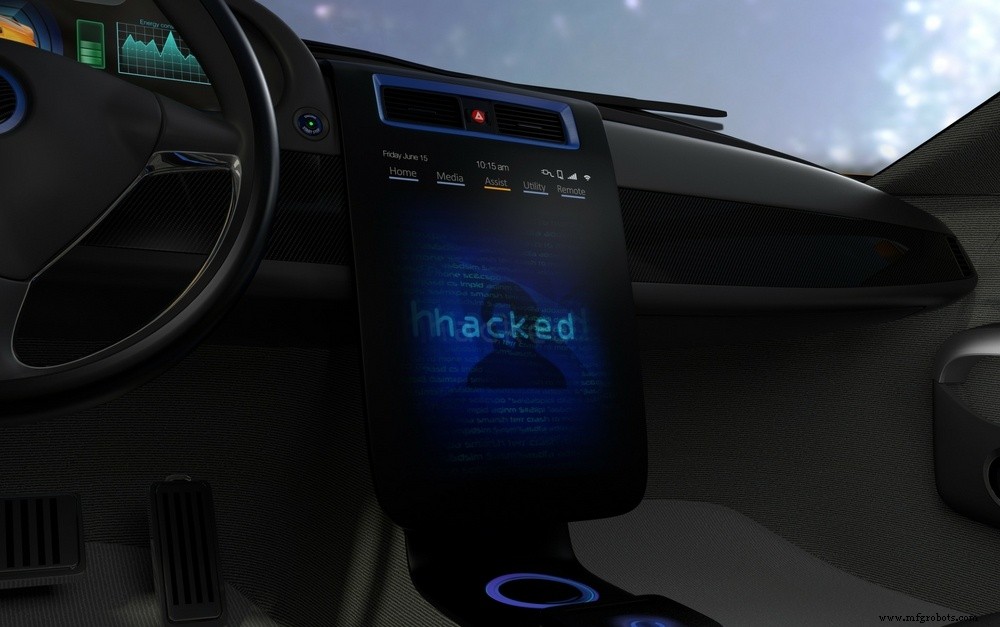
Wired’s recent piece on Charlie Miller—famously the hacker who remotely commandeered a Jeep—argues that only open dialogue among companies can build secure autonomous cars. That view oversimplifies the competitive reality of a revitalized automotive sector, yet it misses a crucial point: security is a cross‑industry challenge, not one confined to automotive.
.jpg)
The Industrial Internet Consortium (IIC) already brings together 250+ firms—including Bosch, Denso, and TTTech—to tackle the same balance of security, safety, performance, and cost that car makers face. The IIC’s open reference architecture, free for all, offers a practical roadmap from business goals to implementation. The Industrial Internet Connectivity Framework (IICF) and Industrial Internet Security Framework (IISF) extend this foundation, providing targeted guidance for protecting connectivity endpoints and the data that flows between them.
Let’s explore how a data‑centric approach can shield a connected car from attacks like Miller’s Jeep hack. The exploit began with a backdoor in a Harmon Kardon head unit, allowing unprotected remote commands that reprogrammed a CAN‑Bus‑connected chip and granted near‑full control. Removing that interface is only the first step; securing the entire stack is essential.
Miller would likely have continued searching for vulnerabilities. A robust defense begins with an authenticated application layer: secure boot, ARM TrustZone, and signed application binaries. This builds a trusted stack that can be illustrated as follows.
.png) Figure 1. Trusted Application Stack
Figure 1. Trusted Application Stack
Many of these trusted components interface directly with the CAN Bus, exposing the vehicle’s control system to unauthorized reads and writes. In autonomous taxis, physical access by malicious actors becomes a realistic threat, underscoring the need for data authenticity and granular access control.
While replacing the CAN Bus entirely is not a realistic short‑term goal, the Industrial Internet Security Framework recommends a Data Distribution Service (DDS) overlay. DDS introduces a layered architecture that isolates legacy systems while allowing new components to communicate securely.
.png) Figure 2. Industrial Internet Security Framework Protecting Legacy Endpoints
Figure 2. Industrial Internet Security Framework Protecting Legacy Endpoints
DDS enables peer‑to‑peer communication where participants authenticate each other and share only the data they need. Security can be tailored—TLS‑style encryption for critical topics, selective authentication, and fine‑grained access control—without the performance overhead of a central broker.
Back to the IICF: it maps open standards to system functions, and its recommendations for industrial IoT systems naturally extend to autonomous vehicles. The Object Management Group’s DDS specifications provide exactly that data‑centric, publish/subscribe model.
.png) Figure 3. Autonomous Vehicle Data‑Centric Architecture
Figure 3. Autonomous Vehicle Data‑Centric Architecture
With DDS Security, architects can plug in security modules that balance performance and protection: authenticate only the topics that matter, encrypt sensitive data, and enforce distributed access control. This approach prevents unauthorized publishers—like Miller’s rogue application—from sending steering or braking commands, and it allows subscribers to reject tampered messages based on cryptographic signatures.
.png) Figure 4. Connext DDS Secure Pluggable Architecture
Figure 4. Connext DDS Secure Pluggable Architecture
In short, while Miller’s demonstration was alarming, it also highlights that a collaborative, cross‑industry approach—rooted in the IIC’s frameworks and DDS security—provides the flexibility needed to secure future autonomous systems. We invite industry leaders, including Charlie Miller and Chris Valasek, to join us at RTI for deeper discussions on autonomy, industrial IoT, safety, and security.
Internet of Things Technology
- Ethernet: The Backbone of Autonomous Vehicle Reliability
- Voice‑Driven Tech in Manufacturing: Driving Efficiency, Accuracy and Real‑Time Insight
- Commercial Drones: 7 Essential Rules for Securing Data in the Ecosystem
- Industrial IoT Demystified: A Comprehensive Guide
- Why Industrial Companies Must Embrace AI—Even Small and Mid‑Size Firms Should Consider It
- Boost IoT Performance with Metadata-Driven Data Insights
- Driving Innovation: How Edge Computing Is Transforming the Automotive Industry
- IoT Investment Set to Surpass Cloud Spending, New Study Finds
- Explore CNC Pipe Bending Machines: Types, Features, and Benefits
- The Future of Autonomous Vehicles: Technology, Challenges, and Innovations