



Fog Computing Meets Open Architecture Control: Cross‑Industry Synergies

Fog computing is emerging as a pivotal paradigm for deploying the Industrial Internet of Things (IIoT). According to the OpenFog Consortium, it is a “system‑level horizontal architecture that distributes computing, storage, control, and networking resources across the continuum from cloud to edge.” The goal is to deliver low‑latency, context‑aware intelligence directly where it is needed.
Beyond edge analytics, fog computing’s open, internet‑centric design is especially compelling for control systems. Many sectors—defense, energy, healthcare, and process automation—are moving toward interoperable, open‑architecture control frameworks. In this article, we examine existing initiatives that echo fog concepts and explore how they can learn from one another.
Open Architecture Control in Defense
In 2004, the U.S. Navy pioneered the Navy Open Architecture to reduce procurement costs and accelerate system integration. By defining clear software and electronic interfaces—centered around the Data Distribution Service (DDS) publish‑subscribe standard—the Navy enabled seamless, real‑time data exchange across subsystems.
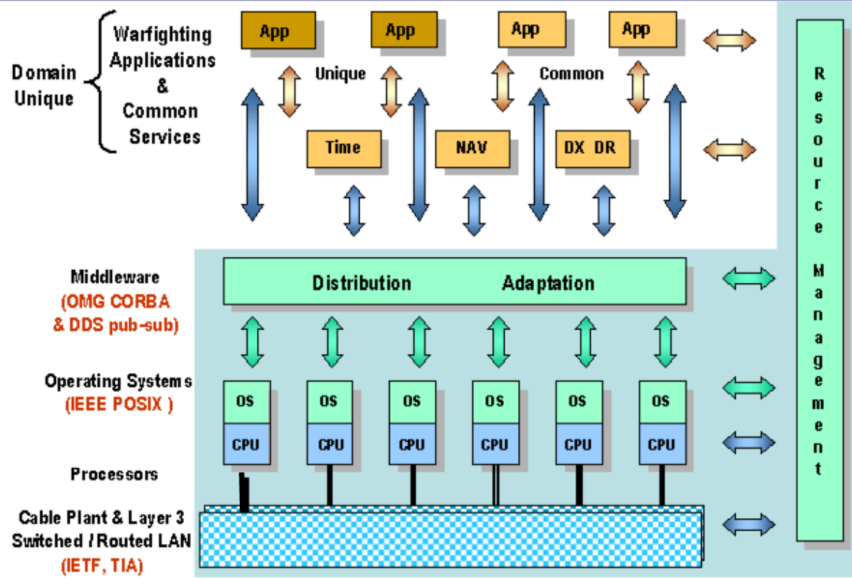
- Figure 1. The Navy Open Architecture functional overview. Distribution and adaptation middleware integrates distributed software applications.
Today’s OpenFog reference architecture mirrors the Navy’s design, proving that a fog‑style, distributed control approach works in complex, mission‑critical environments. Lessons from the Navy’s field deployments can guide the evolution of fog computing standards.
Open Field Message Bus (OpenFMB) for Smart Grids
The Smart Grid Interoperability Panel (SGIP) is developing OpenFMB, a modern edge‑intelligence framework for power‑grid applications. Distributed Energy Resources (DERs) such as solar, wind, hydro, and geothermal deliver power locally, eliminating long‑distance transmission. However, DERs are intermittent, requiring decentralized control.
OpenFMB addresses this need with a real‑time publish‑subscribe bus that unifies subsystems and applications. Its architecture, shown below, is essentially a fog computing environment tailored to energy distribution.
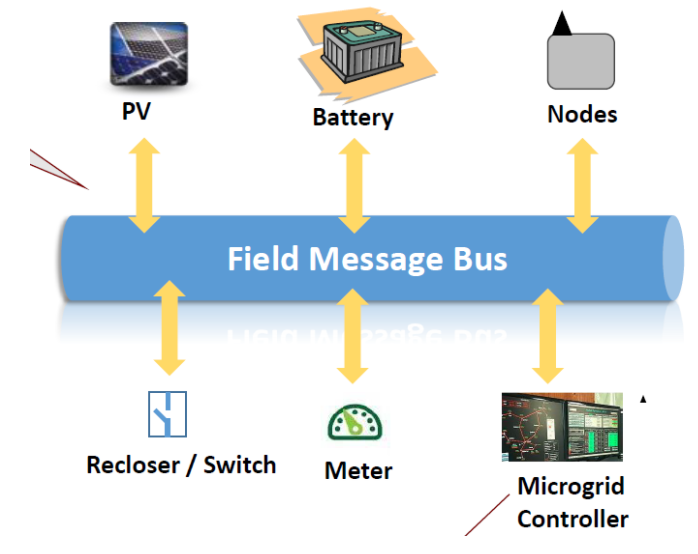
- Figure 2. OpenFMB architecture integrates subsystems through a central, real‑time publish‑subscribe bus.
Collaboration between the OpenFog Consortium and the OpenFMB team could accelerate the adoption of shared standards and best practices.
OpenICE: Interoperability in Critical Care
Intensive care units often monitor patients with dozens of devices that lack native interoperability, forcing clinicians to manually integrate data. OpenICE (Open Source Integrated Clinical Environment) provides a DDS‑based data bus that connects medical devices and software applications, enabling sensor fusion and intelligent decision support.
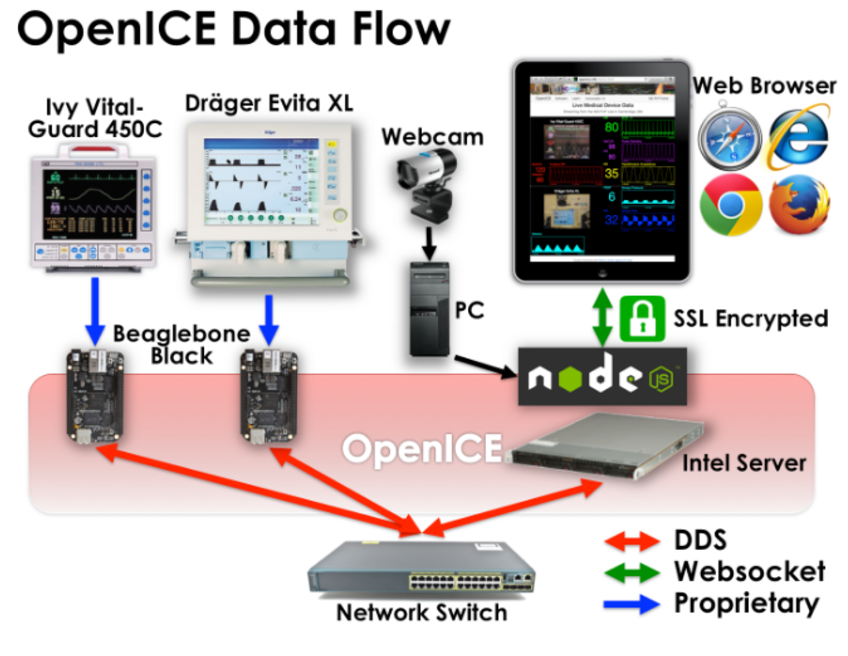
- Figure 3. The OpenICE distributed compute architecture, with DDS-based databus, facilitates medical device and software integration.
Like the other frameworks, OpenICE demonstrates the power of a local, distributed control architecture—a core fog computing principle.
Open Process Automation Forum
Exxon‑Mobil and other process‑automation leaders are convening to establish an open‑architecture framework for refinery control systems. Existing installations feature heterogeneous vendors, each with proprietary protocols and interfaces, which inflates integration costs and limits innovation.
The forum’s vision is a real‑time service bus that unifies devices and applications across the IIoT, mirroring fog computing’s integration bus concept.
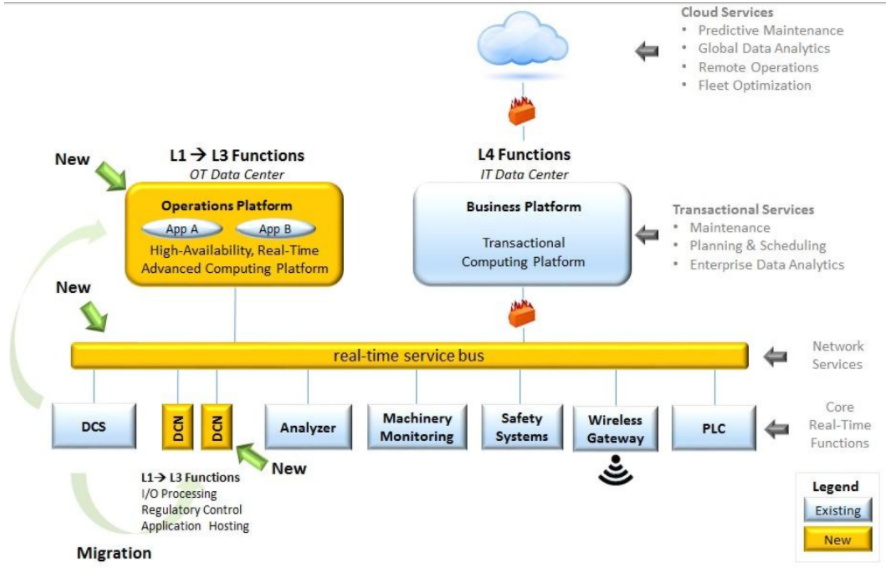
- Figure 4. Exxon‑Mobil’s open process automation architecture centered around a real‑time service bus.
The Cross‑Industry Opportunity
Each initiative—defense, energy, healthcare, and process automation—leverages a software integration bus, often based on DDS, to enable distributed control, monitoring, and analytics. They are also addressing essential fog computing aspects such as end‑to‑end security, system provisioning, and distributed data management.
By sharing lessons learned and converging on common standards, these communities can create a unified, open‑architecture framework that transcends industry boundaries. Such collaboration would unlock new levels of innovation, reduce integration costs, and accelerate the deployment of resilient, intelligent systems.
Internet of Things Technology
- Will Cloud Computing Replace Enterprise Architecture? A Balanced Analysis
- Essential Security Practices for Fog Computing
- ECCE: 18 European Partners Forge Unified Edge‑Computing Architecture
- Edge Computing: The Architecture Driving Tomorrow’s Intelligent Networks
- Industrial Internet Consortium White Paper Clarifies Edge Computing Architecture for IIoT
- HPE Unveils Edge Computing Advancements at Discover, Positioning the Edge as the New Digital Hub
- Mastering Control Loops: Open vs. Closed Systems Explained
- Fog Computing Explained: Bridging Cloud and Edge for Faster, Smarter Data
- Open Source Powers the Rise of IoT and Edge Computing
- Ultimate Guide to Cloud Computing Architecture: Flexibility, Design, and Cost Savings