



When Will You Trust a Driverless Car?
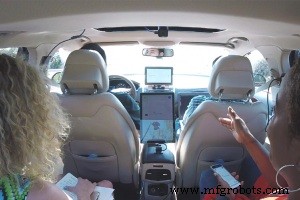
We are on the cusp of perfecting self‑driving technology, but the next milestone is public trust. While autonomous test vehicles still operate under a safety driver, the moment that seat is empty will require more than engineering excellence – it demands confidence from everyday riders.
The allure of autonomous vehicles is undeniable: experts project that eliminating human drivers could save millions of lives and unlock mobility for everyone. Yet the gap between promise and practice lies in fear. A recent AAA study found that 75% of Americans are reluctant to ride in self‑driving cars, echoing concerns voiced by Jack Weast, senior principal engineer and chief systems architect of Intel’s Autonomous Driving Group.
Intel believes this hesitation can be overcome by designing an interactive, informative, and comforting experience that builds trust. Our user‑experience team tested this hypothesis in a recent Trust Interaction Study with autonomous car passengers.
The qualitative study invited participants who had never ridden a driverless car to experience a test vehicle and provide feedback. Five core interactions were prototyped and evaluated: requesting a vehicle, starting a trip, modifying trip details, handling errors or emergencies, and pulling over to exit. We interviewed users before and after the ride and recorded their reactions in real time.
The research focused on trust in the machine and the human‑to‑machine interfaces—displays, touch screens, vocal cues, and more—that enable passengers to engage with their vehicle. Despite the study’s limited scope, the outcome was clear: every participant reported a significant increase in confidence after the journey, recognizing autonomous cars as a safer transportation option and expressing excitement about the market’s growth.
While these findings are encouraging, they also reveal seven tension points that warrant deeper exploration. Intel will continue to investigate these areas to help the industry deliver a trustworthy driverless experience when autonomous cars hit the road.
HMI‑Trust tension points:
Human vs. machine judgment: Participants worried about the absence of human judgment in complex situations such as jaywalkers or sudden lane changes, yet they also believed that autonomous vehicles would be safer by eliminating human error and avoiding hesitation.
Personalised space vs. lack of assistance: The idea of free time in a self‑driving car appealed to many, while a few felt uneasy without a human driver’s presence. Parents appreciated the ability to transport minors without a stranger, yet raised concerns about accountability.
Awareness vs. too much information: Most users anticipated a learning curve but feared that continuous alerts could become intrusive once confidence grew. Balancing safety reminders with a calm interface is key.
Giving up control vs. gaining new control: Some riders felt discomfort with the absence of conventional controls, especially as the steering wheel moved autonomously. Others welcomed new control modalities—summoning a vehicle, unlocking with a phone, and reduced driving stress—viewing them as added safety.
How it works vs. proof it works: Understanding the underlying technology was crucial, but witnessing the system respond to real‑world cues solidified trust, underscoring the need for transparent HMI systems.
Tell me vs. listen to me: Participants were reassured by the car’s human‑like voice, yet many desired the ability to converse naturally, using their own voice to request detours or adjustments.
Rule‑following machines vs. human interpretation of the rules: While safety dominated trust, users acknowledged that drivers often violate rules. Adapting to a system that strictly enforces safety requires a behavioral shift.

Intel will keep advancing trust as a core design principle in vehicle architecture. Follow our journey and explore our findings in the autonomous driving webcast replay. For more details, hear an explanation of our topline findings in our autonomous driving webcast replay.
The author of this blog is Jack Weast, senior principal engineer and the chief systems architect of Intel’s Autonomous Driving Group.
Internet of Things Technology
- DDS: Proven Connectivity Solutions for Autonomous Vehicles
- Preparing Your Manufacturing Business for Industry 4.0: A Practical Roadmap
- Preparing Your Manufacturing Operations for AI with IoT
- 7 Proven Strategies to Secure a Product Management Role Without Industry Experience
- Is Your Business Ready for Contact Centre 2.0? A Proven Blueprint for Modern Customer Engagement
- When Smart Cars Go Faulty: Why Google Can’t Diagnose Vehicle Fraud
- NEVS' Revolutionary Car‑Sharing Initiative in Trollhättan: A New Era of Mobility
- Is Blockchain Ready to Revolutionize Supply Chain Management?
- Preparing for Your Annual Workplace Shutdown: 5 Key Phases to Ensure Smooth Operations
- How to Achieve Precision-Cut Metal Parts Quickly and Effectively