



Key Technologies Driving the Industry 4.0 Revolution

Renowned science‑fiction author Ray Bradbury once noted that living at risk is akin to “jumping off a cliff and building your wings on the way down.” While poetic, the real drivers of transformation lie in technology, not daring leaps.
Jonathan Wilkins, Marketing Director at EU Automation, explores the three pivotal tipping points that are accelerating the transition to Industry 4.0.
Although Industry 4.0 remains a nascent concept, rapid socio‑economic shifts are already reshaping business and society. The following factors are poised to bring the fourth industrial revolution from theory to practice.
Data
Massive growth in data volume—what we now call "big data"—has compelled enterprises to rethink storage, analytics, and decision‑making. Leveraging historic datasets with advanced analytics enables cognitive systems to diagnose and self‑configure, while cyber‑physical systems monitor production in real time, boosting both productivity and quality.
Companies are also embracing smarter energy management through product‑lifecycle platforms and cloud‑based analytics, turning data into a competitive advantage.
Connectivity
Globalisation has created sprawling supply chains that struggle with distance, latency, and time‑zone disparities. Industry 4.0 offers a solution: the virtual global factory—an interconnected network that harmonises suppliers, manufacturers, and customers across borders.
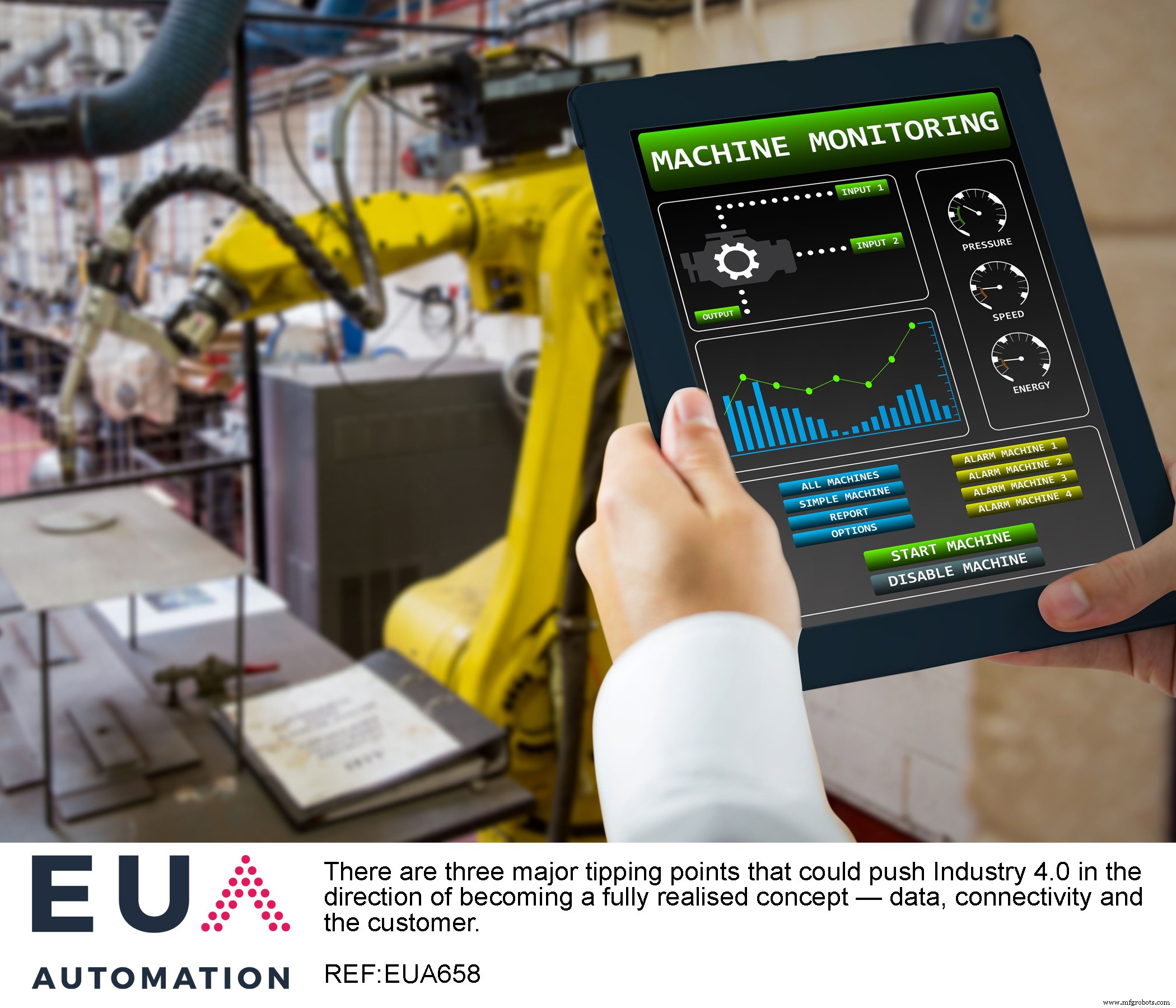
Technologies such as Remote Database Access (RDA) and Radio‑Frequency Identification (RFID) feed into the Internet of Things, creating a resilient digital infrastructure that supports real‑time information exchange.
The Customer
Modern consumers demand personalization and speed. Additive manufacturing—particularly 3D printing—allows digital designs to be transformed into physical products at unprecedented scale. This means mass production can now deliver bespoke items tailored to individual needs.

Digital design tools empower both B2B and B2C transactions, while dynamic data analytics augments human decision‑making. Together, they lay the groundwork for a digital ecosystem where algorithms amplify, rather than replace, human insight.
It’s time for businesses to commit to the Industry 4.0 journey. Successful adoption requires a clear roadmap and a dedicated, cross‑functional team that embraces change.
Author: Jonathan Wilkins, Head of Marketing, EU Automation
Internet of Things Technology
- Industrial Internet of Things vs Industry 4.0: What You Need to Know
- Harnessing Industry 4.0: Cisco’s Path to Manufacturing Excellence
- Three Key Drivers of Industry 4.0: Data, Connectivity, and Customer Demand
- Discover Two Industry 4.0 Technologies Set to Transform Food Manufacturing
- Revolutionizing Food Production: Two Key Industry 4.0 Technologies
- Next-Gen Tech Drives Resilience, Agility, and Profit in Industrial Manufacturing
- Cutting‑Edge Industry 4.0 Tech: Real‑World Innovations & Applications
- Industry 4.0 Unveiled: History, Benefits, and Key Technologies
- Industrial Automation 4.0: Revolutionizing Production Efficiency
- How Emerging Technologies are Shaping Industry 4.0