



Effective Lifecycle Management for Industrial IoT Deployments: Monitoring, Service, Update, and Decommissioning
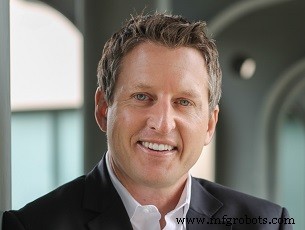
Keith Shea, General Manager of Helix IoT Solutions at Wind River, shares practical insights on the full lifecycle of Industrial Internet of Things (IIoT) deployments.
Step One is straightforward: agree to reap the benefits of an IIoT rollout. Step Two is far more complex—deploying and managing fog, cloud, or hybrid compute, supporting thousands of sensors and actuators, and planning their entire lifecycle. Editorial Director Jeremy Cowan asks Shea how to navigate these challenges.
IoT Now: Do device owners and operators struggle to manage their deployments, particularly with usage monitoring?
Keith Shea: While monitoring has long been a staple, evolving use cases, expectations, and technologies demand a shift toward holistic lifecycle management. The sheer diversity and projected volume of connected devices make this a daunting task for many operators.
IoT Now: What percentage of operators plan lifecycle management from deployment to decommissioning?
Keith Shea: More operators are recognizing the value of end‑to‑end planning. Early project phases often focus on data collection, but as use cases mature, robust lifecycle strategies become essential.
IoT Now: What drives the new Wind River Helix Device Cloud platform?
Keith Shea: We invest continuously to meet evolving customer needs. The next release of Helix Device Cloud will feature:
- Enhanced Security: Zero‑Touch device onboarding and Intel‑based hardening for instant, secure connectivity.
- Advanced Device Management: Remote monitoring, OTA firmware updates, alerts, rule‑based actions, campaign support, data governance, and comprehensive device visibility.
- Deployment Flexibility: Private, hybrid, and expanding public cloud hosting options across regions.
- OS Flexibility: Python Agent enables choice of operating system that best aligns with business requirements.
- Expanded APIs: Simplify integration of device data and applications with enterprise business processes.
Adopting the latest Device Cloud ensures that critical business data remains secure, responsive, and optimally performing.
IoT Now: How can Helix Device Cloud reduce costs for solution providers?

Keith Shea: Leveraging Device Cloud frees solution providers from the burden of building and maintaining complex lifecycle functions. It accelerates time‑to‑market, cuts development spend, and mitigates operational risk.
During operation, Device Cloud streamlines onboarding and servicing, reducing costly on‑site interventions and keeping devices secure and available.
IoT Now: Security consultants warn that security can’t simply be added to legacy networks. Do operators need to secure everything or replace everything?
Keith Shea: Security must be built in from inception to decommission. While replacing legacy devices is ideal, it’s often economically impractical. We help operators assess risks, understand business contexts, and architect secure, cost‑effective solutions.
In a software‑defined environment, device security is foundational—any compromise at the device level can cascade throughout the network. Continuous update capability is therefore non‑negotiable to counter emerging threats.
IoT Now: Is edge analytics growing? How does Helix Device Cloud support this?
Keith Shea: Absolutely. With sensor capabilities increasing, sending all data to the cloud is inefficient. Edge strategies—such as threshold‑based transmission or local analytics—optimize bandwidth. Helix Device Cloud serves as the edge egress, offers logic tools for selective data forwarding, and collaborates with analytics partners to deploy and manage edge‑side analytics engines.
IoT Now: What new business models are emerging?
Keith Shea: Many customers are transitioning from equipment sales to usage‑based models—e.g., selling a welder as pay‑by‑the‑weld or guaranteeing performance metrics for industrial robots. Others share cost savings, such as energy‑efficiency rebates for smart lighting. These models require integrated supply‑chain adoption.
Keith Shea, General Manager of Helix IoT Solutions at Intel’s Wind River, interviewed by IoT Now’s Jeremy Cowan.
Internet of Things Technology
- Web‑Enabled DDS: Bridging IoT, Cloud, and Real‑Time Connectivity
- Deploying DevOps in the Cloud: A Proven Blueprint for Digital Transformation
- Eclipse Vorto: Empowering Seamless IoT Device Integration
- Top 5 IoT Conferences to Attend in 2016
- How the IoT Cybersecurity Improvement Act Shapes the Future of Connected Devices – What Businesses Need to Know
- Strategic IoT Integration: A Proven Path to Business Growth
- Unconfigured IoT Devices: The Hidden Threat to Your Smart Home
- How IoT and Cloud Computing Shape the Future of Enterprise Data
- Harnessing IoT to Transform Oil & Gas Operations
- Mastering IoT Gateways: Seamlessly Connect Devices to the Cloud