



Artificial Intelligence in Retail: Proven Benefits, Not a Fad

Retailers are increasingly embracing artificial intelligence (AI) to enhance the shopping experience, especially online where chatbots, search engines, and recommendation engines have already proven their value. Yet, with roughly 90% of sales still coming from physical stores and only a handful of tangible AI applications in brick‑and‑mortar, Detego’s CTO Michael Goller explains how machine learning can finally deliver measurable results in the fashion sector.
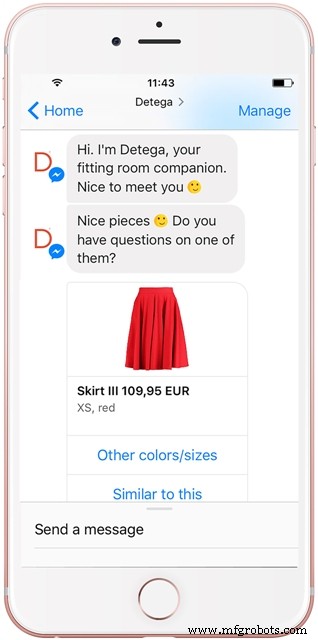
Detego was one of the first companies to embed machine learning into its retail platform, launching a popular chatbot that answers stock enquiries instantly—no need to seek a sales assistant or call customer service. The tool illustrates the potential of AI to reduce friction and improve customer satisfaction.
Despite the hype, many retailers still grapple with the basics: what AI can truly do for their business and how it can drive consumer engagement. This article breaks down the current landscape and shows that AI is moving beyond a passing trend.
Knowing Your Product
AI has already transformed product recommendation online, with giants like Amazon showing how data‑driven suggestions can boost sales. On the high street, however, the integration between online and physical channels remains fragmented. Retailers often overlook the strategic selection of products that are both profitable and in demand.
AI excels at synthesising vast data sets—product availability, purchase history, current trends, and profitability—to make informed decisions. Unfortunately, most stores still rely on disjointed, manual processes across departments, resulting in sub‑optimal inventory allocation.
Merchandise planning and product assortment are often driven by outdated sales figures and gut instinct rather than predictive analytics. By applying machine learning to forecasting and stock allocation, retailers can automate what has historically been a labor‑intensive task, ensuring the right mix of products arrives at the right place.
In practice, AI can reveal that two stores in the same town may need different garment sizes to maximise profit. When combined with RFID tagging—providing near‑100% stock visibility—AI can streamline delivery performance, resolve shipment discrepancies in seconds, and maintain the integrity of marketing promises.
Many retailers struggle to track inventory in real time, leading to missed opportunities and customer frustration. AI mitigates human error, keeps supply chains transparent, and guarantees that promotions, such as a limited‑time release in select outlets, are delivered as promised.
Human Machines

While the buzz around chatbots remains high, this is merely the beginning of AI’s role in retail. Intelligent assistants on shoppers’ smartphones can provide instant guidance, access a broader catalogue, and eliminate the need to hunt for a sales associate.
These tools handle straightforward, product‑related queries and stock checks with speed and accuracy. Retailers who have deployed AI‑powered chatbots report conversion rates that are up to 5% higher than in stores without them.
Chatbots do not replace human staff—they complement them. They are always available, never miss a break, and do not push unnecessary sales, ensuring a consistent customer experience.
By improving stock transparency, profitability, and customer engagement, AI equips retailers to compete with online giants and shape the future of shopping. It is not a fleeting fad; it is a proven technology that continues to deliver results.
The author of this blog is Michael Goller, chief technology officer at retail tech provider Detego
Internet of Things Technology
- Kubernetes Empowers AI Startups with Scalable, Containerized Solutions
- How AI is Transforming the Internet of Things Landscape
- Congatec Launches Low‑Power AI Flagship: NXP i.MX 8M Plus SMARC Modules
- Artificial Intelligence Is Not Yet Ready for Industrial Control System Cybersecurity
- AI-Powered Tracking of Amazon Deforestation
- AI-Driven Robotics: Cutting-Edge Intelligent Machines
- AI: Benefits, Risks, and Industry Impact
- Big Data vs AI: Synergy Behind Digital Transformation
- AI vs RPA: Why Artificial Intelligence Is Dominating Business Automation
- Artificial Intelligence: Evolution, History, and Real-World Applications