



Placing the Customer at the Heart of Digital Transformation
While technology fuels today’s industrial revolution, the real hurdle is cultural transformation. It requires embedding the customer experience and business outcomes at the core of every decision.
Engineering, manufacturing and supply‑chain teams must be re‑oriented to deliver a world‑class sales and service experience. As Colin Masson, Global Industry Director of Manufacturing Solutions at Microsoft, notes, this means prioritising metrics like Customer Satisfaction Scores or Net Promoter Scores over traditional production efficiency.
Manufacturers should explore—and invest in—IoT, industrial automation, cloud, big data, AI, robotics, 3D printing and related technologies. Microsoft partner Columbus recently released an industry report that maps these emerging tools to the broader manufacturing digital‑transformation agenda under its ‘Manufacturing 2020’ strategy.
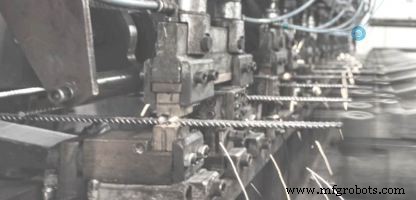
Data sits at the heart of this revolution. We embed telemetry in every asset, cultivating a data‑driven culture that rests on a single version of the truth.
The fourth industrial revolution thrives on the sheer volume of IoT data generated by factory sensors, coupled with external streams from smart cities, buildings, offices and connected vehicles. Selecting an IoT platform is therefore critical; start by ensuring it can scale to match your long‑term ambitions.
Another convergence is reshaping internal workflows: IT, operations and engineering are unifying under digital technology, empowering employees with modern tools and intelligent work practices—such as cobots that collaborate “shoulder to shoulder” with human operators.
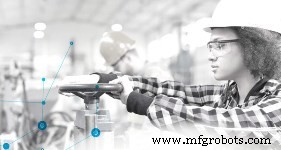
Optimising operations through smart factories and supply‑chain solutions powered by intelligent edge and cloud is essential. It also unlocks new product and business models, leveraging insights from connected products, advanced modelling like “digital twins”, and agile end‑to‑end solutions.
Manufacturers are at varying stages of servitisation—shifting from product sales to services. Some enhance customer engagement via call centres or IoT‑enabled field service, while others move to full “product‑as‑a‑service” models: selling flight hours instead of jet engines, car coatings instead of paint, or cleaning services instead of chemicals.
This evolution demands the dissolution of silos between ERP, CRM, PLM and SCM. Instead, organisations must connect people, data and processes through agile intelligence systems that keep pace with the rapid delivery of highly tailored products and services.
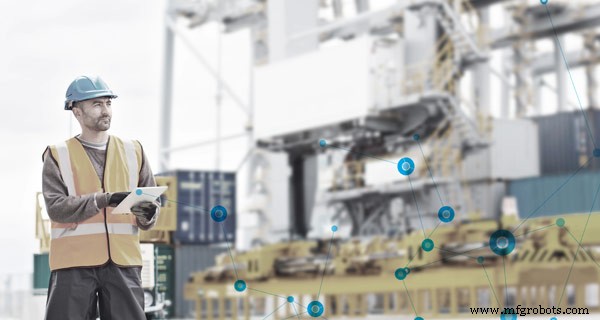
Smart factories that manufacture smart products lie at the centre of a more agile supply chain. Intelligent shop‑floor solutions and business apps further augment workforce capabilities, addressing the widening skills gap in manufacturing.

While IoT platforms enable connectivity, they must be paired with big data and AI to deliver actionable insights for line workers and executives alike. Intelligent cloud and edge technologies will power the next‑generation factory, from autonomous robots to collaborative cobots.
Big compute is also required to accelerate product innovation, enabling rapid iteration through digital twins of devices, designs, supply chains and customer use cases. Legacy ERP, CRM, PLM and SCM systems must evolve to meet this new velocity.
At its core, however, digital transformation boils down to customer insight. Whether through smart products that stream usage data or traditional engagement channels, the depth of these insights will determine the success of future products and services.
Author: Colin Masson, Global Industry Director of Manufacturing Solutions at Microsoft
Internet of Things Technology
- Industrial IoT: Driving Digital Transformation and New Business Value
- Strategic IoT Integration: A Proven Path to Business Growth
- Maximizing IoT for Restaurants: Boost Efficiency, Reduce Waste, and Delight Customers
- Digital Transformation Fatigue: Turning Tech Hype into Tangible Business Value
- COVID‑19 Accelerated Digital Transformation: Why Modern Businesses Must Embrace Technology
- Transforming Container Shipping: A Digital Strategy for Smart, Efficient Operations
- Future-Proof Your Business with Digital Buyer Technologies
- Kordsa’s Strategic Shift to Composites: Expanding Global Footprint
- Digital Factories: Smart Manufacturing for Industry 4.0
- Centering Customer Experience in Your Digital Strategy