



COVID‑19 Accelerated Digital Transformation: Why Modern Businesses Must Embrace Technology
When COVID‑19 disrupted global supply chains and daily life, it also clarified a single truth: digitization is no longer optional. Businesses that failed to adapt risked significant revenue loss and customer attrition, while those that leveraged technology delivered faster, higher‑quality service and secured a competitive edge.
The Pandemic Accelerated the Shift to Digital Business Models
Digital transformation had already been a strategic priority for many companies, but the pandemic forced a rapid pivot. Enterprises that could not transition to online platforms or remote workflows found themselves sidelined by competitors who had already embraced digital tools.
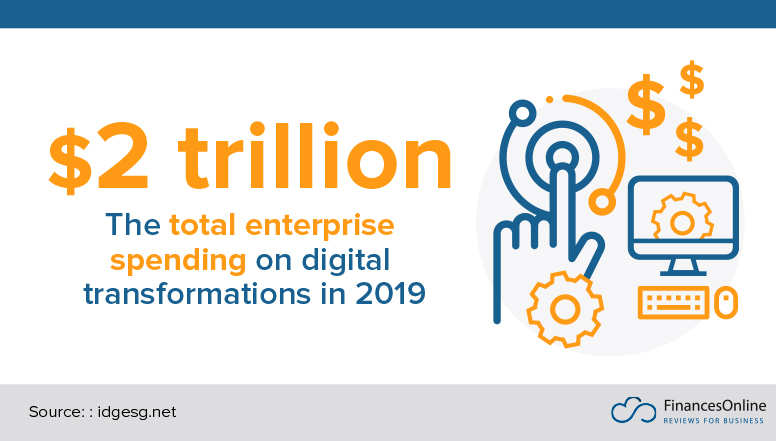
Image Credit: financesonline.com
From students mastering e‑learning to consumers ordering groceries online, the pandemic accelerated the adoption of technology across all sectors. A robust online presence—website, mobile app, and social media—has become essential for sustaining operations, automating processes, and cutting costs.
In this climate, digital transformation is the deciding factor for survival. Businesses that integrate digital technologies can serve customers anywhere, anytime, and at lower operating expenses.
Why Digital Adoption Is Critical for Business Success
2020 saw an explosion of services like Zoom, DoorDash, Postmates, and Zomato, illustrating how smartphones and the internet became the backbone of everyday life. Remote meetings, online ordering, and telehealth were no longer luxuries but necessities.
According to a Singapore Economic Survey, small businesses that adopted digital tools saw a 25% increase in revenue and a 14% boost in productivity. These statistics underscore the tangible benefits of technology adoption, even for the smallest enterprises.
Digital solutions mitigate economic shocks by creating new revenue streams, cutting operational costs, and streamlining workflows. Companies that resist digitization risk falling behind as labor becomes less central to their operations.
Restaurants are migrating to online ordering platforms, and transportation providers are investing in advanced ride‑sharing apps, reflecting a shift toward private, contact‑less mobility that persists beyond the pandemic.
Rapid Digitization in the New Normal
Global lockdowns ushered in a “new normal” where consumers rely on apps and websites to fulfill daily needs, avoiding physical stores for safety. This shift caused a worldwide drop in spending but also created unprecedented demand for digital commerce.
More than 70% of consumers now order food and groceries online, benefiting from contact‑less delivery and payment options. Brands that rapidly adopted digital tools could streamline orders, payments, and customer service, turning a crisis into an opportunity for growth.
Digital investment is now a necessity, not a luxury. From online ordering to remote work, cloud adoption, and AI‑driven customer service, the technology stack that gives a firm an advantage is constantly evolving.
Digital transformation offers several key benefits:
- Reduced operational costs
- Global reach and market expansion
- Enhanced customer service and engagement
- Higher conversion rates
- Sustained competitive advantage
By adopting digital strategies, businesses can operate across time zones, eliminate geographic constraints, and process payments in any mode—critical advantages in a post‑pandemic economy.
Entrepreneurial Adoption of Digital Transformation
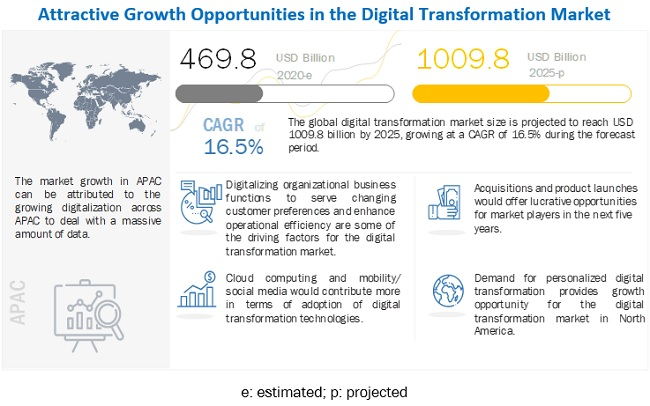
Image Credit: marketsandmarkets.com
The pandemic spurred an unprecedented acceleration in technology adoption across all business sizes. Even small e‑commerce operators now integrate multiple payment gateways to support contact‑less transactions, while local restaurants deploy mobile‑first solutions for rapid delivery.
Emerging technologies—cloud, microservices, chatbots, big data, AR/VR, digital currencies—enable seamless connectivity and real‑time transactions, keeping businesses operational under crisis conditions.
Remote Work: The shift from 30% to over 70% remote‑working employees in the U.S. demonstrates how collaboration tools like Zoom and Teams have become integral to productivity.
Omnichannel Commerce: With physical stores shuttered, consumers turned to platforms such as Instacart and DoorDash. Brands that offered digital ordering and delivery experienced sustained engagement.
Online Content Consumption: Lockdown led to a 51% increase in global streaming service usage, with Netflix adding 16 million new subscribers in the first three months of 2020.
These digital solutions are keeping businesses afloat, engaging customers, and building resilience against future shocks.
Will the Digital Revolution Endure?
The transition to online ordering and digital interactions is now ingrained. While Gen X and Y may still be cautious, Gen Z embraces mobile‑first experiences. Over 57% of consumers plan to maintain digital habits post‑pandemic, spanning online banking, shopping, and payments.
As businesses invest in digital infrastructure—social media, mobile apps, AI chatbots—continuity becomes a reality, even for traditionally offline enterprises.
The convergence of emerging technologies such as blockchain, IoT, AI, machine learning, and robotics will shape the next phase of economic development. Small businesses that adopt these tools can transform into digital‑native enterprises, contributing to national growth.
Image Credits: provided by the author; thank you!
Internet of Things Technology
- The Pandemic’s Impact on 3D Printing: From Decline to Resurgence
- Unlocking IoT Data: How Business Rules Management Drives Enterprise Value
- Industrial IoT: Driving Digital Transformation and New Business Value
- Placing the Customer at the Heart of Digital Transformation
- Strategic IoT Integration: A Proven Path to Business Growth
- Maximizing IoT for Restaurants: Boost Efficiency, Reduce Waste, and Delight Customers
- International Women in Engineering Day 2021: Pandemic‑Driven Gender Disparity in Tech
- Amazon's Journey Through COVID-19: Challenges, Adaptations, and Growth
- AI-Driven Social Distancing: Revolutionizing Digital Business Transformation
- Digital Floors: The New Frontier in Business Innovation