



How AI, Data Science, and Machine Learning Drive Next‑Generation Website Design

Yash Mehta
Artificial intelligence (AI), data science, and web design are converging to reshape the digital landscape. At first glance, the link between these fields may not be obvious, but the reality is clear when we consider how personalized ads surface during our browsing or how Amazon tailors product recommendations based on prior searches.
As consumer behavior evolves, data‑driven solutions are becoming essential for business strategy. Michael Bereslavsky, founder of DomainMagnate, notes that “we are at a point where data science and AI capabilities are improving daily, and future business solutions may be generated autonomously from financial indicators.” Understanding AI and data science’s role in web design requires a concise overview of each domain.
Machine Learning, Web Design, and Data Science: A Quick Primer
Machine learning (ML) is a subset of AI that enables systems to learn patterns from data without explicit programming. Together with deep learning, ML dominates research at universities and corporations such as Facebook, Google, and IBM. Core tools include R and Python libraries.
Web design and development are complementary disciplines. Designers craft the visual layout, typography, and user experience—akin to an architect—while developers translate these designs into functional, responsive web pages—akin to an engineer. Designers often use Photoshop and Illustrator, and must understand HTML, CSS, and JavaScript. Developers typically work with a broader stack—HTML, CSS, PHP, JavaScript, jQuery, MySQL—depending on front‑end or back‑end focus.
Data science is the practice of extracting actionable insights from data, using statistics, programming, and domain knowledge to optimize outcomes. It relies on tools like Python, R, and specialized software for data mining and predictive modeling.
Integrating ML and Data Science into Web Design
The synergy between ML and data science in web design can be visualized as a continuous loop of data collection, pattern recognition, and automated content generation. 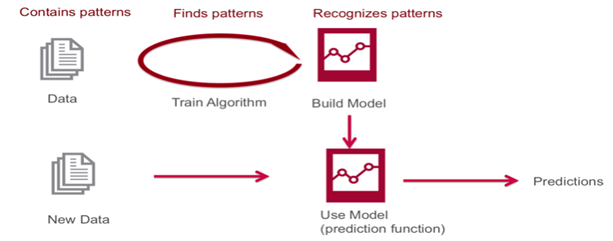
Take Bookmark, a startup that offers web design services powered by its “Artificial Intelligence Design Assistant” (AiDA). AiDA uses ML and data mining to auto‑generate mobile‑friendly website layouts within minutes, a process that traditionally takes developers a week. For instance, a photographer can input basic details, and AiDA crawls similar portfolios, identifies effective layouts, and applies suitable color schemes and typography automatically.
Grid is another player in this space, leveraging AI to streamline website creation. While current algorithms may not yet match a seasoned developer’s sophistication, the iterative nature of ML means that platforms like AiDA will only improve as more data is fed into the system.
Key benefits of ML in web design include:
- Personalized Content Prioritization – According to a 2017 Monetate study, 79% of revenue‑surpassing companies had a documented personalization strategy. ML can analyze user data to deliver tailored content, much like YouTube’s recommendation engine, but with deeper contextual relevance.
- Behavioral Insight Capture – By monitoring metrics such as average session duration, click paths, and exit pages, ML models can identify friction points and suggest UX improvements, leading to higher engagement and conversion.
- Developer Efficiency Boost – Automating routine tasks frees developers to focus on creative and strategic initiatives, allowing them to fine‑tune performance and innovate rather than rewrite boilerplate code.
Large enterprises worldwide have embraced ML and data science to enhance web design and development, resulting in better optimization and greater innovation at the grassroots level. As technology continues to integrate into daily life, adapting to these advancements is no longer optional but essential.
Author: Yash Mehta, an award‑winning IoT and Big Data Science expert with extensive publication experience.
Internet of Things Technology
- How Robust Data Management Drives Machine Learning and AI in Industrial IoT
- Boost Asset Availability with Advanced Machine Learning – Proven Industrial Success
- How Machine Learning Can Safeguard Your Competitive Edge
- Leveraging Machine Learning to Reduce Manufacturing Emissions and Fight Climate Change
- Boost IT Performance: Leveraging AIOps & Observability to Reduce Downtime & Enhance User Satisfaction
- How AI and Machine Learning Revolutionize CNC Machining
- Track & Analyze Machine Downtime: Boost Efficiency & Reduce Costs
- Automating Data Quality to Accelerate AI & ML Success
- Accelerate Business Insights with Automated Data Science & Machine Learning Solutions
- Why Wire EDM Cutting Machines Deliver Precision and Cost Savings