



Securing Advanced Driver Assistance Systems (ADAS): Safety Strategies for the Next Decade

Advanced Driver Assistance Systems (ADAS) enhance vehicle safety by monitoring surroundings, issuing warnings, applying brakes, and assisting with steering. The next decade will see rapid expansion of these systems, fueled by breakthroughs in sensor and LiDAR technology and evolving regulatory requirements.
According to Jeff Phillips, Head of Automotive Marketing at National Instruments, the European Union mandated in 2020 that all new vehicles must include Autonomous Emergency Braking (AEB) and Forward Collision Warning (FCW) systems.
Although ADAS remains in its nascent stages, its safety capabilities are poised to become a key differentiator for automotive manufacturers, particularly as they advance toward fully autonomous vehicles.
OEMs and tech companies are currently vying in this largely unregulated arena to secure market share and deliver the safest cars on the road. With nearly 1.3 million road‑traffic fatalities worldwide annually and a five‑year high of 1,792 deaths on UK roads, safeguarding ADAS technology is more urgent than ever.
Nightmare Scenario
Testing engineers face a daunting landscape: evolving regulations, emerging sensor technologies, and AI‑driven architectures that can be opaque. The stakes are high—every high‑profile incident involving a semi‑autonomous vehicle raises public scrutiny, and even the limited number of documented autonomous‑vehicle crashes has eroded consumer confidence.
Test engineers must determine how much verification is necessary to satisfy both regulatory and legal standards while also meeting public expectations. The absence of clear guidelines for AI systems means that traditional testing approaches are insufficient.
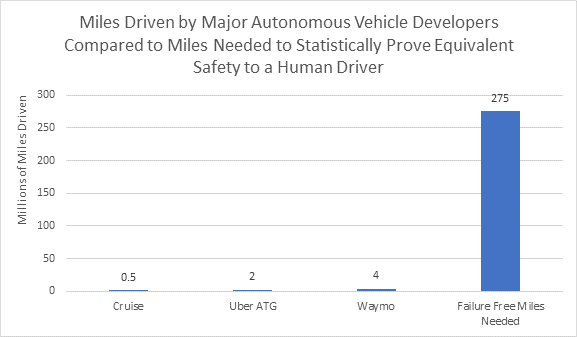
According to a 2018 Rand Corporation study, an autonomous vehicle would need to log tens of millions of miles of testing to statistically demonstrate performance parity—or superiority—over human drivers. Achieving this volume in a realistic timeframe demands innovative test strategies and large‑scale simulation environments.
The Machine Learning Story
Fully autonomous driving relies heavily on machine‑learning models because the spectrum of real‑world scenarios is effectively infinite. Engineers gather vast amounts of human‑driven data, label it, and train neural networks to replicate human decision making.
While design teams can develop the underlying algorithms, the resulting models function as black boxes, complicating validation. Test engineers must therefore devise comprehensive scenario libraries that cover a wide range of edge cases, as the lack of insight into internal logic precludes traditional unit testing.
A New Roadmap
Sensor portfolios are evolving rapidly, driving cost reductions and new architectural choices. Manufacturers must decide between centralized on‑board processing and distributed edge‑processing, and they must plan for future sensor additions such as LiDAR, radar, and additional camera arrays.
Cloud computing and 5G connectivity add another layer of complexity, enabling real‑time data exchange and remote diagnostics but also raising latency and bandwidth considerations.
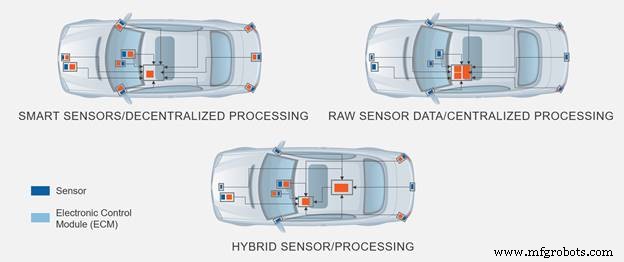
Because the sensor mix of future platforms is uncertain, test teams need flexible infrastructures that can integrate new hardware without costly rebuilds. Modular test rigs and virtualized environments allow rapid scaling of camera, radar, and LiDAR payloads.
Building for Change
As autonomous features move from prototype to product, regulatory bodies must evolve to protect consumers. Standards such as ISO 26262 for functional safety and EURO‑NCAP crash‑test protocols are already shaping the industry, while Germany’s recently published ethical framework for autonomous vehicles sets precedents for decision‑making rules.
Even as formal standards mature, companies will introduce proprietary testing layers to differentiate themselves. An open, adaptable test infrastructure will give engineers the agility to incorporate new regulatory requirements and internal safety objectives.
The author of this blog is Jeff Phillips, head of Automotive Marketing, National Instruments
Internet of Things Technology
- How New Technologies Are Transforming Refractory Materials
- Maximizing Performance of Qt State Machines
- Accelerating Smart Building Adoption: ABB’s Roadmap to Affordable, Interoperable Solutions
- Connected Technology Revolutionizing Water Utilities: Smart Metering Drives Efficiency & Sustainability
- Harnessing IoT to Protect the Planet: Proven Success Stories
- The Future of Cruising: How IoT Is Transforming the Passenger Experience
- Revolutionizing Automotive Operations: How IoT Drives Efficiency and Oversight
- How IoT-Enabled Geofencing Boosts Modern Fleet Monitoring
- Why Friction Materials Are Essential for Reliable Safety Systems
- Keep Your Crew Focused: Proven Strategies for Safe Job Sites