



How IoT Is Transforming Mobile Apps and Driving Business Innovation
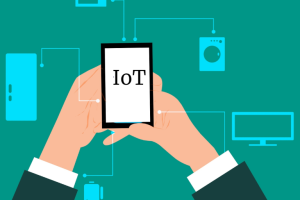
While some analysts question the hype around the Internet of Things (IoT), others see it as the next frontier in digital transformation. According to Charles Richards, a business analyst at TatvaSoft UK, the shift from desktop to mobile—and now to connected devices—is reshaping how we interact with technology.
The Mobile App Landscape
In a competitive market, mobile apps have become indispensable. Companies leverage them to engage customers, enable employee collaboration, track orders, oversee operations, and manage supply chains across sectors—from finance to manufacturing and healthcare.
Integrating Mobile Apps with IoT
Smart homes already showcase the power of IoT: lighting, security, HVAC, and kitchen appliances respond to user commands. When mobile apps are combined with IoT, the reach expands dramatically—every connected object can collect, analyze, and act on data in real time.
This convergence creates new opportunities for app developers and a growing demand for solutions that bridge the physical and digital worlds.
Key Drivers Behind the Shift
1. Heightened Security Needs – As users store more data in the cloud and IoT devices proliferate, protecting sensitive information becomes critical. Secure mobile apps must incorporate advanced encryption and authentication to safeguard user data.
2. Specialized Design Requirements – Mobile apps must support diverse connectivity options—Wi‑Fi, NFC, cellular, Bluetooth—while remaining lightweight and user‑friendly.
3. Rising Demand for Enterprise Apps – Businesses that connect machines and devices gain productivity gains, reduce downtime, and enable predictive maintenance. Wearables further expand the app ecosystem.
4. Hardware Evolution – Modern smartphones now include sensors that facilitate IoT integration, creating a hardware‑software synergy that fuels innovation.
5. Infrastructure Upgrades – The surge in data consumption and high‑frequency app interactions pushes carriers to expand Wi‑Fi and cellular capacity, ensuring seamless performance.
6. Data‑Driven Customer Insights – IoT‑enabled apps deliver real‑time analytics on customer behavior, enabling personalized marketing, inventory optimization, and stronger brand loyalty.
7. Necessity of Adaptability – Apps that ignore IoT risk obsolescence. Future‑proof solutions must be designed to adapt to new connected devices and standards.
8. Enhanced Convenience – The abundance of interactive devices simplifies development, allowing developers to build robust, multi‑device experiences with less effort.
Conclusion
IoT and mobile apps together create a powerful feedback loop: sensors capture data, the app processes it, and real‑time actions are triggered across the network. This immediacy speeds decision‑making, reduces latency, and improves operational efficiency. For businesses, embracing IoT‑enabled mobile development is not just a competitive advantage—it’s becoming essential.
We hope this overview provides insight into how IoT is reshaping the mobile world.
The author is Charles Richards, business analyst at TatvaSoft UK.
Internet of Things Technology
- IoT-Driven Supply Chain Management: Real-Time Asset Tracking & Fleet Optimization
- IoT Diversity & Security Take Center Stage at Mobile World Congress 2017
- How IoT is Revolutionizing Inventory Tracking
- Revolutionizing Logistics: How IoT Drives Supply Chain Efficiency
- Key Takeaways from the 2014 IoT World Forum in Chicago
- How IoT is Revolutionizing Construction: Safety, Visibility, and Asset Management
- Revolutionizing IoT: How Mobile Location Tracking Drives Asset Visibility and Efficiency
- Closing the IoT Blind Spot in a Post‑Pandemic World
- Software AG Projects the Next Wave of IoT Growth
- How IoT is Revolutionizing Everyday Life