



Understanding Level Sensors: Types, Functions, and Industry Applications
For decades, liquid‑level sensors have been a staple in industries ranging from food & beverage to pharmaceuticals, automotive, and smart homes. Modern innovations have turned once expensive, bulky equipment into compact, highly accurate, and effortlessly installable devices. Today, even notoriously difficult fluids—such as foamy soaps, dairy products, or viscous inks—can be measured reliably thanks to a diverse array of level‑sensing technologies.
Types of Level Sensors and Their Applications
A level sensor is a device that determines the liquid level in either an open or closed system. Measurements typically fall into two categories: continuous‑level readings, which provide a precise value across a range, and point‑level readings, which simply indicate whether the level has crossed a predetermined threshold. Modern units transmit results wirelessly to central monitoring systems, a feature especially valuable in hazardous or hard‑to‑reach locations.
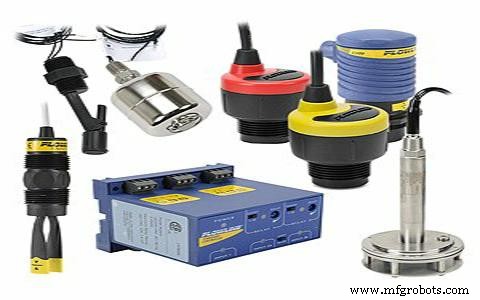
Below are the primary sensor categories, each suited to specific fluids, operating environments, and industrial needs.
Classification of Level Sensors
The major types of level sensors include the following.
Ultrasonic Level Sensors
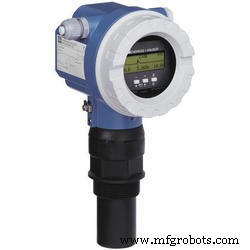
Ultrasonic sensors determine liquid height by emitting sound waves between 20 kHz and 200 kHz and measuring the time until the echo returns. Because they are non‑contact, they work well with sticky or abrasive liquids and bulk solids. Performance can be affected by turbulence, temperature, and pressure, so transducer placement and calibration are important for optimal accuracy.
Pros and Cons
- Compact, cost‑effective, non‑contact operation.
- Limited to a few user interfaces; performance can degrade in highly turbulent flows.
Applications
Ideal for liquid level control, solid‑particle monitoring in mining, food & beverage processing, and chemical plants.
Capacitance Level Sensors
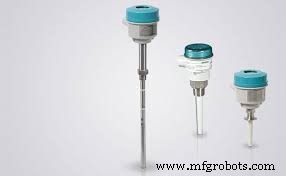
Capacitance sensors use a probe that changes its dielectric constant as the liquid level rises or falls. The resulting voltage change is converted to an analog signal. Probes are typically made of PTFE‑insulated wire or stainless steel for harsh media. Because there are no moving parts, they are easy to maintain and highly reliable.
Pros and Cons
- Solid‑state, compact, can be non‑invasive, high accuracy.
- Best suited for specific liquid types; occasional calibration may be required.
Applications
Common in tank level monitoring for chemicals, water treatment, food production, battery manufacturing, and environments that experience high pressure or temperature.
Optical Level Sensors
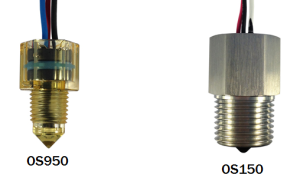
Optical sensors detect liquid presence by measuring the transmission of infrared light from an IR LED. When the light beam is interrupted by a liquid or sediment, the sensor registers a change. Pulse‑modulated, high‑energy IR diodes reduce interference, while laser‑based continuous sensors can penetrate dusty atmospheres.
Pros and Cons
- Compact, high‑pressure tolerance, no moving parts, can detect very low liquid volumes.
- Requires direct contact with the liquid; some substances may coat the prism, and power supply is necessary.
Applications
Widely used for leak detection and tank level monitoring across diverse industries.
Microwave Optical Sensors
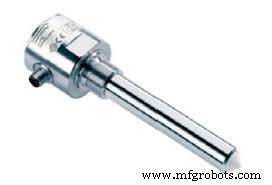
Microwave sensors operate by transmitting microwave energy that penetrates dust, moisture, and even conductive materials. Time‑domain or pulse‑reflectometry techniques convert the return signal into a level measurement, making them ideal for harsh environments where optical or ultrasonic sensors may fail.
Pros and Cons
- No calibration required, highly accurate, offers multiple output options.
- Higher cost, limited detection range, and susceptible to extreme environmental conditions.
Applications
Commonly employed in vaporous, moist, and dusty processes, as well as systems with significant temperature variation.
In summary, selecting the right level sensor hinges on the fluid type, process conditions, and required accuracy. From high‑level monitoring to low‑level alarms, over‑fill protection, and leak detection, level sensors are integral to safety, efficiency, and cost savings in marine, manufacturing, chemical, food & beverage, pharmaceutical, medical, and energy sectors. For more detailed guidance or to discuss a specific application, please leave a comment below.
Sensor
- Spring Types Explained: Applications & Selection Guide
- Exploring Hot and Cold Chamber Die Casting: Types, Applications, and Advantages
- Mastering Lathe Machines: Types, Classifications, and Practical Applications
- Types of Shaper Machines & Their Classifications – A Comprehensive Guide
- Exploring Metal Types: Classifications and Key Properties
- Explore Wrench Varieties: Types, Uses, and Key Features
- Punch Types in Engineering: Functions, Materials, and Best Practices
- Understanding Clamps: Types, Uses, and Applications
- Exploring Measuring Tools: Types, Uses, and Best Practices
- Screwdriver Types & Their Applications: A Comprehensive Guide