



Vestas Sets Ambitious Goal: Zero‑Waste Wind Turbines by 2040
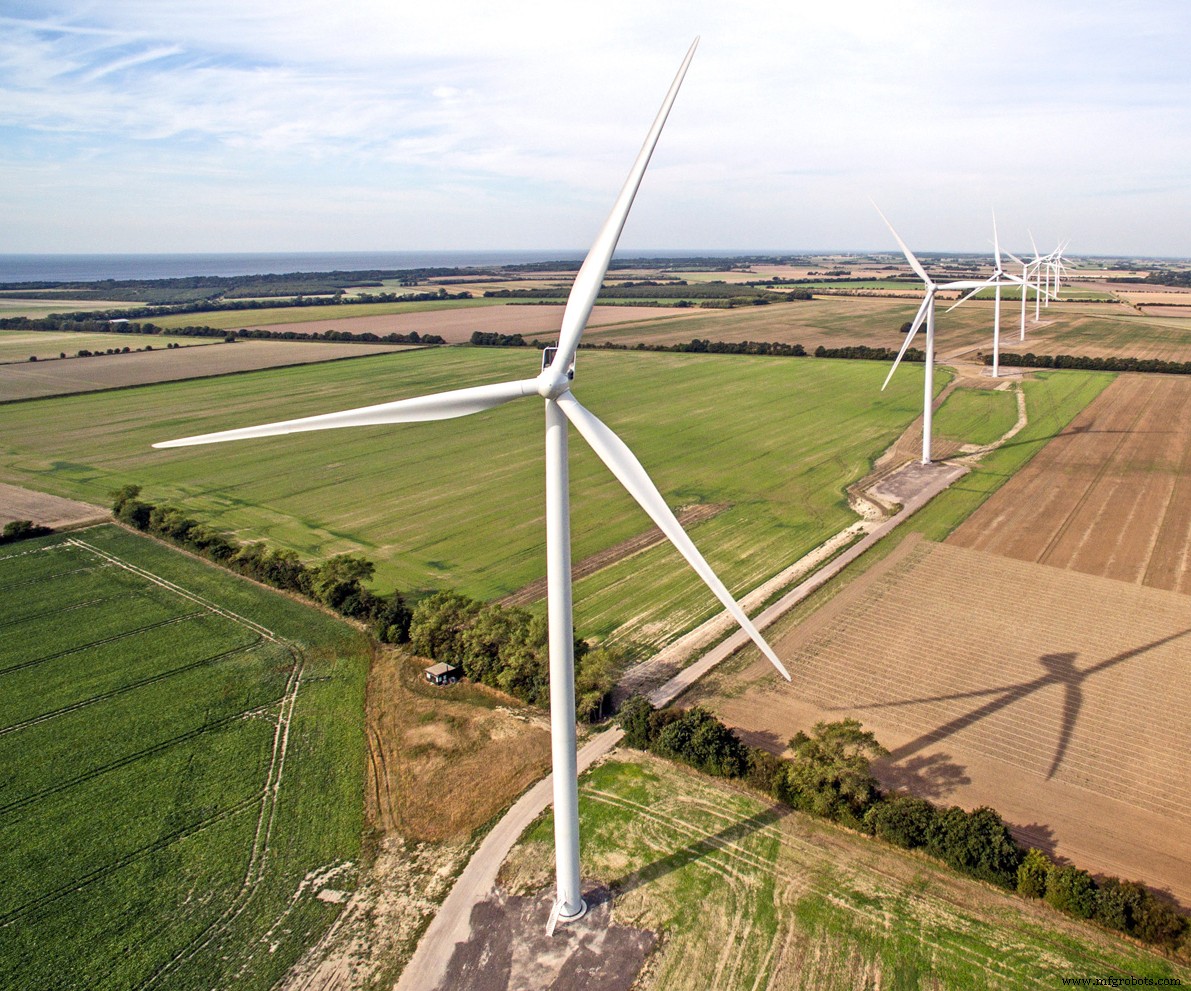
Global wind turbine manufacturer Vestas (Aarhus, Denmark) announced on Jan. 20 that it plans to produce zero-waste wind turbines by 2040, as part of its company focus on sustainability.
Vestas says that it is the first turbine manufacturer to commit to zero-waste wind turbines, and that this process will involve running a value chain that generates no waste materials. This will be achieved by developing and implementing a new waste-management strategy, introducing a circular economy approach in the different phases of the value chain: design, production, service and end-of-life. Vestas plans to present this strategy within the next two years.
According to Vestas, waste generated from turbine blades is estimated to be around 43 million metric tonnes accumulated by 2050. Reporting that the global wind energy market set to grow by an average of 3% per year in the coming decade, Vestas says it is mitigating its own environmental impact by committing to eliminate waste across its value chain. Today, Vestas reports that its wind turbines are on average 85% recyclable, but that wind turbine blades currently comprise non-recyclable composite materials.
Vestas will consider all aspects of the turbine lifecycle, aimed at improving the recyclability rate of blades and nacelles. As a first step, Vestas will be focusing on improving the recyclability of all wind turbine blades. Incremental targets will be introduced to increase the recyclability rate of blades from 44% today, to 50% by 2025, and to 55% by 2030. This includes several initiatives designed to address the handling of existing blades after decommissioning, Vestas says. These will cover new recycling technologies that are optimal for composite waste, such as glass fiber recycling and plastic parts recovery. Vestas says it will also be implementing a new process around blade decommissioning, providing support to customers on how to decrease the amount of waste material being sent to landfill.
“Establishing such an ambitious goal for waste reduction is paramount to ensuring a better world for future generations,” says Anders Vedel, Vestas executive vice president of Vestas Power Solutions. “Leading the wind industry is not enough to combat the global challenges we face today. If we are to spearhead the energy transition, we must be an example for doing so in the most sustainable way, and this involves making sustainability part of everything we do.”
“As the world’s largest supplier of wind energy, Vestas has a responsibility to eliminate waste across its value chain,” says Tommy Rahbek Nielsen, Vestas interim chief operations officer. “Wind energy will continue to grow rapidly, therefore the time for a conservative approach is behind us. I am proud to be part of an organization that is making sustainability an integral component in all business operations.”
fiber
- Timken Launches UltraWind Bearings to Boost Reliability of Multi‑Megawatt Wind Turbines
- Guohua Energy Deploys SKF Remote Monitoring to Drive Turbine Reliability
- New Research Aims to Boost Wind Turbine Efficiency Through Advanced Flow Control
- Swancor Secures Global Wind Blade Material Supply Deal with MHI Vestas in Taiwan
- GE Haliade-X Turbines Selected for the World’s Largest Offshore Wind Farm at Dogger Bank
- Aerodyn Introduces 111‑m TC1B Rotor Blade for 11‑15 MW Wind Turbines
- Understanding Wind Turbine Technology: How They Convert Wind into Clean Energy
- Equipment Series: Wind Turbines – From Small to Grid‑Scale Power
- Wind Turbines Explained: Types, Benefits, and Applications
- Wind Turbines Explained: How They Generate Clean Power