



Clean Sky 2 Funded Breakthrough: Advanced Ice Protection System for Composite Aircraft Wings
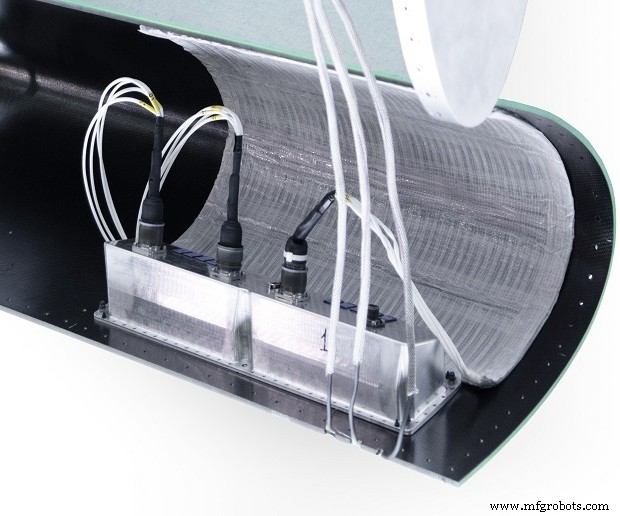
EU funding of the InductICE project has supported development and testing of a unique ice protection system for composite wings. Formation of ice on aircraft occurs under certain conditions when supercooled water freezes on impact with the surface of an aircraft. Even a very thin layer or small patches of ice on the leading edge and upper surface of the wings can have a significant effect on drag and lift and thus aircraft safety.
Until recently, there were two main types of ice protection systems: those to prevent ice from forming (anti-icing), and those to remove it, once formed (de-icing). Thermal approaches heat the surface via electrical resistance or by redirecting a portion of the hot air from the motor’s compressor. Mechanical systems used for de-icing separate the ice by deformation of the surface on which it accumulates. More recently, some systems have integrated more than one method to both protect against ice formation and remove it, once formed.
The new kid on the ice protection block
InductICE pursued a completely new solution, as project coordinator Irma Villar explains: “The InductICE solution uses electromagnetic induction to heat up a thin metal mesh integrated into the composite wings of an aircraft. This contactless heating applied directly in the external layer where the ice is created enhances efficiency significantly relative to heat conduction through the various composite layers or redirection of compressor heat.”
Furthermore, since the system is not part of the wing structure itself, maintenance costs are reduced, and compared to a mechanical solution, there is no mechanical fatigue in the structure. Villar continues: “In addition to evaluating the efficiency of each module, we also assessed the global installation impact of the technology. We designed the system based on the compromise between installation weight and mean/peak power consumption of the de-icing/anti-icing technology.”
A hot new idea taxies for take-off
A completely new concept in ice protection technology, the electromagnetic induction system has undergone significant and strenuous testing in an icing wind tunnel, resulting in a series of changes to the prototype. The leading edge of the wing with its concave shape created a challenge in the geometry of the induction coils. In fact, design modifications, manufacturing and testing have been a completely manual process. As the team advances the system's technology readiness level, InductICE’s multiple benefits promise enhanced safety for passengers and increased competitiveness for EU aviation.
See the latest news on Clean Sky 2 projects here.
fiber
- Composite Materials: Powering Innovation in Automobiles, Aerospace & Beyond
- Qarbon Aerospace Introduces Helios: Advanced Composite Ice Protection System
- Clean Sky 2 Releases 2019 Report Showcasing Milestone Achievements in Greener Aviation
- Ducommun Secures Exclusive Licensing of WSU Lightning Protection Tech for Composite Wind Turbine Blades
- Erickson Adopts Composite Rotor Blades for Sikorsky S‑64 Skycrane Fleet, Secures FAA Approval
- Potez Aéronautique Delivers Advanced Carbon Fiber Doors for Eviation's Alice Electric Aircraft
- Jaguar Land Rover Leads UK Initiative to Lighten EVs with Advanced Composites
- Toray Introduces AMS6891 Spec for New CMA 3900 Prepreg System
- Braskem & Vartega Announce Advanced Carbon‑Fiber Recycling Initiative for 3D Printing Filaments
- GKN Aerospace Unveils Fully Integrated Composite Structures for Eviation’s All‑Electric Alice Aircraft