



3D Printing vs. CNC Machining: The Real Story Behind Their Roles in Modern Manufacturing
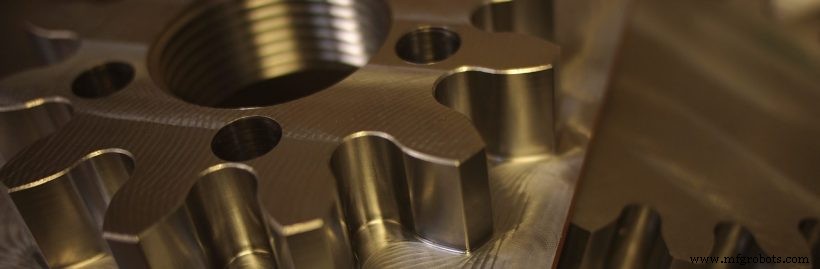
Since the early days of additive manufacturing, the industry has debated whether 3D printing could eventually replace CNC machining and other established methods. As the technology has matured, it’s clear that 3D printing will not supplant CNC; instead, it has carved out a niche as a powerful tool for rapid prototyping, bespoke parts, and limited‑run production.
While the “3D printing revolution” has not yet arrived, incremental successes have earned the technology credibility. Even The Economist has acknowledged the growing promise of additive manufacturing, helping shift the perception from hobbyist curiosity to industrial asset.
Manufacturers are increasingly embracing hybrid workflows that combine multiple technologies. For example, metal 3D printing often requires post‑processing—CNC machining is commonly used for final shaping and finishing. Consequently, facilities that adopt metal additive manufacturing still rely on CNC equipment. Rather than a conflict, this coexistence allows CNC to handle high‑volume, precision tasks while 3D printing delivers prototypes or customized parts that would be prohibitively expensive to produce otherwise.
Similar synergies appear between 3D printing and injection moulding. Companies are now using additive manufacturing to produce moulds at unprecedented speeds, then leveraging the quality and repeatability of traditional moulding for production runs.
These developments have spurred new hybrid machines. In March 2017, a Kickstarter project unveiled a modular printer capable of 3D printing, CNC shaping, and laser engraving in a single unit. While it remains to be seen whether such a device can match dedicated industrial equipment, the concept underscores a growing industry focus on integrated solutions.
Given this landscape, evaluating 3D printing solely on its potential to dominate manufacturing is misguided. The future lies in complementary, streamlined processes that blend additive and subtractive techniques. Establishing best practices for integrated workflows will unlock efficiencies and enable teams to bring innovative concepts to life more rapidly.
As the manufacturing sector navigates this convergence, we are committed to developing the tools and systems that support seamless integration. With the right framework, engineers can fully exploit the strengths of each technology to deliver breakthrough products.
3D printing
- Choosing Between 3D Printing and CNC Machining for Plastic Parts
- CNC Machining vs. 3D Printing: Which Technology Delivers Superior Value for Your Projects?
- Comparing 3D Printing and CNC Machining: Which Is Best for Your Projects
- CNC Machining vs. 3D Printing: Which Technology Delivers Superior Performance?
- CNC Machining vs 3D Printing: Why CNC Leads in Precision, Cost, and Surface Quality
- Choosing Between CNC Machining and 3D Printing for Master Pattern Production
- CNC Machining vs. 3D Printing: A Clear Guide to Fabrication Choices
- CNC Machining vs 3D Printing: Key Differences Explained
- Optimizing CNC Machining: Key Insights and Best Practices
- CNC Machining vs. 3D Printing: Choosing the Right Production Method