



Carbon’s Digital Light Synthesis: Revolutionizing 3D Printing in the UK
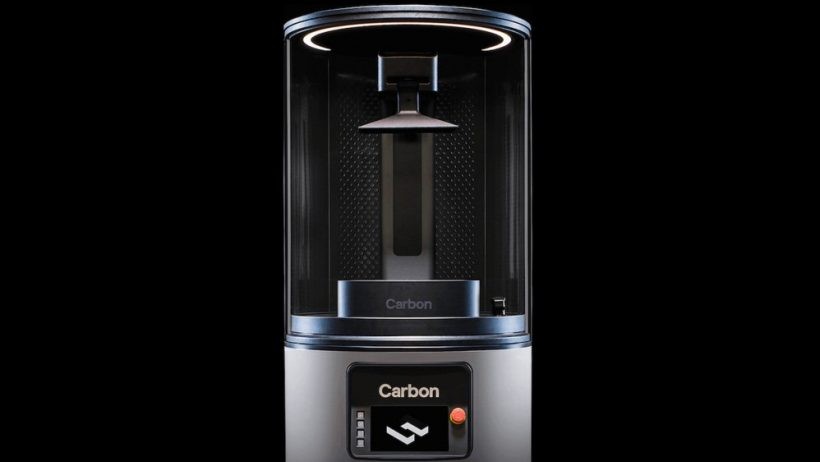
Image: Carbon’s M2 3D Printer [Source: Carbon]
Paragon Rapid Technologies, a leading 3D‑printing specialist and long‑time AMFG customer, has joined forces with Carbon to introduce its proprietary Digital Light Synthesis (DLS) technology to the UK. This partnership marks Paragon’s first UK production collaboration with Carbon, expanding its ability to deliver end‑use parts via additive manufacturing and reinforcing Carbon’s global footprint.
But what exactly is Digital Light Synthesis, and why is it poised to transform additive manufacturing? Below we break down the technology, its key advantages, and real‑world applications that illustrate its impact.
Digital Light Synthesis: A Breakthrough in 3D Printing
DLS builds on Carbon’s patented CLIP (Continuous Liquid Interface Production) platform. Unlike conventional 3D‑printing methods, DLS projects UV light through an oxygen‑permeable membrane into a vat of curable resin. The part is then thermally cured in a dedicated bath or oven, setting its mechanical properties. The result is an engineering‑grade part that combines speed, strength, and finish quality rivaling traditional injection moulding.
Key benefits of DLS include:
- Rapid Production – Eliminating tooling and prototyping stages allows designers to iterate quickly and mass‑produce thousands of parts in a fraction of the time required by other processes.
- Superior Mechanical Properties – DLS parts exhibit high resolution, near‑isotropic strength, and surface finishes comparable to injection‑moulded plastics. Heat treatment ensures durability and consistency across the part.
- Material Flexibility – The platform supports a broad palette, from rigid polyurethane (RPU), a tough alternative to ABS and nylon, to elastomeric polyurethane (EPU), offering tear‑resistant elasticity.
Industry‑Shaping Use Cases
DLS is already redefining the product development cycle. By removing the need for tooling and extensive prototyping, companies can move directly from design to production, dramatically cutting time‑to‑market.
Phil Adamson, Managing Director of Paragon, notes:
“DLS is game‑changing for the industry. Our customers can go from design to production with one technology, significantly reducing development costs and eliminating tooling requirements.”
Concrete examples include:
- Adidas Futurecraft 4D – Carbon’s partnership with Adidas produced custom, high‑performance midsoles that vary in stiffness across the shoe. DLS enabled in‑design testing, eliminating prototyping and accelerating production to an anticipated 100,000 pairs by year‑end.
- Icase Protective Cases – Using the M2 printer, Icase leverages DLS to create complex elastomer lattice structures, delivering lighter, stronger, and impact‑resistant phone cases.
While it remains to be seen whether DLS will fully unlock mass production at scale, the growing number of collaborations—most recently with Paragon—signals a clear trend toward additive manufacturing as a mainstream production method.
3D printing
- Virtual Inventories & 3D Printing: Securing the Future of Distributed Manufacturing
- 3D Printing: Empowering Communities in the Developing World
- The Future of Cruising: How IoT Is Transforming the Passenger Experience
- Embrace Digital Transformation: How Industries Thrive in the New Tech Era
- Revolutionizing Spare Parts: The Impact of 3D Printing
- Choosing the Right 3D Printing Technology: Expert Tips from Fast Radius
- Carbon DLS 3D Printing: Advanced Digital Light Synthesis Technology
- Cutting 3D Printing Costs: Proven Strategies from Design to Post-Processing
- Cat® Technology: Revolutionizing Construction Efficiency and Safety
- How Rapid Prototyping is Revolutionizing EV Manufacturing