



Why 3D Printing Is a Magnet for Investors

Industrial 3D printing has become a headline‑grabbing sector, drawing hundreds of millions of dollars in funding over the past year. In Q1 2019 alone, the industry secured notable deals: Desktop Metal raised $160 million, Markforged $82 million, and 3D Hubs $18 million. As the additive manufacturing (AM) landscape evolves, investors are keen to stake a claim in its most promising segments.
Early Hype and Lessons Learned
The early 2010s buzzed with optimism as patents expired and a consumer‑oriented “3D printing revolution” was imagined. The vision promised home‑based printers that would let anyone print objects on demand. However, the market failed to materialize: printers were unwieldy, and no mass‑appeal consumer application emerged. Between 2014 and 2016, many desktop‑printer start‑ups collapsed and major stocks, such as 3D Systems and Stratasys, plummeted from their $100‑$136 highs.
The Rise of Industrial 3D Printing
By 2018, the global AM market hit $9.3 billion, and forecasts project a jump to $20 billion by 2022 (Smartech Publishing). The shift from consumer hype to industrial application has unlocked new opportunities: rapid prototyping, tooling, and, increasingly, end‑use parts. While additive manufacturing still represents a fraction of the $12 trillion manufacturing sector, its share is poised to grow as the technology matures and scales.
Industrial 3D printing is not a wholesale replacement for conventional manufacturing but a complementary tool that offers novel design freedom, cost savings, and faster time‑to‑market. These advantages make it an attractive proposition for investors, reflected in nearly $1.3 billion raised in early‑stage AM deals in 2018 alone (Wohlers Report 2019).
Hardware Investment Highlights
Desktop Metal – Disrupting Metal Production
Founded: 2015
Last Round: Series E
Funding: $436.8 million
Investors: Koch Industries, Ford Motor Company, Koa Labs
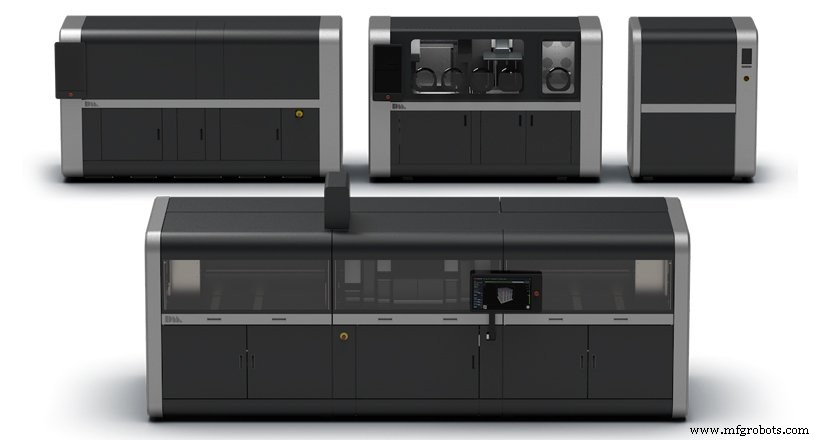
Desktop Metal, dubbed the most‑funded private 3D printing company, combines leading metallurgical expertise with a new binder‑jetting technique called Single Pass Jetting (SPJ). By leveraging inexpensive metal‑injection‑molding powders, the company claims faster, scalable production that rivals traditional casting. After a $160 million Series E, the company’s valuation topped $1.5 billion, securing its status as a 3D‑printing unicorn.
Carbon – Digital Light Synthesis for High‑Volume Parts
Founded: 2013
Last Round: Series D
Funding: $422 million
Investors: GE Ventures, Sequoia Capital, GV
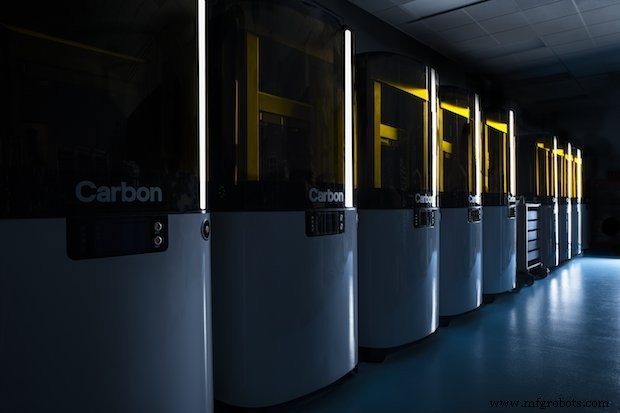
Carbon’s proprietary Digital Light Synthesis™ (DLS) technology prints continuously through an oxygen‑permeable window, eliminating visible layers and producing high‑surface‑quality parts. Its high‑profile collaborations—Adidas midsoles, Ford automotive components—demonstrate DLS’s scalability. With a valuation of $1.7 billion, Carbon exemplifies how breakthrough technology can attract significant capital.
Markforged – Affordable Metal & Composite Printing
Founded: 2013
Last Round: Series D
Funding: $136.8 million
Investors: Summit Partners, Matrix Partners, Next47
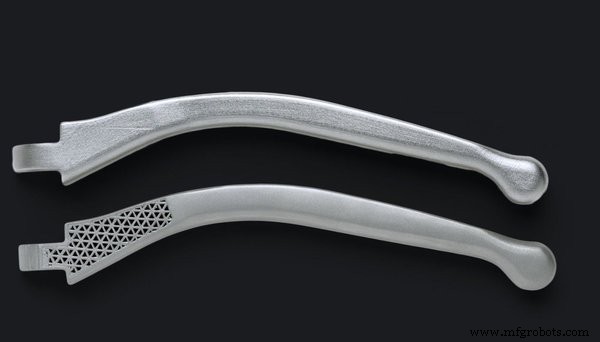
Markforged pioneered continuous‑fiber reinforcement in polymers and later introduced the Metal X printer at under $100,000. This lowered entry barriers for small‑to‑medium enterprises and catalyzed a surge in demand for strong, lightweight parts. The $82 million Series D round fuels product development and global expansion.
Formlabs – SLA & SLS for the Professional Market
Founded: 2011
Last Round: Series C
Funding: $103.7 million
Investors: New Enterprise Associates (NEA)
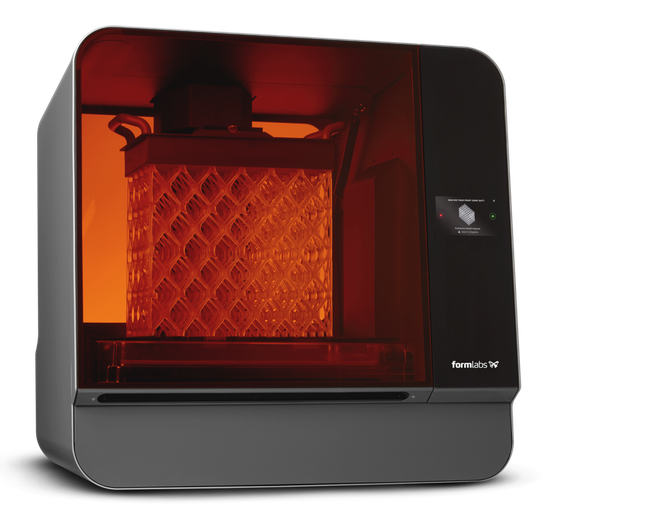
From a 2012 Kickstarter to a $1 billion valuation, Formlabs has democratized high‑quality SLA printing with the Form 1 series and expanded into SLS with the Fuse 1 system. Its consistent 100% YoY growth over five years underscores its strong market traction.
Services & Platforms – Accelerating On‑Demand Manufacturing
3D Hubs – From Community Marketplace to B2B Provider
Founded: 2013
Last Round: Series C
Funding: $29.5 million
Investors: Endeit Capital, Hearst Ventures, EQT Ventures

3D Hubs transitioned from a peer‑to‑peer marketplace to a B2B network that offers additive manufacturing alongside CNC and injection molding. Its $18 million Series C round reflects investor confidence in distributed manufacturing’s potential to streamline supply chains.
Fast Radius – Smart Factory for Rapid Production
Fast Radius recently closed a $48 million Series B, positioning itself as a full‑service contract manufacturer. By integrating 3D printing with digital workflow tools, it promises speed and quality that attract high‑profile clients, including recognition by the World Economic Forum as a leading global factory.
AMFG – AI‑Powered Workflow Solutions
AMFG secured Innovate UK funding to enhance AI in production scheduling and quality assurance. This investment fuels further automation and scalability across its additive manufacturing platform.
Conclusion – A Win‑Win for Investors and Industry
The surge in capital for both hardware innovators and digital‑manufacturing platforms illustrates the broader confidence that 3D printing will reshape production landscapes. As new technologies mature and adoption accelerates, the industry’s growth trajectory will likely continue to attract venture capital, rewarding early‑stage investors and expanding the additive manufacturing ecosystem.
3D printing
- Why 3D Printing Is Booming: Key Drivers & Future Outlook
- How Global Leaders Are Integrating 3D Printing Into Their Core Operations
- Why CT Scanning Is Revolutionizing Quality Assurance in 3D Printing
- Why Automation Is Essential for Scaling 3D Printing Service Bureaus
- Why Origin One Is a Game‑Changer for Production‑Ready 3D Printed Parts
- Discover How Easy 3D Printing Is: A Beginner’s Guide
- Choosing Between Nylon and PETG Filaments for 3D Printing: Pros, Cons, and Best Applications
- SLS vs FDM 3D Printing: Which Technology Should You Choose?
- The Critical Role of Layer Height in 3D Printing Quality
- The Hidden Risks of 3D Printing in Product Development