



Why Origin One Is a Game‑Changer for Production‑Ready 3D Printed Parts

Stratasys’ newest addition, the Origin One, is a vat‑based resin 3‑D printer now shipping worldwide. While the company’s Polyjet line has long excelled at detailed prototypes, the Origin One targets full‑scale production parts, marking a new chapter in Stratasys’ resin capabilities.
Programmable Photopolymerization (P3) Drives Precision Production
The Origin One harnesses Programmable Photopolymerization (P3). A 4K projector projects a pattern that partially cures each layer, after which a UV chamber completes the cure. A pneumatic separation system lifts finished parts from the vat, preventing adhesion and enabling both bulky and finely detailed geometries. Stratasys collaborates with leaders like DSM and Henkel, continuously certifying new high‑performance resins, and offers an Open Materials License to unlock the full material palette for research and production.
In an era of disrupted supply chains, businesses demand cost‑effective, agile solutions that deliver production‑quality parts quickly. The Origin One fulfills that need with a broad material range, full process control, and the ability to produce end‑use parts that meet stringent industry standards.
Extensive Material Portfolio
At launch, the Origin One supports 12+ materials, with new resins added regularly. The high‑performance Henkel Loctite 3955, for example, boasts HDT > 300 °C, high stiffness, and flame, smoke, and toxicity compliance—making it ideal for aerospace and other demanding applications.
Aerospace Success Story
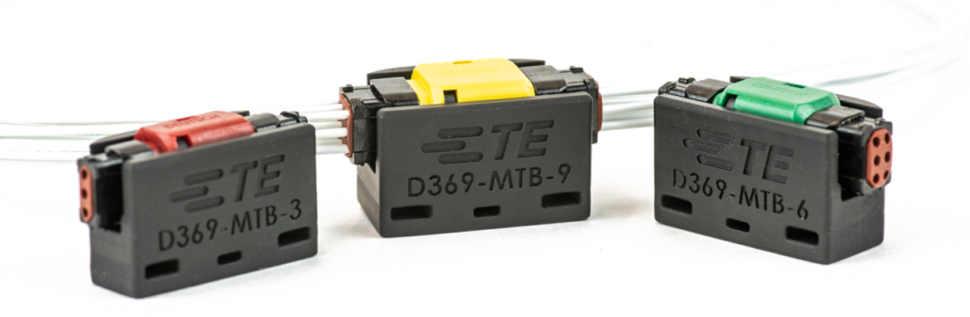
Today, we’re seeing the hardware, the software, and the materials from Stratasys really come together to begin making production scale a reality for us. We believe this helps make TE Connectivity a more agile and cost‑effective partner for many of the world’s leading OEMs, in industries from automotive to aerospace to appliances, as we work to build a more connected future.
Mark Savage, Senior Manager, Additive Manufacturing of TE Connectivity
TE Connectivity leveraged the Origin One to produce a helicopter connector holder that met a ±0.002‑in accuracy requirement—an impossible target for FDM or injection molding. The result was a production‑grade part delivered on schedule and within budget.
Medical Applications Meet Regulatory Demands
Henkel’s MED412 and MED413 resins satisfy ISO 10993‑5 and ‑10 biocompatibility standards when printed with a validated workflow. MED412 offers polypropylene‑like ductility and impact strength, while MED413 mimics ABS for engineering uses.

Eventys Partners, a full‑service product‑launch agency, used the Origin One to produce the FloSonix lice‑eradication device. The handheld tool required biocompatible, heat‑resistant material, lightweight construction, textured grips, and an appealing look—all while keeping costs low for a 200‑300 unit annual run. The Origin One delivered the parts in a single printer, with a second printer scaling to meet demand.
The Origin One has allowed us to not only adapt to changing supply chains, but plan our development in stages; for example, we often like to refine the product in the future, but not immediately. Additive manufacturing allows us to iterate incrementally without having to recut molds, retool, or have to dispose of excessive old stock; this saved us both time and capital that would normally be at stake during redesigns.
TJ Root, Senior Design Engineer at Eventys Partners
Sports Equipment: High‑Performance Parts in Extreme Conditions

Slicelab and f=f design studios partnered with the Origin One and Henkel Loctite to reimagine the snowboard high‑back. The machine’s ability to print extended bridges and steep overhangs, combined with a lattice support structure, enabled variable flexibility that injection molding could not achieve.
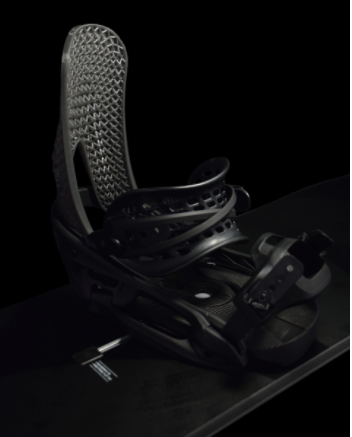
The chosen material, Henkel Loctite IND 3172, delivered high impact strength and moderate flexibility. A test rider installed the printed high‑back on his snowboard the next day and rode through Breckenridge Resort’s slopes with confidence.
With additive manufacturing being where it is today, it’s possible to forecast that less hardware components or sizing adjustment features would need to be built into products in the future. Being able to plug in the mechanical properties of the material into parametric software allows us to simply tweak a few inputs to generate geometry for any type of difference in performance we are looking for, whether it be a casual day of riding or an intense powder day.
Diego Taccioli, Co‑founder of Slicelab
Additional Impactful Applications
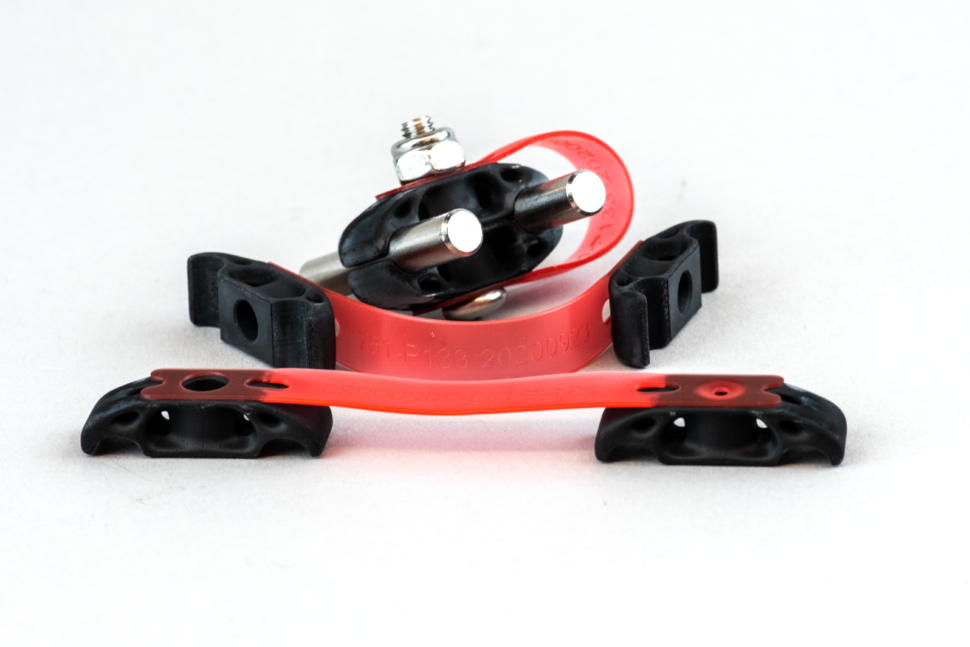
F16 Aircraft Hydraulic Cable Clamp – Printed on the Origin One using Henkel 3955, this part meets strict accuracy, temperature, vibration, flammability, and chemical exposure requirements. The finished part is twice as strong and 5% lighter than the original design.
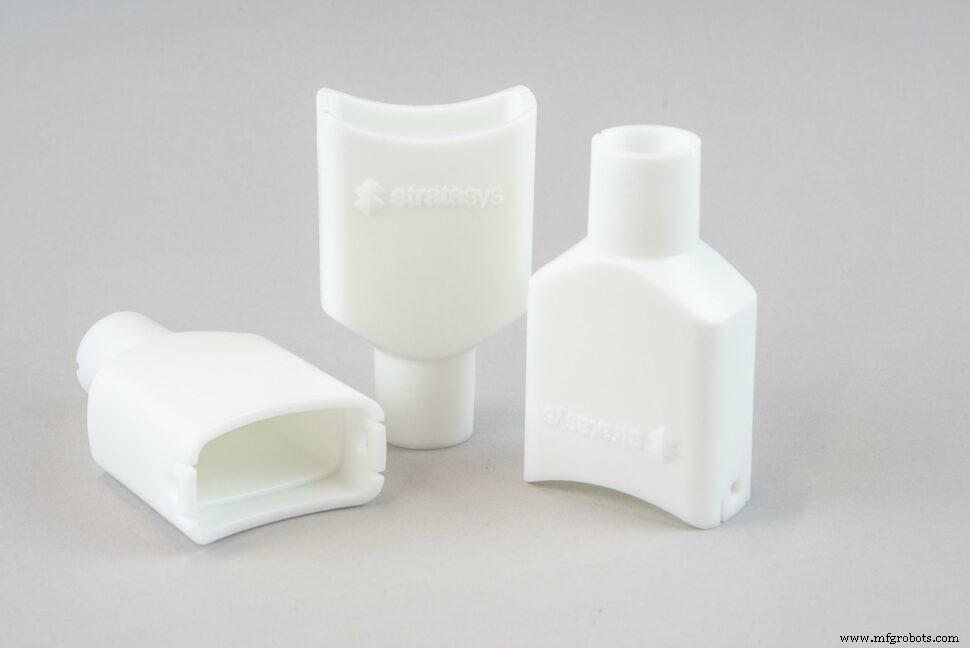
Respirator Adapter – Produced with Henkel MED413, the adapter offers the biocompatible properties needed during the COVID‑19 respirator shortage, enabling rapid, short‑lead production.
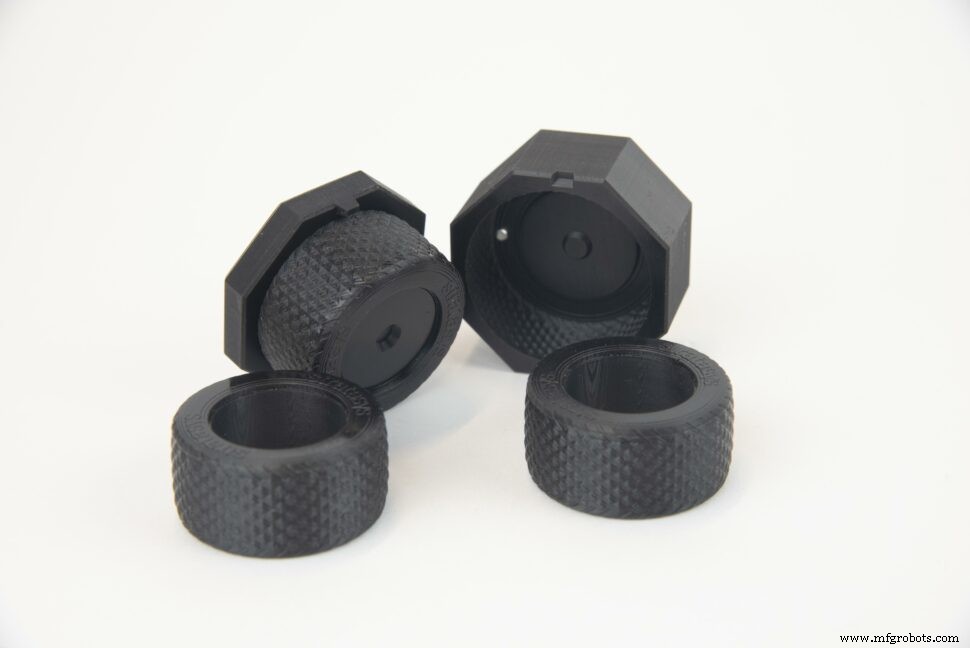
PU Wheel Mold – The Henkel IND403 mold has produced over 1,500 polyurethane wheel parts without degradation, demonstrating durability across multiple chemistries.
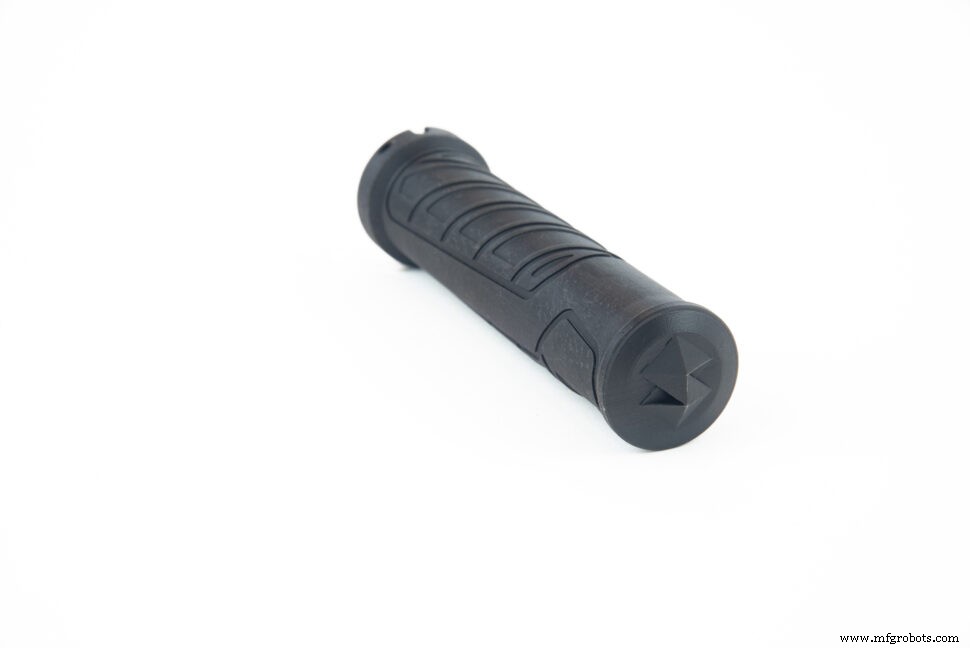
Bike Handlebar Grip – Crafted from Henkel IND402, the grip delivers impact absorption, flexibility, and UV stability for long‑term performance.
Mass Production Made Easy: The Bull Rider Case Study
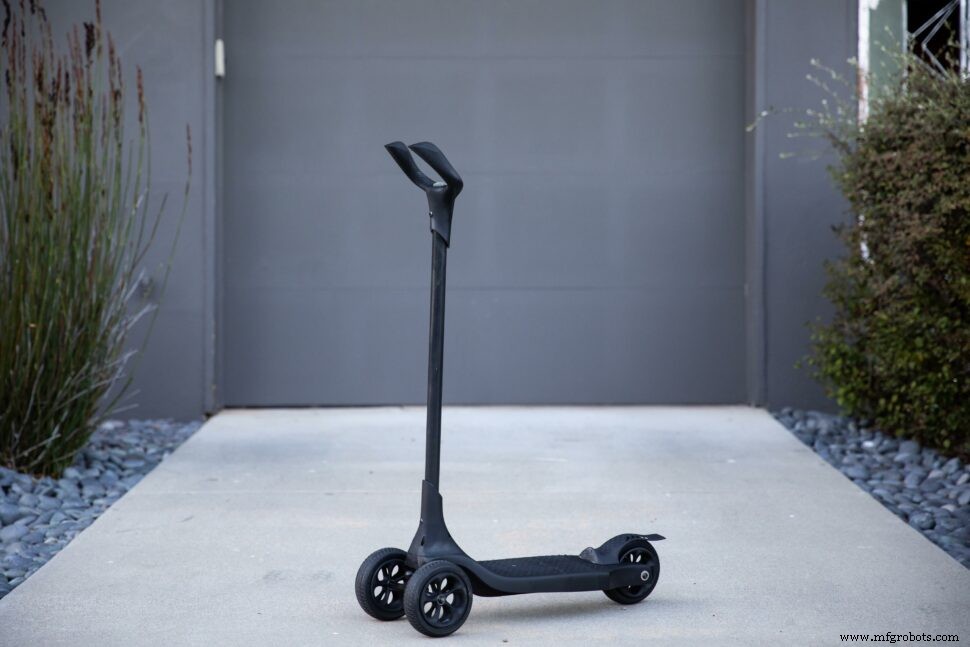
The Bull Rider kick scooter showcases the Origin One’s ability to produce complex, production‑grade parts. Using Stratasys Dura56, the team printed over 90% of the scooter’s mass in just 48 hours across three printers, completing the project in 81 days from concept to finished product.
Learn more through our infographic or watch the full video to see the Origin One in action.
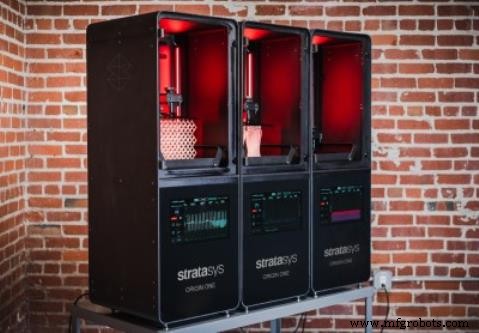
Achieve Exceptional Accuracy.
Learn More About This Amazing Technology And Start Achieving Exceptional Print Quality
3D printing
- Emirates Embraces 3D Printing for Aircraft Cabin Parts, Boosting Efficiency and Sustainability
- 3D Printing: From Rapid Prototyping to Full‑Scale End‑Part Production
- 3D Printing for Turbine Parts: Accelerating Development, Performance, and Sustainability
- Stratasys Origin One: Precision 3D Printing for Production-Grade Parts
- What 3D Printing Needs to Evolve: Top 3 Industry Demands Revealed at AMUG
- 3D Printing for Production: The Missing Standard That Holds Back Mass Adoption
- Onyx: The Next Leap in Production‑Ready 3D Printing
- Revolutionizing Flexible Part Production: AFP Meets 3D Printing
- Revolutionizing Mass Production: The Key Advantages of 3D Printing
- Explore the Versatile Applications of 3D Printing in Industry and Healthcare