



Why Bronze Is the Preferred Material for Ship Propellers
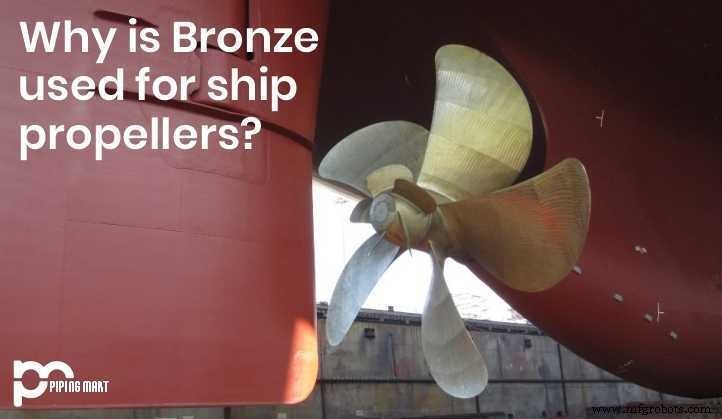
A propeller is a rotating fan‑shaped component that converts the engine’s power into thrust, propelling a vessel forward. Its efficiency hinges on precise manufacturing and material selection.
Power from the ship’s main engine is transferred through a series of shafts—crankshaft, intermediate shaft, and propeller shaft—before reaching the propeller itself. Depending on speed, size, and maneuverability requirements, vessels may carry one, two, or even three propellers.
Manufacturing of Marine Propellers
Marine propellers must withstand the harsh, corrosive nature of seawater. Modern production methods involve welding or forging blades onto a central hub. Forged blades are more robust and offer superior performance, albeit at a higher cost, while welded blades are cost‑effective and suitable for many applications.
Why Bronze?
Bronze, an alloy of copper and tin, has been the material of choice for maritime applications for centuries. Its combination of corrosion resistance, machinability, and mechanical strength makes it uniquely suited for propellers.
- Exceptional Machinability
Bronze’s composition—typically >80 % copper and ~12 % tin—provides a balanced microstructure that is easy to machine with minimal tool wear. Small additions of aluminum, manganese, nickel, or zinc fine‑tune its properties without compromising workability.
- Corrosion Resistance in Saltwater
Bronze forms a protective oxide layer that guards against chloride‑induced corrosion and cavitation erosion. These characteristics keep the propeller surface smooth and functional even after prolonged exposure to seawater.
- Superior Toughness
With a density roughly 10 % lower than steel, bronze offers a high strength‑to‑weight ratio. This toughness allows the propeller to endure heavy loads, impact, and cyclic stresses without failure.
- Ease of Repair
When damage occurs—such as nicks or holes—bronze can be patched or repaired in situ, often with simple welding or casting techniques. This reduces downtime and maintenance costs compared to steel or composite alternatives.
In summary, bronze’s blend of durability, resilience, and serviceability ensures that ship propellers remain reliable workhorses in the demanding marine environment.
Metal
- Why Zirconium Is Essential for Nuclear Reactor Safety and Efficiency
- Key Applications of Hafnium: From Nuclear Control Rods to Advanced Alloys
- Why Fiberglass Cloth Revolutionized Surfboard Design
- Why Origin One Is a Game‑Changer for Production‑Ready 3D Printed Parts
- Inconel Alloys: Key Applications and Benefits in High‑Temperature, Corrosion‑Resistant Environments
- Niobium: Applications in Industry, Jewelry, Gravimetry, and Orthopedic Implants
- Aluminum Bronze: Applications, Properties, and Advantages
- Why Titanium is the Preferred Metal for Orthopedic Implants
- Bronze Alloys in Military Applications: From Ancient Armor to Modern Defense
- Why C63200 Aluminum Bronze Is Ideal for High-Performance Industrial Applications