



Unique Facts About Niobium: Properties, Uses, and Global Significance
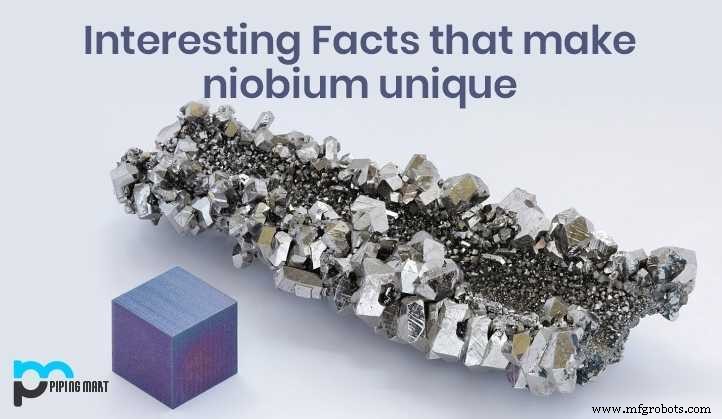
Introduction to Niobium
Niobium is a lightweight, crystalline, and highly ductile transition metal prized for its exceptional resistance, strength, and biocompatibility. Its corrosion resistance makes it an ideal hypoallergenic alternative to nickel in jewelry, while its robust mechanical properties allow it to be shaped into plates, sheets, cylinders, and wires.
Primarily sourced from the minerals pyrochlore and columbite—historically called columbium—niobium is extracted through a hydrofluoric acid process that isolates a liquid niobium‑containing solution. This solution is converted to niobium hydroxide, then to niobium pentoxide, and finally reduced with aluminum thermite to yield high‑purity metal. Superconductor‑grade niobium is produced by repeated vacuum‑electron‑beam refinement, minimizing impurities to meet stringent electrical performance requirements.
Niobium’s low toxicity and excellent mechanical performance make it indispensable in industries ranging from superconducting MRI magnets to aerospace and automotive components.
Applications of Niobium
Niobium is a cornerstone of superconducting alloys, often combined with titanium and tin to create the high‑field magnets used in MRI scanners. Beyond medical technology, it plays a vital role in welding, aerospace, optics, numismatics, and jewelry.
Intriguing Facts About Niobium
- Named After a Greek Goddess – Niobium derives its name from Niobe, the mythological figure associated with tears. The element’s close relationship with tantalum, named for Tantalus, reflects their similar physical and chemical traits.
- Significant Mining in Brazil and Canada – According to the U.S. Geological Survey, over 95 % of global niobium reserves are located in Brazil, with an additional 3.5 % in Canada. The Earth’s crust contains enough niobium to sustain production for roughly 500 years.
- Dominant Use in the Steel Industry – Approximately 80 % of mined niobium is added to steel to act as a grain‑refiner and precipitation hardener. This enhances strength, high‑temperature performance, and corrosion resistance in pipelines, automotive bodies, ship frames, and rail tracks.
Metal
- Niobium in Dental Medicine: From Implants to Radiation Shielding
- 6 Key Insights Into Vanadium
- Tantalum: 5 Fascinating Facts About the High‑Temperature Refractory Metal
- 8 Fascinating Facts About Zirconium
- 6 Fascinating Facts About Nickel – History, Properties, and Global Impact
- 7 Expert-Backed Facts About Hafnium: Discovery, Properties, and Modern Applications
- 7 Fascinating Facts About Tungsten: From Discovery to Modern Applications
- Rhenium: 6 Fascinating Facts About This Rare, High‑Melting Metal
- Titanium: 8 Key Properties That Make It the Ultimate Marine Metal
- Proven Techniques to Strengthen Metals for Industrial Applications