



Titanium: 8 Key Properties That Make It the Ultimate Marine Metal
8 Key Properties That Make Titanium the Ultimate Marine Metal
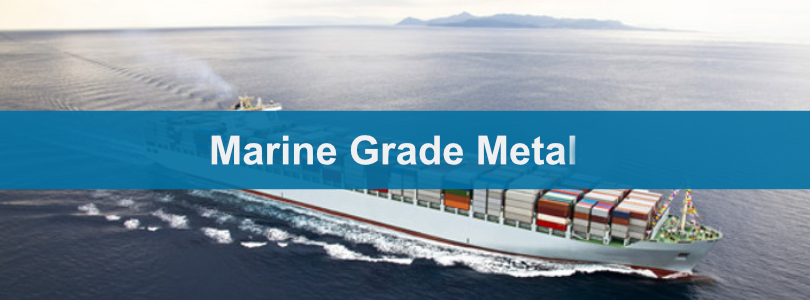
Titanium and its alloys are celebrated worldwide for their remarkable performance in demanding environments. In the marine sector, they earn the nickname “marine metal” because of their combination of lightness, strength, and corrosion resistance. This article details eight critical properties that establish titanium as the material of choice for modern marine engineering.
1. Low Density, High Specific Strength
With a density of 4.51 g / cm³—only 57 % that of steel—titanium offers exceptional weight savings. Its specific gravity is less than twice that of aluminum, yet its tensile strength surpasses aluminum by a factor of three. The result is the highest specific strength among commonly used industrial alloys, enabling lighter, more powerful offshore structures and faster, more maneuverable submarines.
2. Superior Corrosion Resistance
Titanium is the gold standard for seawater corrosion at ambient temperatures. It remains resilient in polluted, hot (≤120 °C), and turbulent waters, thanks to a self‑passivating oxide film that reforms instantly when damaged. This property eliminates the need for protective coatings, reduces material usage, and lowers maintenance costs while extending service life.
3. Resistance to Seawater Erosion and Cavitation
Unlike most metals, titanium’s critical velocity in seawater exceeds 27 m / s, preventing the rapid removal of its protective film. Erosion–corrosion tests confirm its durability in high‑speed flow, and cavitation experiments show it among the most resistant materials available.
4. High Impact Resistance
Titanium alloys exhibit outstanding impact toughness, essential for marine equipment that must endure wave‑induced shocks. This enhances safety, reliability, and operational longevity.
5. Non‑Magnetic Nature
The material’s non‑magnetic characteristic minimizes electromagnetic interference. Submarines built from titanium experience reduced magnetic signatures, lowering detection risk from magnetic‑sensitive anti‑submarine systems and mines.
6. High Sound Transmission Coefficient
Its acoustic properties make titanium ideal for sonar shrouds on submarines and aircraft carriers, improving detection sensitivity and range while maintaining structural integrity.
7. Excellent Workability
Titanium can be machined, forged, and welded into diverse shapes—plates, rods, tubes, wires, foils—while retaining strength. Weldability coefficients above 0.9 and minimal post‑weld heat treatment simplify large‑scale construction.
8. Sustainable Recyclability
After decades of service, titanium components can be re‑processed with negligible weight loss, yielding lower‑grade alloys for reuse. This closed‑loop approach supports environmental stewardship.
Conclusion
Understanding these properties reveals why titanium dominates marine applications. For deeper insight into titanium and other refractory metals, visit Advanced Refractory Metals (ARM), a global leader headquartered in Lake Forest, California, supplying high‑quality tungsten, molybdenum, tantalum, rhenium, titanium, and zirconium at competitive prices.
Metal
- Titanium Scrap Recovery: Turning Waste into Value
- The Evolution of Titanium: From Discovery to Modern Applications
- Titanium: Key Physical Properties and Industrial Significance
- Titanium: Key Chemical Properties and Corrosion Behavior
- Rhenium Metal Powder: Applications in Superalloys, Catalysts, and Precision Instruments
- Unique Facts About Niobium: Properties, Uses, and Global Significance
- Chromium: Essential Trace Element, Properties, and Practical Applications
- Bare Metal Cloud: API‑Driven Infrastructure for Rapid Edge & Kubernetes Deployments
- Proven Techniques to Strengthen Metals for Industrial Applications
- Copper Alloy 3D Printing: Superior Mechanical Properties & Precision Parts