



The Evolution of Titanium: From Discovery to Modern Applications

A Brief History of Titanium
Curious about when titanium was first identified and how it entered industrial use? This article traces titanium’s discovery, purification milestones, and its pivotal roles across industries.
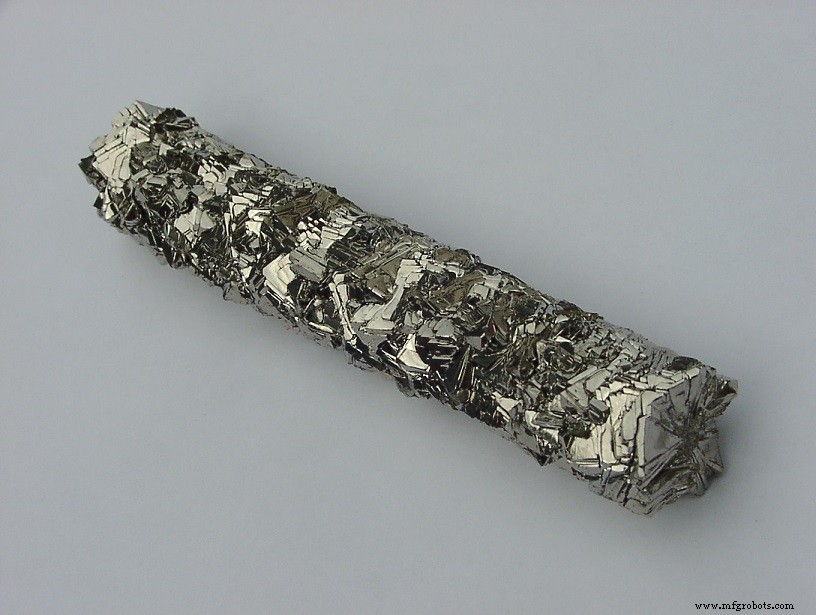
History Of Titanium
The Discovery of Titanium
Reverend William Gregor, a British priest and amateur mineralogist, first detected titanium in 1791 while examining a magnetically attracted black sand near Manaccan, England. He noted an unidentifiable metal oxide alongside iron oxide and reported his findings to the Royal Geological Society of Cornwall and the German Annals of Chemistry.

Reverend William Gregor
Almost simultaneously, Franz-Joseph Müller von Reichenstein produced a similar compound but did not recognize it. In 1795, chemist Martin Heinrich Klaproth, while studying rutile, isolated the same oxide and named the metal titanium after the Greek Titans. He verified Gregor’s discovery by testing samples from Manaccan.

Martin Heinrich Klaproth
Progress in titanium purification was slow; it took nearly a century before a practical process emerged. In 1910, American chemist Matthew A. Hunter produced 1 gram of 99.9% pure titanium for the first time.
Industrial Development of Titanium
World‑scale production began in 1948 when the United States used a magnesium reduction process to create 2 tons of sponge titanium. Since then, the U.S. has led global production, followed by China, the Commonwealth of Independent States, Japan, and Europe—forming the top five producers and consumers.
Applications Across Sectors
Titanium’s high strength‑to‑weight ratio and corrosion resistance make it indispensable in aerospace, defense, automotive, sporting goods, and many industrial fields.
In aerospace, titanium is used for rocket nozzle sleeves, satellite shells, spacecraft cabins, and 85% of the pressure vessels on Apollo missions. In defense, Russia pioneered the all‑titanium nuclear submarine K‑162 in 1968, a vessel that has remained operational for over three decades. Automotive manufacturers employ titanium in connecting rods, crankshafts, valves, and fasteners; General Motors showcased an all‑titanium “Firebird II” body in 1956. Military hardware such as tanks, missiles, and firearms also benefit from titanium’s robustness.
Sports equipment—including golf clubs, tennis rackets, fencing gear, sprint spikes, climbing gear, skis, and fishing tackle—takes advantage of titanium’s lightweight yet durable properties. Additionally, the material is widely used in construction, marine engineering, metallurgy, chemical processing, and medical devices.
Conclusion
We hope this overview clarifies titanium’s rich history and its contemporary significance. For deeper insight into titanium and titanium alloys, visit Advanced Refractory Metals (ARM), a leading global supplier of high‑quality refractory metals and alloys.
ARM, headquartered in Lake Forest, California, offers titanium, titanium alloys, tungsten, tantalum, rhenium, and zirconium at competitive prices.
Metal
- Titanium Scrap Recovery: Turning Waste into Value
- From Ancient Plywood to Modern Fiberglass: A Brief History of Composite Materials
- Tracing the Evolution of Metal Manufacturing: From Ancient Tools to Modern Tech
- Tracing the Evolution of Welding: From Ancient Origins to Modern Innovation
- The Evolution of Metal Stamping: From Ancient Coinage to Modern Innovation
- The Evolution of Printed Circuit Boards: From 1940s Origins to Modern High-Speed Design
- From Invention to Innovation: The Evolution of 3D Printing in Medicine
- The Evolution of Stereolithography: From Inception to Modern 3D Printing
- CNC Machining: A Comprehensive Overview of its Evolution and Precision Power
- The Evolution of Plastic Injection Molding: From Inception to Modern Manufacturing