



How I Validated a Profitable 3D‑Printed Faucet Extender for Kids
Most entrepreneurs spend weeks chasing a product idea only to discover it’s a dead end. I cut that risk short by testing concepts early, so I can focus on those that truly have upside.
Last week I evaluated a seemingly simple item: a faucet extender that clips onto a tap and lets toddlers reach the water stream. I almost scrapped it—here’s why I kept it on the list.
Step 1: Start With a Product Type List
Before I even touch a keyword tool, I compile a list of product categories that solve real problems—holders, adapters, extenders, mounts, organisers, and so on. The “extender” category immediately flagged a faucet solution that has a clear, searchable use case and a specific buyer.
Step 2: Generate Seed Keywords for Keyword Keg
Keyword Keg excels at expanding suffixes but doesn’t reorder words. Therefore I front‑load every realistic lead word a buyer might type. For this product, the seeds were:
faucet extender, tap extender, sink extender, spout extender
Each seed becomes a launchpad; Keyword Keg then surfaces the full keyword universe from each one.
Step 3: Run the Keywords and Filter the Results
I entered the seeds into Keyword Keg, set to Amazon US, and reviewed every returned keyword—including lower‑volume terms that can accumulate significant demand.
Here’s the initial output:
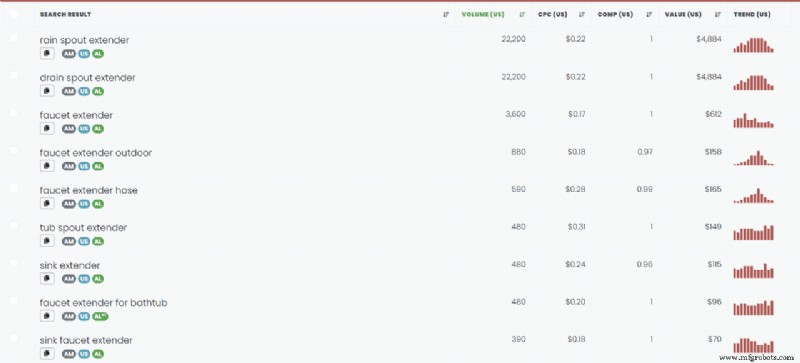
Immediately, the two highest‑volume terms—rain spout extender and drain spout extender—were unrelated to tap extenders. I removed them. I also filtered out generic phrases such as faucet extender outdoor and rotating faucet extender that pointed to plumbing hardware rather than a kids’ hand‑washing accessory.
The remaining, buyer‑specific terms were:
faucet extender kids (210), faucet extender for toddlers (140), faucet extender for kids (50), sink extender for toddlers (50), sink extender for kids (30), kids sink extender (30), tap extender for kids (10), spout extender for kids (10), faucet handle extender for kids (10), water faucet extender for kids (10)—a total of roughly 550 searches per month.
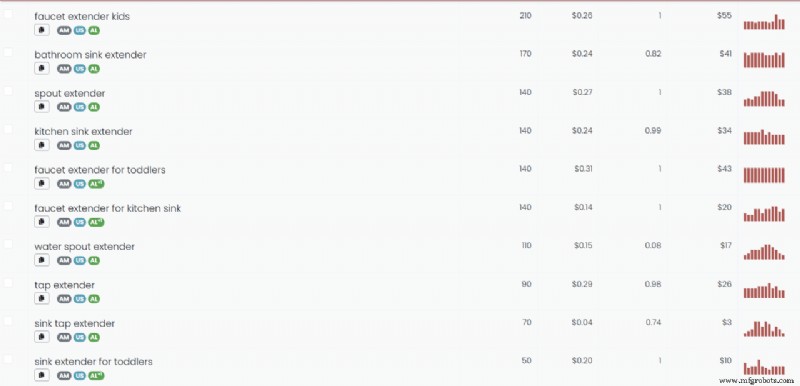
This volume comfortably exceeds my 200‑search threshold, confirming genuine demand.
Step 4: Check Amazon to Validate the Product Type
High keyword volume alone isn’t enough; I needed to see what buyers were actually buying. I searched the most relevant terms on Amazon.
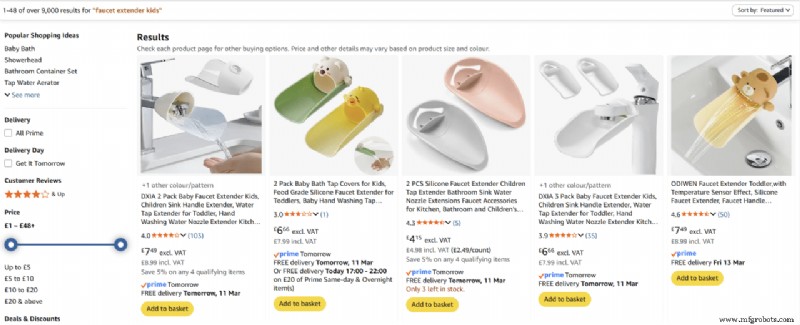
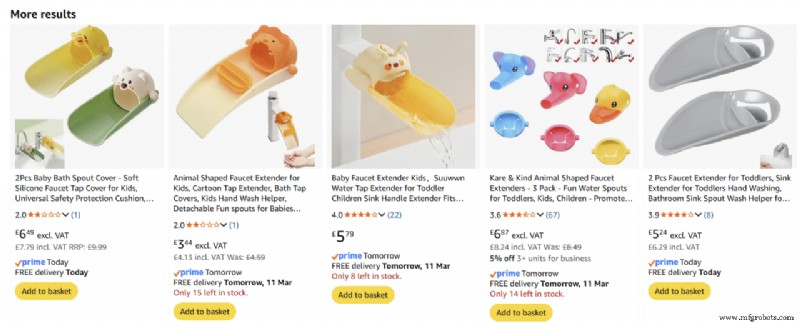
The market is dominated by inexpensive, injection‑moulded silicone and plastic items from Chinese manufacturers, priced between $4 and $9. Common designs feature bears, ducks, elephants, and lions—functional but generic.
What stood out was a Munchkin listing: a two‑pack faucet extender priced at $23 with over 16,700 reviews. In a sea of $4–$9 products, this brand leveraged trust to command a three‑fold premium.
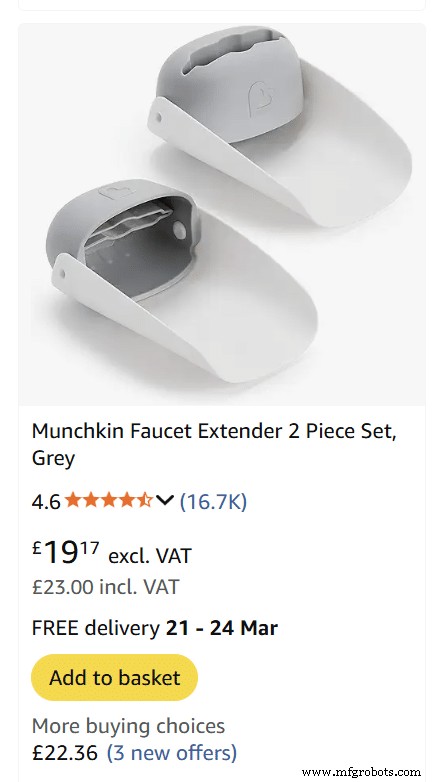
This indicates a higher price ceiling when buyers perceive added value. Conversely, I noted a glaring theme gap: no dinosaur or dragon designs, and no features that address common complaints.
Step 5: Spot the Theme and Review Gaps
I dug into reviews to uncover exact pain points.
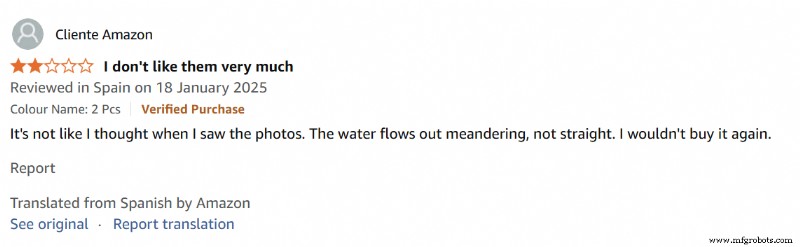
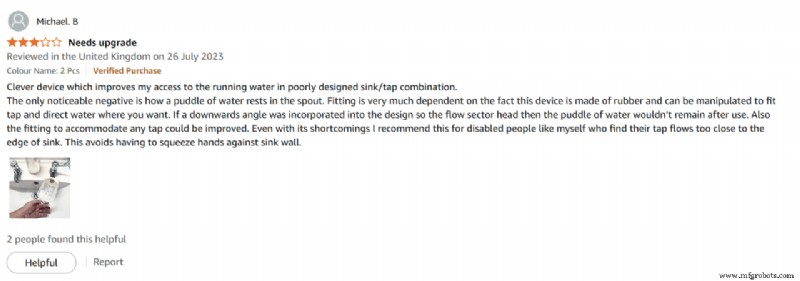
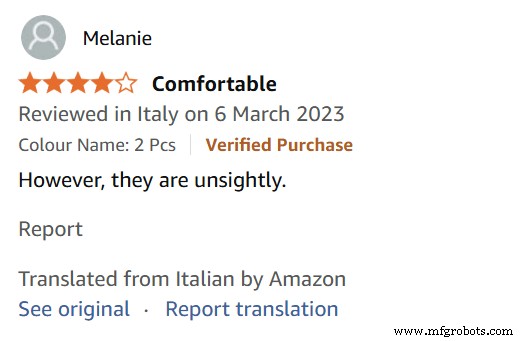
- Water flow direction: One reviewer noted the water doesn’t flow straight, suggesting a design flaw that a well‑engineered 3D‑printed channel could solve.
- Post‑use pooling: A reviewer described a puddle forming in the spout and proposed a downward angle to drain water—essentially a free design brief.
- Appearance: A four‑star review called the product “unsightly,” highlighting parents’ desire for a bathroom‑friendly look.
These three concrete complaints point to clear, actionable improvements—none of the existing listings combine them with a themed design that resonates with kids.
Step 6: Apply the Manufacturability Filter
Demand and a gap don’t automatically make a product 3D‑printable. Heat tolerance is a key concern: PLA softens under hot water, but PETG withstands up to ~80 °C—well within domestic tap temperatures. ABS is an alternative for extra heat resistance, but PETG is typically sufficient.
Thus, material choice is the only technical hurdle, not a deal‑breaker.
The Verdict: It Stays on the List
I almost dismissed the idea because the generic market tops out at $9, whereas my target price is $15 (with $10 being a low‑margin option). However, the Munchkin example proves buyers will pay more for a compelling reason.
By creating a dinosaur or dragon faucet extender that incorporates a drainage angle, a directional spout, and an appealing design, I offer a product that sits squarely above the $4–$9 baseline. Parents are willing to pay $12–$15 for a themed, functional solution that turns a mundane bathroom space into a playful experience.
The validated process not only surfaced real risks but also clarified the exact improvements needed to make this 3D‑printed idea profitable.

Michael Dwamena
Michael Dwamena is the founder of 3D Printerly, a platform dedicated to simplifying 3D printing for hobbyists and professionals alike. He owns over 20 3D printers (filament and resin) and has extensive experience in the field. Michael has authored more than 900 articles, helping millions navigate the world of 3D printing.
3D printing
- Mastering Material Jetting 3D Printing: Fundamentals & Applications
- SLS vs SLA 3D Printing: Key Differences and How to Choose
- Digital Alloys CEO Duncan McCallum Discusses Joule Printing and the Future of Metal 3D Manufacturing
- E-Ring: A 3D-Printed, Non-Invasive Glucose Monitoring Device
- Automate Pricing for Traditional & Additive Manufacturing with Internal Quotation
- 5 Proven Ways to Slash 3D Printing Costs
- Why a Filament Runout Sensor is Crucial for Reliable 3D Printing
- Stratasys F770 vs. BigRep Large‑Format 3D Printers: A Detailed Comparison
- Skateboard Part 1: Building Durable 3D‑Printed Wheels
- Harnessing Machine Learning to Transform Additive Manufacturing