



Triple Throughput in Half the Space: How Autotiv Harnessed the Fuse X1 to Scale SLS Production
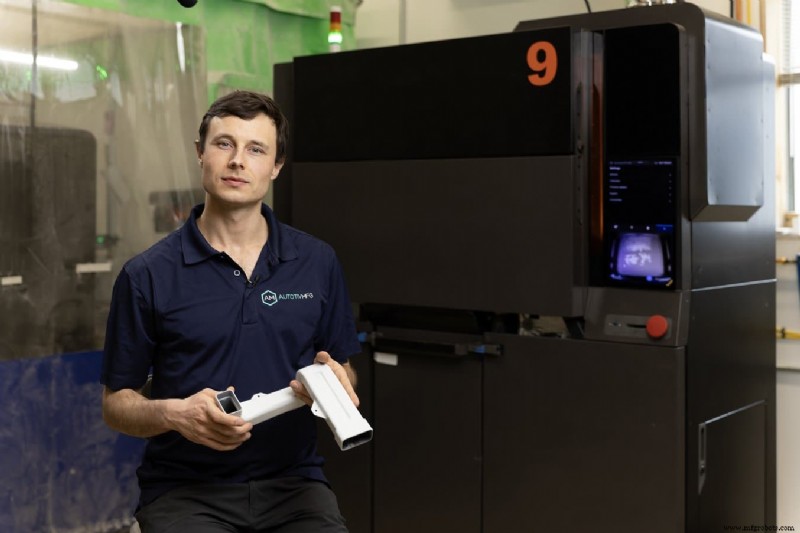
Producing 10,000 3D‑printed parts a week demands the highest throughput per square foot of any facility. Speed, reliability and low cost per part are non‑negotiable.
Autotiv operates more than 200 printers around the clock, supplying drones, robotics, consumer goods and medical prototypes across the United States and beyond—often within a single business day.
“The Fuse X1 has been a game‑changer for Autotiv Manufacturing. Its speed lets us deliver thousands of parts in days, and the SLS process gives customers true geometric freedom. We can print walls as thin as half a millimeter, parts up to 600 mm long, and finish an entire build volume in just 24 hours,” says Evan LaBelle, CEO.
Evan LaBelle, CEO, Autotiv Manufacturing
Adding the Fuse X1 has dramatically increased SLS throughput. The printer’s rapid cycle time and high mix capability allow Autotiv to ship large parts and thousands of small parts with unprecedented speed.
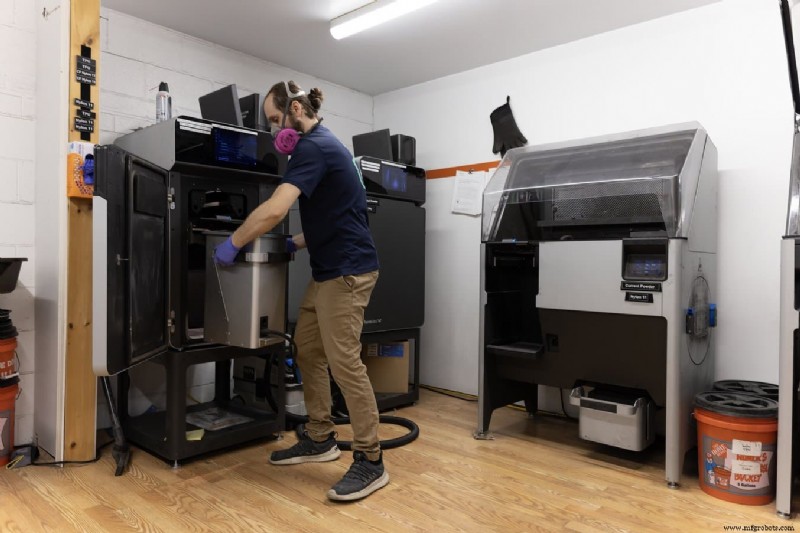
Alongside the Fuse X1, Autotiv runs Fuse 1+ 30W units, swapping materials frequently to offer the full range of SLS powders to clients.
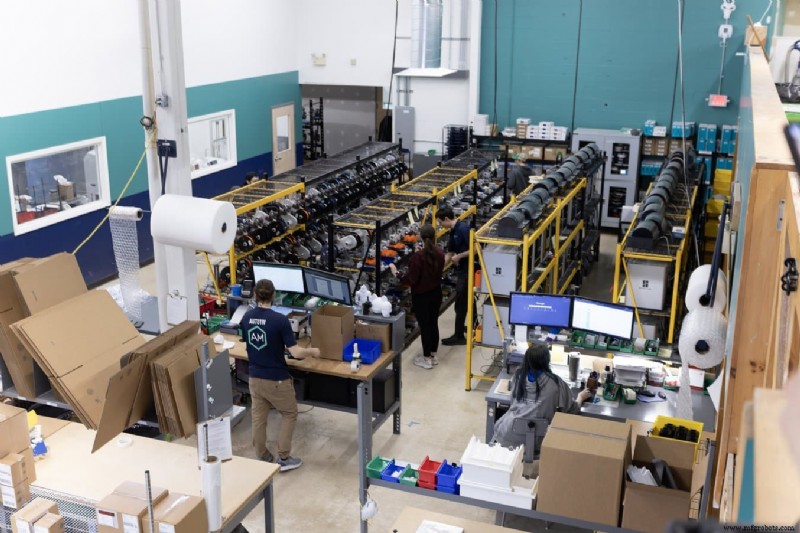
FDM printers also operate nonstop at Autotiv.
“On the Farsoon, a full build takes roughly 70 hours. The Fuse X1’s comparable volume can cycle every 24 hours, giving us roughly triple the throughput in the same footprint,” explains LaBelle.
Evan LaBelle, CEO, Autotiv Manufacturing
The Fuse X1 is an industrial‑grade, compact selective laser sintering (SLS) printer with a 63‑liter build volume—eight times larger than the Fuse 1+ 30W. Autotiv can now produce large parts and dense builds with hundreds of pieces in a single 24‑hour cycle.
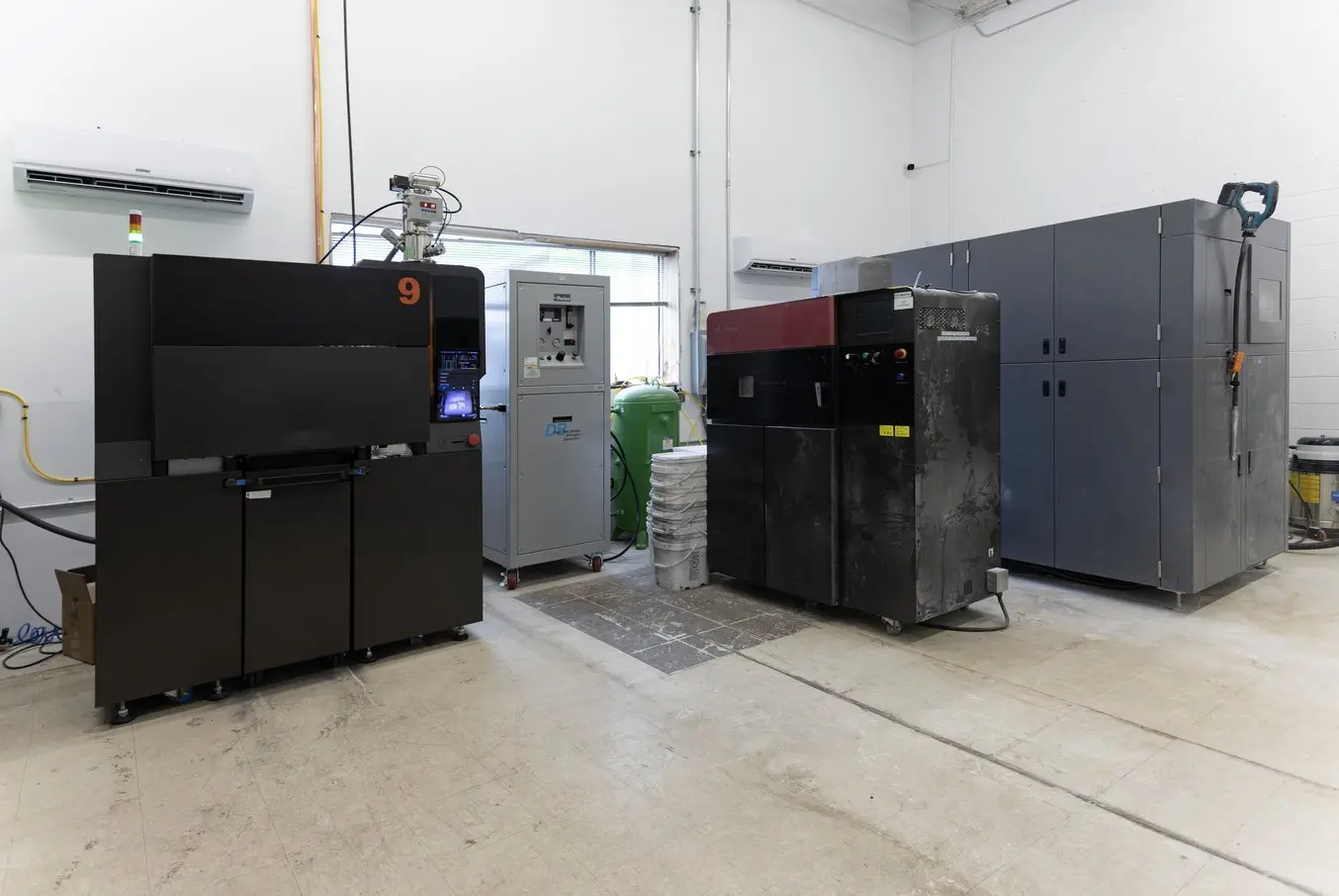
Before the Fuse X1, large parts and high‑volume builds ran on the Farsoon SS403P. The new printer delivers about three times the throughput in a smaller footprint.
Throughput depends on packing density. The Fuse X1’s thermal architecture processes 700 × more data per second than its predecessors, enabling unlimited packing freedom. With Dynamic Thermal Control, the printer can tune temperature in real time, allowing packing densities of 20‑30% without constraints typical of multi‑jet fusion systems.
Previously, a Farsoon cycle took about 70 hours. With a 24‑hour cycle, the Fuse X1 can run two or three builds in the same time a single Farsoon build would occupy—scaling production without expanding the footprint and delivering large SLS parts faster.
The Fuse X1 includes Print Intelligence™, an AI‑driven system that monitors, adapts and protects every print stage. It detects issues before they fail, preventing wasted powder and allowing unaffected parts to continue printing.
“Print Intelligence saves material. If a part fails, the system removes it from subsequent layers, preserving powder and time,” notes LaBelle.
“When we first printed a large part on the Fuse X1, the dimensional accuracy was astounding—only 0.2 mm deviation on a 340 mm tall piece.”
Evan LaBelle, CEO, Autotiv Manufacturing
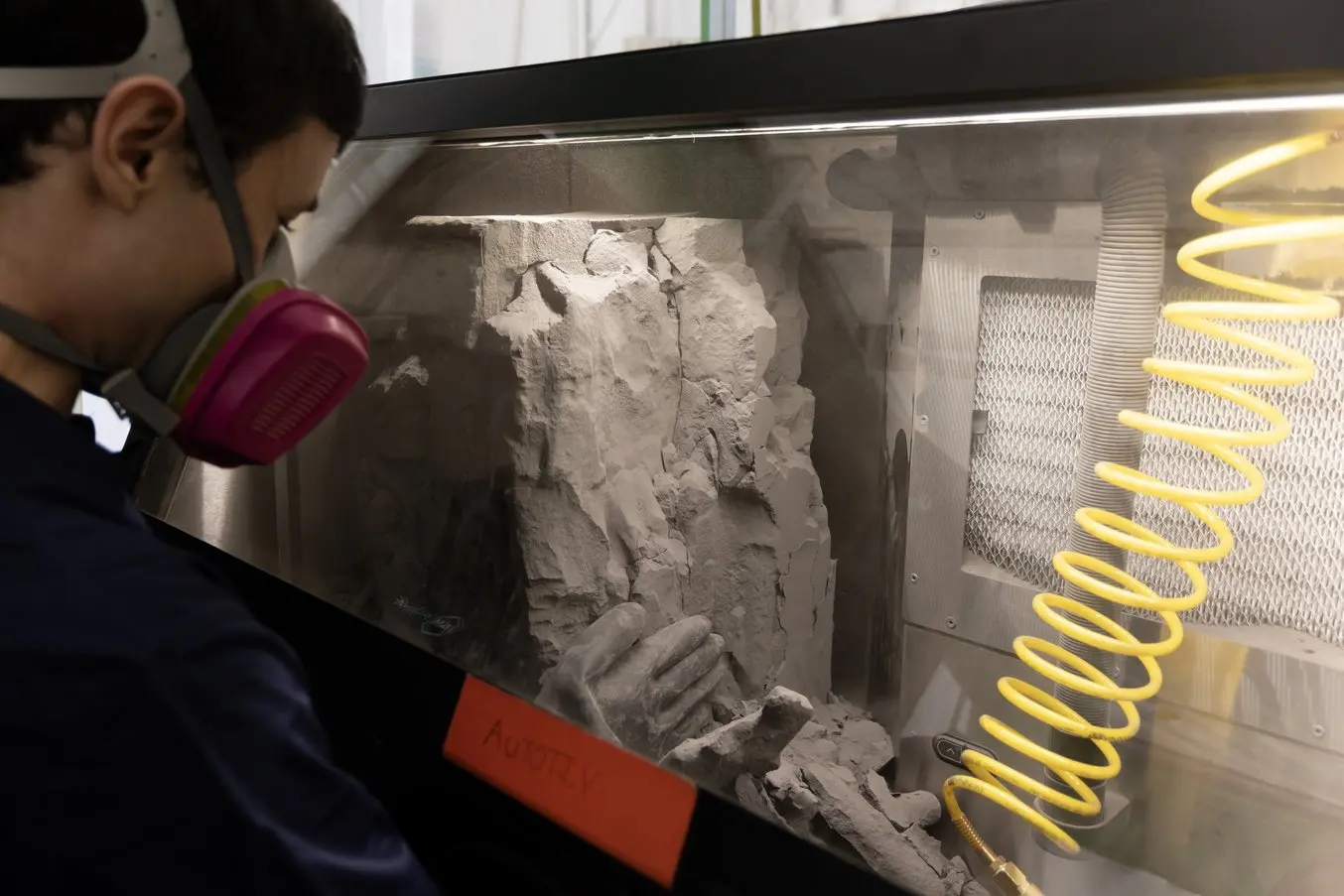
LaBelle demonstrates powder reclamation on the Fuse Sift X1, a larger version designed for post‑processing Fuse X1 parts.
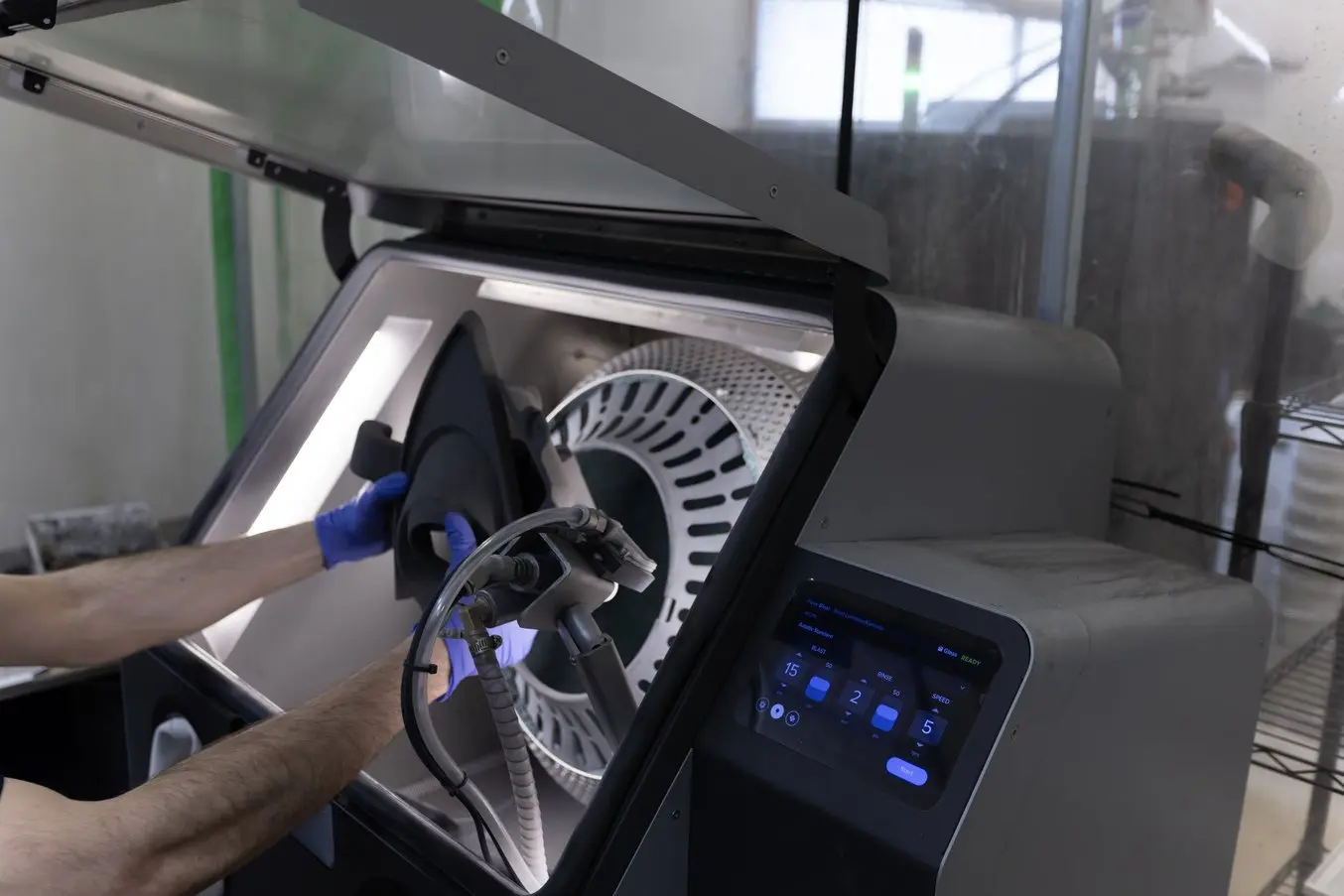
The Fuse Blast High Capacity Kit extends the Fuse Blast to clean and polish Fuse X1 builds.
Post‑processing is done on the Fuse Sift X1, where powder is reclaimed. Autotiv then uses Fuse Blast for efficient cleaning and polishing. LaBelle says that before Fuse Blast, cleaning a build could take five to six hours, and a worker once suffered a shoulder injury from repetitive bead blasting. Now the process is automated, saving time and labor.
Fuse Blast provides a smooth, semi‑gloss finish. Depending on the application, Autotiv also applies Cerakote ceramic coatings or paints parts, enhancing surface finish and mechanical performance.
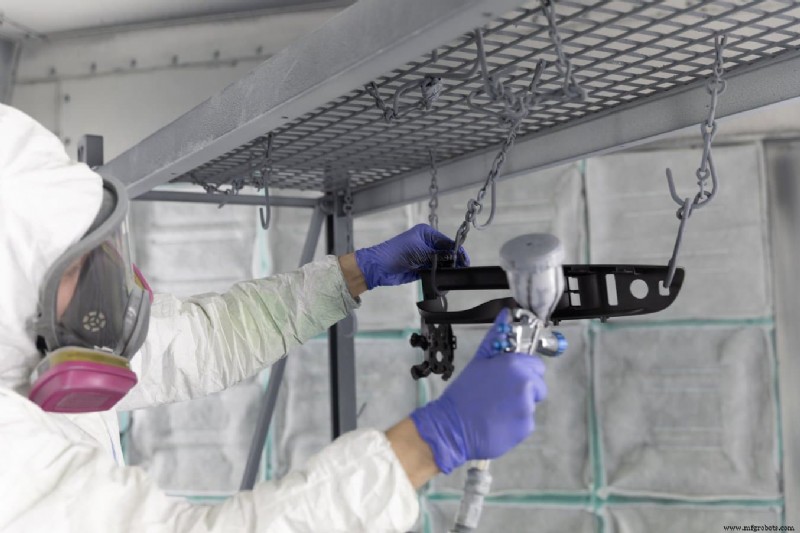
Parts for automotive and aerospace customers are often finished with paint or coating.
“We’ve had packers costing over $10,000 a year. I wish we could run everything through PreForm—it's fully featured, incredibly efficient, and makes setup simple.”
Evan LaBelle, CEO, Autotiv Manufacturing
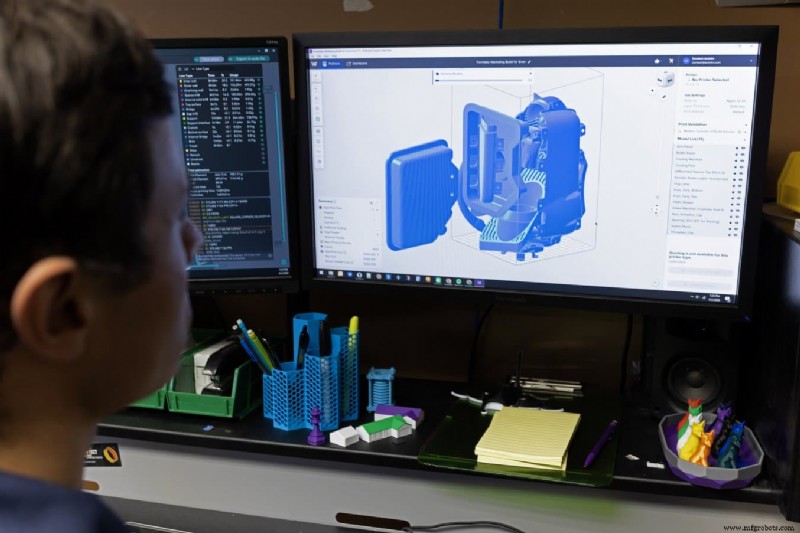
Builds for the Fuse X1 are prepared in PreForm, Formlabs’ free print‑preparation software. The same intuitive workflows used for the Fuse 1+ 30W apply, allowing one‑click setup or detailed tuning for industrial prints. Parts can be added to an in‑progress build if volume permits, enabling LaBelle to accommodate late orders without restarting a print.
To meet growing demand for rapid turnaround, Autotiv is expanding its 3D printing capabilities, adding more FDM, SLA and SLS machines, including additional Fuse X1 units.
“Thanks to its compact footprint, we can fit many Fuse X1s in the space that would otherwise accommodate larger SLS platforms. This lets us run more machines, offer more materials, and deliver higher volumes for our clients.”
Evan LaBelle, CEO, Autotiv Manufacturing
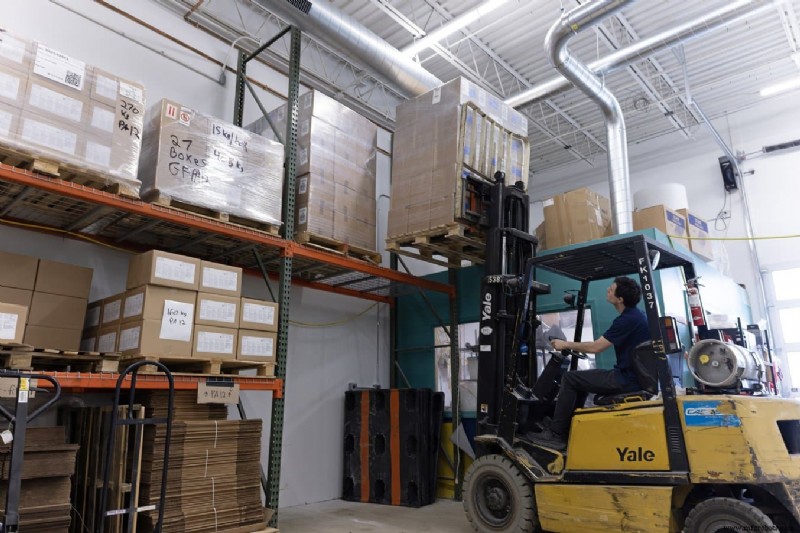
Autotiv orders pallets of Nylon 12 powder to meet demand, leveraging bulk discounts for cost efficiency.
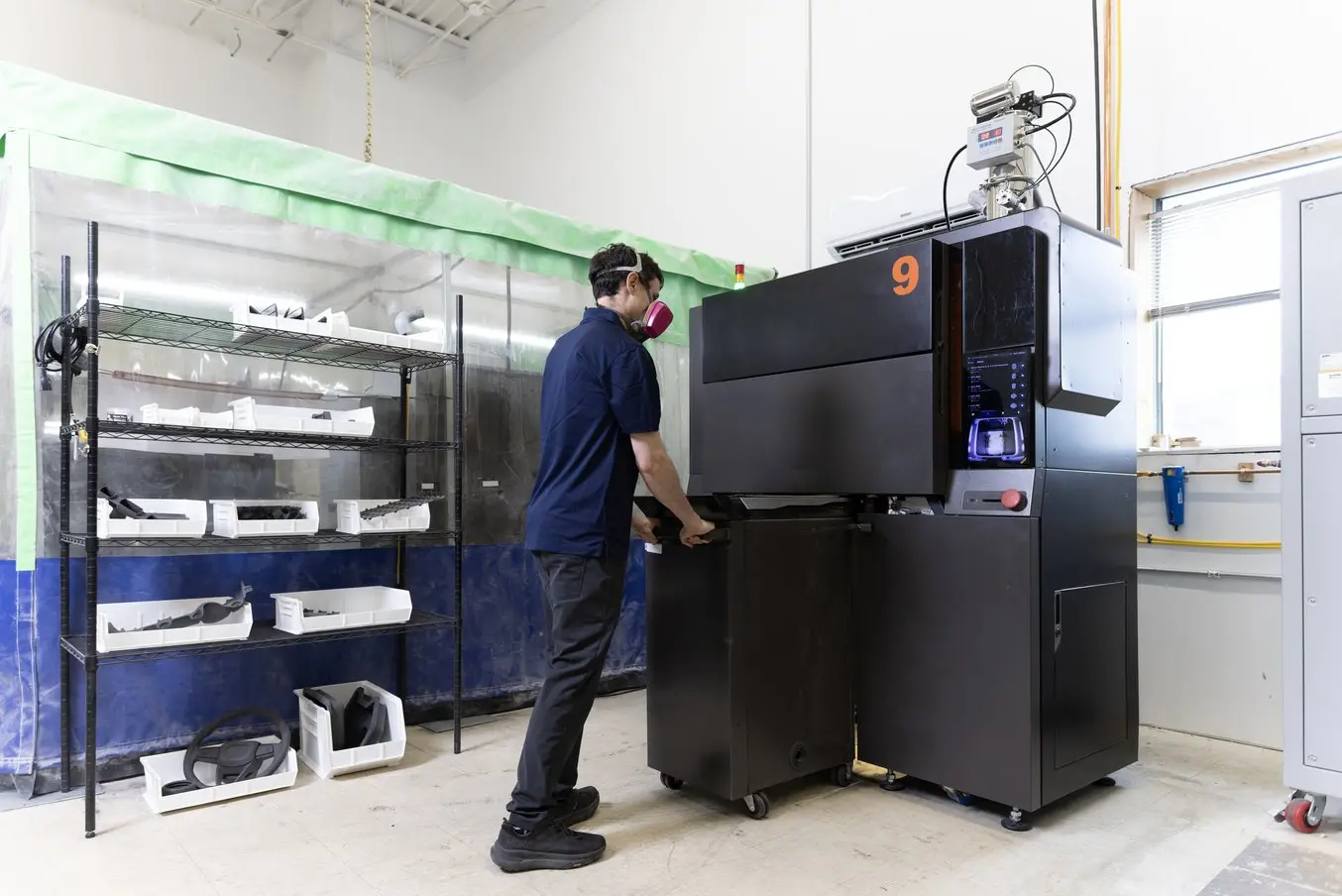
This beta unit of the Fuse X1 is the first of several printers Autotiv plans to acquire as part of its expansion.
Bulk powder discounts and rapid print times translate to low cost per part, delivering a swift return on investment and enabling continued SLS scaling with the Fuse X1.
“The Fuse X1’s ROI is about five times faster than comparable SLS systems we own or evaluate, thanks to half the upfront cost and double the throughput. You see ROI quickly.”
Evan LaBelle, CEO, Autotiv Manufacturing
Watch the video to learn more about the Fuse X1 or contact sales to start printing.
3D printing
- Cura Tree Supports: A Comprehensive Guide to Setup & Best Practices
- Optimizing the IRIS+ Drone: Lightweight, Durable Arms with Onyx 3D Printing
- 3D Printing for Production: The Missing Standard That Holds Back Mass Adoption
- Four Key Automotive Trends Accelerating Innovation
- Composite 3D Printing: A Growing Technology Poised for Industry Impact
- Expert Answers to Your Top 3D Printing Questions
- Optimal Nylon 3D Printing: Temperature & Speed Settings for Superior Results
- Can You Legally 3D Print Lego Pieces? Understanding the Legal Landscape
- Wärtsilä's First CE‑Certified 3D‑Printed Lifting Tool: A Game‑Changing Innovation
- Four Critical Questions Facing Additive Manufacturing in 2019