



Harnessing PolyJet's Multi-Material Capabilities for Advanced Form & Feel Testing
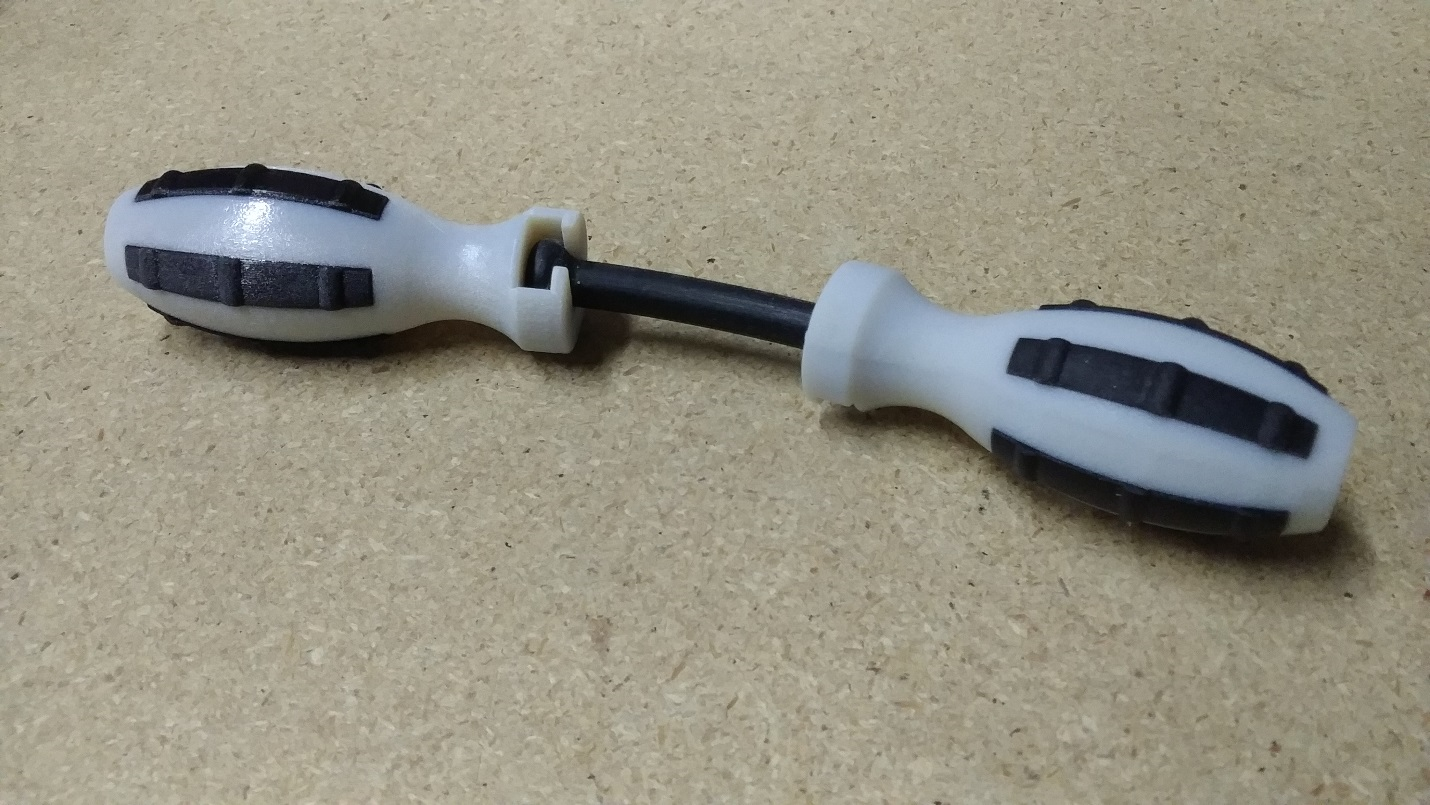 Since I first experimented with a PolyJet 3D printer, I have been consistently impressed by its ability to print multiple materials in a single build. Flexible resins that are notoriously difficult for other 3D technologies can be integrated seamlessly, allowing designers to assign distinct stiffness values to specific regions of a part. By blending rigid and compliant resins, we can produce a spectrum of Digital Materials that range from ultra‑soft to semi‑flexible to robust yet non‑brittle.
With this capability in mind, I developed a simple pull‑test rig that lets users feel the differences in toughness and flexibility among the available Digital Materials. The rig serves as a qualitative benchmark for evaluating PolyJet’s material performance in a tangible way.
My first design hurdle was crafting handles that were ergonomic while using minimal material. I prototyped the handles on an F370 FDM printer to validate comfort and size. The initial iteration felt slightly thin, so I refined the geometry and printed a second version that fit the hand more naturally. This iterative process ensured the final design would be both functional and efficient.
After integrating the refined handles with a flexible test core, I printed the first all‑PolyJet prototype. Users began pulling on the device and began to observe tear lines. Even though Agilus resin can tolerate substantial abuse, its limits were evident. Introducing replaceable, swappable test cores—each with a different Shore hardness—improved the rig’s versatility and allowed direct comparison of material performance under identical loading conditions.
The assembly was primarily built using revolve features derived from a single sketch, which simplifies future modifications. I first modeled one handle and half of the core, then mirrored the geometry to create a symmetrical pair. This approach keeps the design modular and easy to update.
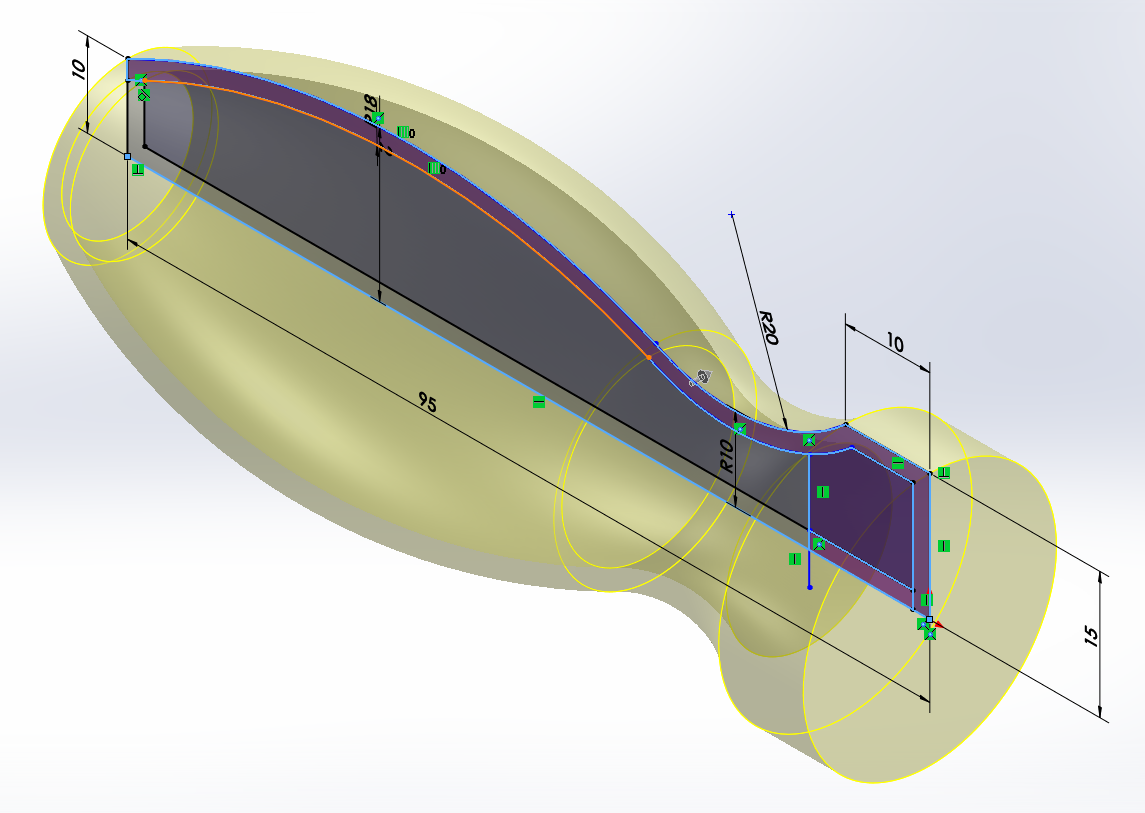
When working with multi‑material PolyJet parts, I keep all bodies in a single SOLIDWORKS Part file. This strategy guarantees that the parts will bond correctly in the final build and eliminates the need for complex tolerance adjustments in an assembly. Below is a step‑by‑step workflow that takes a SOLIDWORKS design and prepares it for a multi‑material Objet PolyJet print.
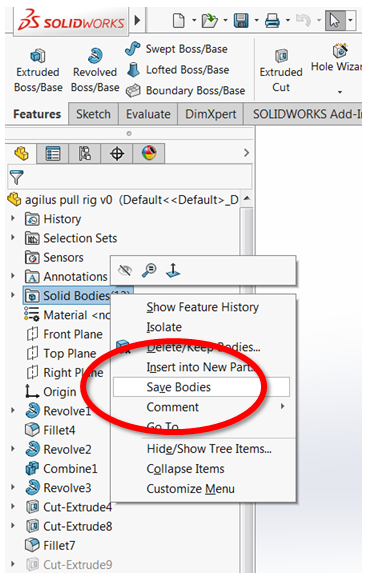
1. In the Feature Manager, right‑click Solid Bodies and choose Save Bodies.
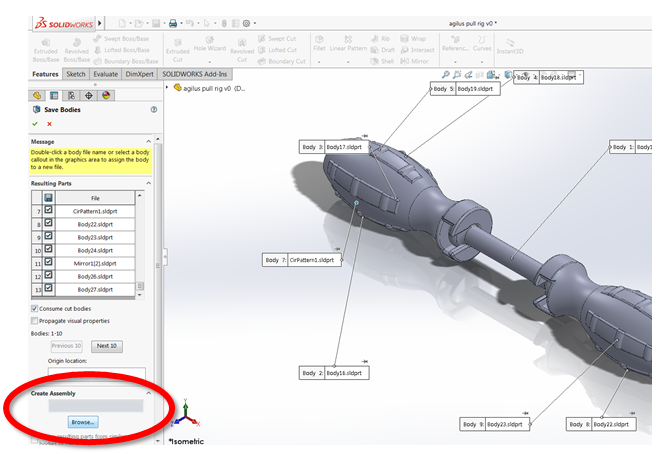
 2. Click Auto‑assign Names, then hit Browse under Create Assembly. This generates a SOLIDWORKS Assembly that preserves the original alignment.
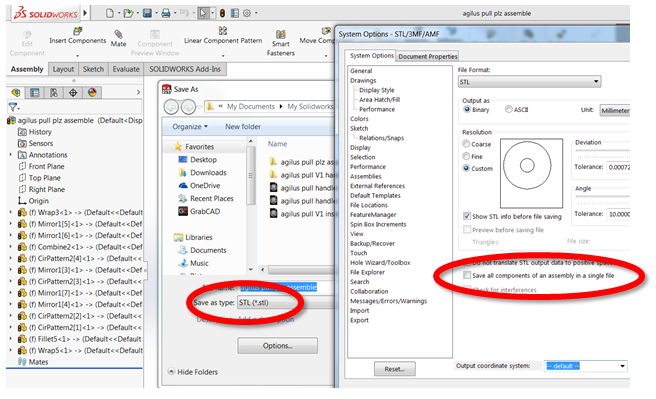
 3. Save the assembly as an STL: File > Save As → STL. Ensure the option Save all components of an assembly as a single file is unchecked.
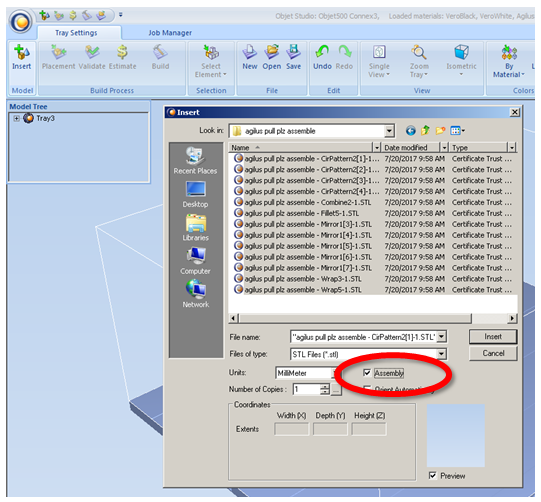
 4. In Objet Studio, Import each STL file and tick Import as Assembly to maintain component positioning.
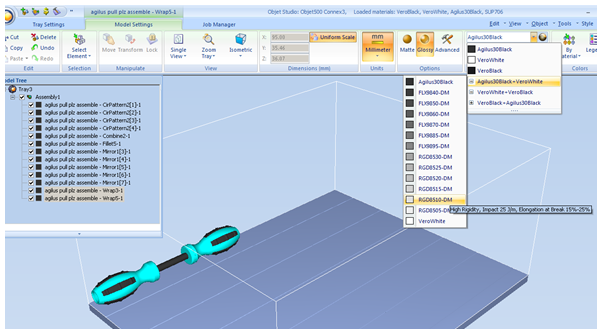
 5. Select a body from the tray or the object tree and assign its material via the toolbar.
PolyJet’s ability to blend flexible and rigid resins unlocks design possibilities that were previously unattainable. In this project, I leveraged that power to create a tactile pull‑test rig that demonstrates the true quality and range of PolyJet materials. As an engineer and designer, every opportunity to harness the Objet’s capabilities is a rewarding one.
Tags: 3D Printers, Materials, PolyJet, PullTest, Stratasys
3D printing
- Revolutionizing Space Travel with Next‑Generation 3D‑Printed Materials
- 8 Cutting‑Edge Materials Driving Industrial 3D Printing
- Introducing Ultem 1010 & ASA: Advanced FDM Materials for Stratasys Fortus Printers
- Single‑Layer Flexible Graphite: The Next‑Generation Heat‑Spreader for Consumer Electronics
- Lambient Technologies Offers Advanced Cure Testing for Thermoset Resins and Composite Materials
- 10 Strongest 3D Printing Materials for Ultimate Durability
- Top Flexible Materials for 3D Printing: Performance & Applications
- Invar 36 Components: Materials, Properties, and Trusted Purchasing
- Choosing the Right Materials for Flexible PCB Fabrication: A Professional Guide
- Top 5 Innovative Filaments Transforming FDM 3D Printing