



Inspection Fixtures: How Additive Manufacturing Outperforms Traditional Machining
Inspection is a critical checkpoint in the manufacturing pipeline, ensuring each part meets its dimensional specifications. Historically, this has required custom work‑holding solutions such as coordinate‑measuring machine (CMM) fixtures and check gauges. A CMM is a precision instrument that probes dozens of points on a part to confirm geometry is within tolerance. Check gauges, on the other hand, provide a quick, tactile test—if a part fits the gauge, it is within specification. These fixtures must meet stringent stiffness and accuracy demands, traditionally achieved by machining them from aluminum. While effective, custom machining is costly and consumes valuable shop floor time, especially as part geometries grow more complex. Three‑axis mills are limited by machine geometry—undercuts, steep angles, and intricate profiles often fall outside their reach. This forces designers to simplify parts or accept sub‑optimal tolerance. Even after a part is designed for conventional manufacturing, a separate CAM workflow is required to plan tool paths and select cutting tools. More complex geometries translate into more tool changes, longer CAM sessions, and higher labor costs. Composite 3D printing eliminates many of these bottlenecks. With Markforged’s Eiger slicing software, the entire preparation—from tool‑path generation to build settings—is automated. The result is a stiff, precise fixture produced in a fraction of the time and cost, regardless of geometric complexity. Discover how 3D‑printed inspection fixtures accelerate production and cut costs—watch our webinar or read our case study where JJ Churchill reduced fixture build time by 70 % and cost by 80 %. Request a free sample part to test the strength of our materials!
Traditional Inspection Fixture Manufacturing
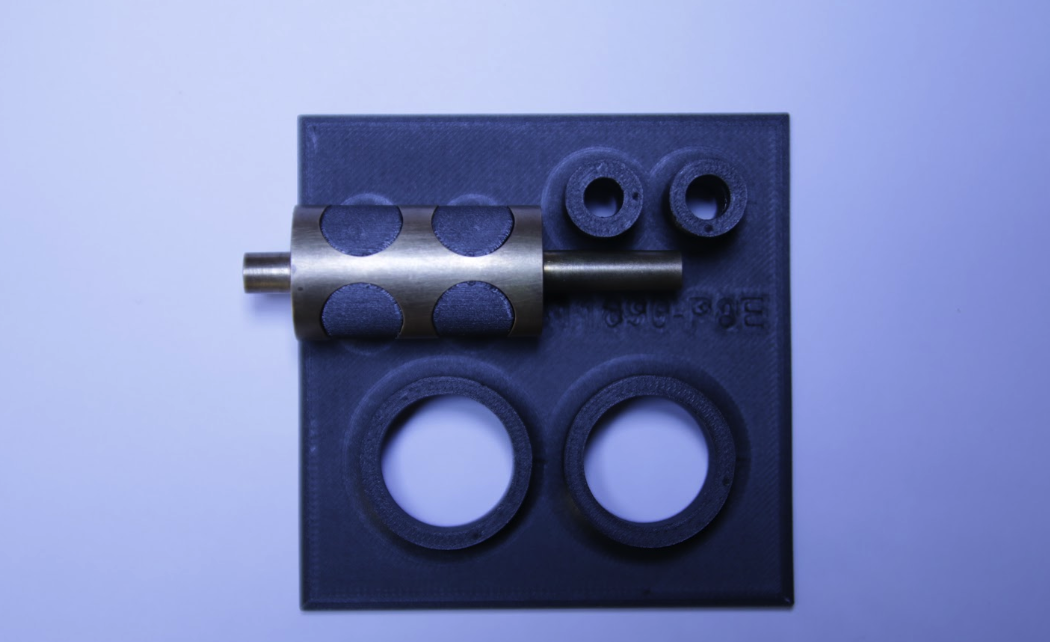
Why Complex Parts Are Hard to Machine
3D printing
- Additive Manufacturing Workflow Survey: Share Your Insights
- Optimizing Fixtures and Tooling for Additive Manufacturing
- Traditional Metalworking: Proven Excellence in Modern Manufacturing
- Revolutionizing Part Consolidation with Additive Manufacturing
- How Additive Manufacturing Consolidates Parts to Cut Costs & Boost Performance
- Additive Manufacturing: Driving Innovation and Cost Efficiency in Aerospace
- Ultrasonic Additive Manufacturing: Low‑Temperature 3D Metal Printing Explained
- Additive vs. Subtractive Manufacturing: Unlocking the Future of Production
- Essential CNC Machining Tips for High-Quality Plastic Parts
- 12 Key Industry Trends Shaping Contract Manufacturing: The Rise of Additive Machining