



Five Unexpected 3D Printing Applications That Are Revolutionizing Industries
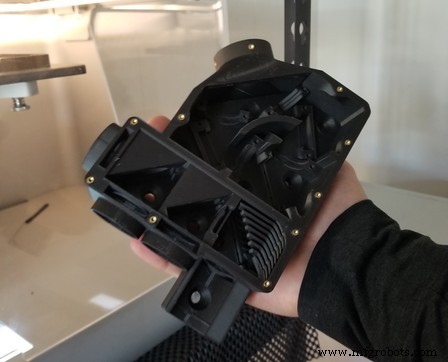
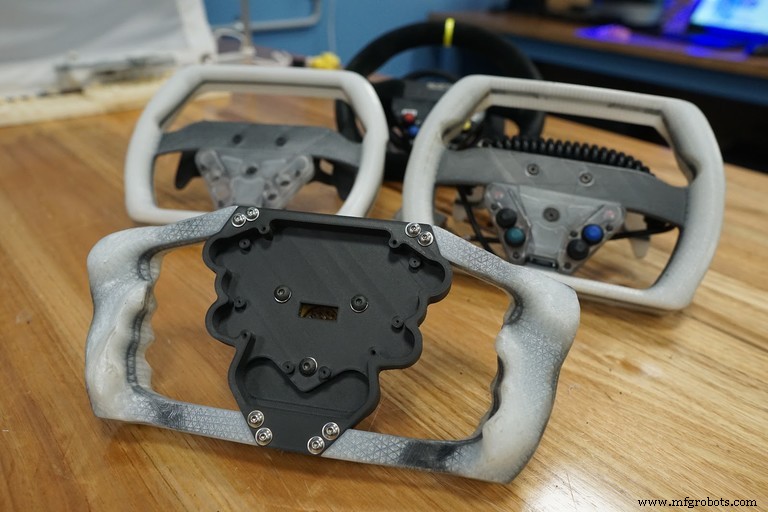
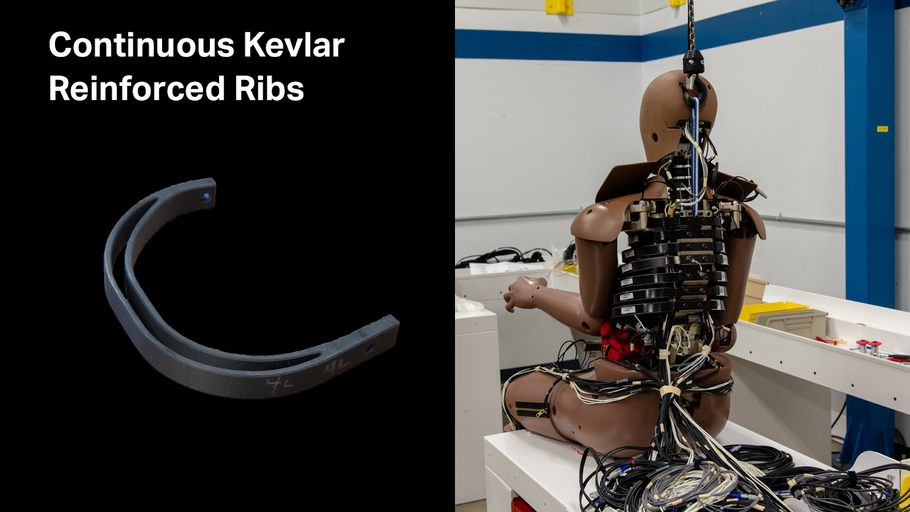
Gone are the days when 3D printers were reserved for hobbyists or ultra‑high‑budget firms. Today, they’re indispensable in sectors ranging from automotive manufacturing to entertainment and safety testing. Sweden‑based Alfdex, a supplier of crankcase gas separators, initially produced robot grippers in PLA/ABS. After only 40 hours of operation, the parts failed, prompting a costly 150,000 SEK ($16,659 USD) aluminum alternative. By partnering with 3DVerkstan Nordic AB, they printed carbon‑fiber‑reinforced grippers on a Markforged X7, cutting the cost to 1,400 SEK (155 USD) per unit. Daniel Nilsson, Alfdex’s production engineer, reports that the new grippers enable a robotic cell to handle 25 % of deliveries to a major Swedish automaker. With two cells now equipped with X7‑printed grippers, Alfdex is positioned to scale production while maintaining durability. Neurosciences PhD candidate Sage Aronson runs Neurophotometrics in California, developing a portable neuro‑imaging system that combines optical sensors with fiber optics. To push sensitivity, user‑facing ergonomics, and affordability, he has iteratively refined the device’s housing and internal components. Aronson has acquired six Markforged Onyx One printers, running them nearly continuously. He emphasizes that the machines enable rapid prototyping, end‑use production, and tool fabrication—tasks that would be impractical with conventional manufacturing routes. In fact, 95 % of the printed parts are finished products rather than tooling. The University of Technology Sydney (UTS) has fielded a Formula SAE Australasia team since 1999. With 25 students, the team continually seeks design improvements. After notable placements—2nd in Endurance, Autocross, and Design, and 1st in EV Efficiency (2017)—the 2018 squad turned to the Markforged X7 to create custom steering wheel inserts. Using clay molds to capture each driver’s hand shape, the team scanned the models into STL files and printed interchangeable grip panels. By printing continuous‑fiber‑reinforced Nylon for the grips and continuous carbon fiber for the wheel body, they achieved lighter, stronger, and ergonomically tailored steering wheels that mitigate driver fatigue during races. Legacy Effects, a California‑based prop house, supplies lightweight, durable equipment for film and television. Traditional manufacturing struggles to meet the on‑set demand for one‑off, high‑impact items. 3D Print Engineer Dean Schneider led the transition to 3D printing after validating the strength of Markforged components. The addition of a Markforged Onyx Pro printer allowed the studio to produce complex, high‑strength props—such as a robotic arm for a commercial series and a safety helmet for a major motion picture—at speed and reliability that exceed conventional methods. Schneider notes that the technology supports rapid iteration and foresees a full print farm within five years. Humanetics, the global leader in crash test dummies, encountered mold wear‑out that threatened production continuity. Engineer Kris Sullenberger explored 3D printing to replace traditional silicone and costly aluminum molds. After validating a carbon‑fiber‑reinforced neck ring on a Markforged X7, the team extended the approach to other dummy components. While steel ribs previously failed after roughly 20 impacts, the new Kevlar‑reinforced ribs endured over 150 tests without cracking, demonstrating superior resilience. Test the strength of our material by requesting a free sample part today!3D Printed Robot Grippers
3D Printed Imaging Device
3D Printed Steering Wheels
3D Printed Movie and TV Props
3D Printed Crash Test Dummy Parts
3D printing
- 6 Essential Insights About 3D Printing You Probably Haven’t Heard
- Understanding UV Resin: Is It Toxic? Essential Safety Information
- ABS Filament Melting Point: Key Facts for 3D Printing Success
- Mastering 3D Printer Feed Rate: Key Insights for Optimal Speed & Accuracy
- ABS Plastic and Food Safety: What You Should Know
- PETG vs PET: Key Differences Explained for 3D Printing
- Essential 3D Printer Lubrication Guide: Keep Your Machine Running Smoothly
- PLA vs PLA+: Which Filament Wins? Expert Guide to Choosing the Right 3D Printing Material
- Countersink vs Counterbore: 5 Essential Facts for PCB Fastening
- 5 Surprising Facts About Titanium: Strength, Weight, and More