



Understanding Industrial Automation: Enhancing Efficiency & Quality in Manufacturing
Earlier the purpose of automation was to increase productivity (since automated systems can work 24 hours a day) and to reduce the cost associated with human operators (i.e. wages & benefits). However, today, the focus of automation has shifted to increasing quality and flexibility in the manufacturing process. In the automobile industry, the installation of pistons into the engine used to be performed manually with an error rate of 1-1.5%. Presently, this task is performed using automated machinery with an error rate of 0.00001%. Lower operating cost: Industrial automation eliminates healthcare costs and paid leave and holidays associated with a human operator. Further, industrial automation does not require other employee benefits such as bonuses, pension coverage, etc. Above all, although it is associated with a high initial cost it saves the monthly wages of the workers which leads to substantial cost savings for the company. The maintenance cost associated with machinery used for industrial automation is less because it does not often fail. If it fails, only computer and maintenance engineers are required to repair it. Although many companies hire hundreds of production workers for up to three shifts to run the plant for the maximum number of hours, the plant still needs to be closed for maintenance and holidays. Industrial automation fulfills the aim of the company by allowing the company to run a manufacturing plant for 24 hours a day 7 days a week and 365 days a year. This leads to a significant improvement in the productivity of the company. Automation alleviates the error associated with a human being. Further, unlike human beings, robots do not involve any fatigue, which results in products with uniform quality manufactured at different times. Adding a new task in the assembly line requires training with a human operator, however, robots can be programmed to do any task. This makes the manufacturing process more flexible. Adding automated data collection can allow you to collect key production information, improve data accuracy, and reduce your data collection costs. This provides you with the facts to make the right decisions when it comes to reducing waste and improving your processes. Industrial automation can make the production line safe for employees by deploying robots to handle hazardous conditions. The initial investment associated with making the switch from a human production line to an automatic production line is very high. Also, substantial costs are involved in training employees to handle this new sophisticated equipment. Industrial automation has recently found more and more acceptance from various industries because of its huge benefits, such as, increased productivity, quality and safety at low costs. Looking For Industrial Automation Parts? We Can Help!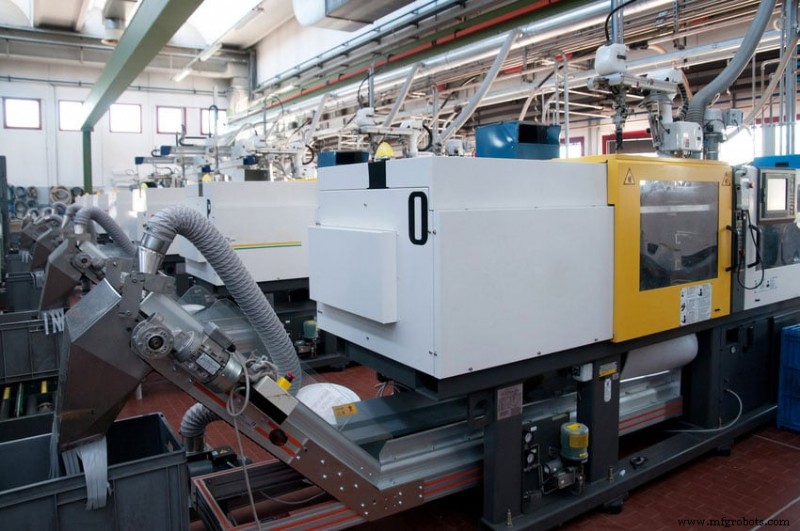
Industrial automation is the use of control systems, such as computers or robots, and information technologies for handling different processes and machineries in an industry to replace a human being. It is the second step beyond mechanization in the scope of industrialization.Increase Quality and Flexibility in Your Manufacturing Process
Advantages of Industrial Automation
High Productivity
High Quality
High Flexibility
High Information Accuracy
High Safety
Disadvantages of Industrial Automation
High Initial Cost
Conclusion
Call us to discuss your calibration needs at:
800-844-8405.
Automation Control System
- Industrial Automation: How Smart Control Systems Transform Manufacturing
- Emerging Trends Shaping Industrial Automation: 2024 Outlook
- Industrial Automation 4.0: Unlocking Efficiency and Innovation
- Industrial Engraving: A Reliable Solution for Product Identification
- Exploring Industrial Automation: Types, Benefits, and Role in Industry 4.0
- Industrial Cable Reels: Purpose, Benefits, and Buying Guide
- Industry 4.0 Explained: The Smart Manufacturing Revolution
- Warehouse Automation Explained: Benefits, Processes, and ROI
- Automation Types: Boosting Productivity, Quality, and Safety Across Industries
- How Industrial Automation Boosts Productivity and Quality in Modern Manufacturing