



Understanding the Derivative of a Constant: Why It Is Zero
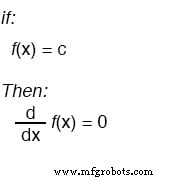
When you differentiate a constant value—denoted by the symbol c—the result is always zero. This fundamental rule is a cornerstone of differential calculus and is used across engineering, physics, and mathematics.
Mathematically, the derivative of a constant is expressed as:
\frac{d}{dx}\,c = 0Because a constant does not change as the independent variable x varies, its rate of change (the derivative) is zero. This is true regardless of the numerical value of the constant, whether it’s 5, –3.14, or 106.
In practical terms, this rule simplifies many calculus problems. For example, if you need to differentiate the function f(x) = 7x + 4, you treat the constant 4 separately: the derivative is f'(x) = 7 + 0 = 7.
Key takeaways:
- The derivative of any constant is zero.
- Only the variable-dependent part of a function contributes to its derivative.
- This rule holds for constants in any expression, no matter how they’re combined.
For further practice, try these worksheets:
Industrial Technology
- Mastering Time Constant Calculations for RC and RL Circuits
- Fundamental Antiderivative Rules: Constants, Sums, and Differences
- Understanding Current Mirrors in Bipolar Junction Transistor Circuits
- How IoT Is Transforming Consumer Business and Manufacturing
- 5 Key Advantages of ISO 9001 Certification for Your Business
- 5 Essential Steps to Transform Your Manufacturing into a Smart, Secure Enterprise
- U.S. Exporters Hit by Shipping Cancellations as Ocean Carriers Cut Sailings
- Today’s Titanium Uses: From Aerospace to Everyday Products
- Path to a Career as a Robotics Technician
- Why Community Engagement Is Essential for Business Success