



Converting Octal and Hexadecimal Numbers to Decimal: A Practical Guide
While octal and hexadecimal systems primarily serve as compact representations of binary in digital electronics, there are frequent scenarios where converting these numbers to decimal format is essential.
Instead of the two-step process—converting to binary first and then to decimal—you can transform octal or hexadecimal numbers directly into decimal. This method is efficient and reduces the potential for errors.
Octal is a base‑eight system, meaning each successive place value is eight times the previous one. For instance, the octal number 245.37 expands as follows:
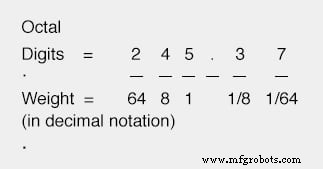
To find the decimal equivalent, multiply each digit by its positional weight and sum the results:

Hexadecimal to Decimal Conversion
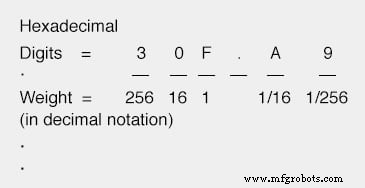
Hexadecimal is a base‑sixteen system. Each place value increases by a factor of sixteen. The conversion process mirrors the octal method: assign each digit its weight, multiply, and sum.
For example, converting the hexadecimal number 30F.A916 to decimal proceeds as:

These straightforward techniques apply to any base, provided you know the system’s radix. Mastering this skill enhances your ability to interpret and manipulate numerical data across computing domains.
RELATED WORKSHEETS:
- Numeration Systems Worksheet
Industrial Technology
- Decoding Numbers and Symbols in Electronics
- Octal and Hexadecimal Numeration: A Practical Guide for Engineers
- Converting Decimal Numbers to Binary, Octal, and Hexadecimal: A Practical Guide
- Analyzing a Parallel R‑L‑C Circuit: Impedance, Current, and SPICE Simulation
- Analyzing Series-Parallel RC and RL Circuits with Complex Impedance
- Comprehensive Summary of Resistors, Inductors, and Capacitors in AC Circuits
- Mastering C# Type Conversion: Implicit, Explicit, Parse, and Convert Methods
- Mastering Python Type Conversion & Casting: A Comprehensive Guide
- Mastering Numbers, Type Conversion, and Mathematics in Python
- Harnessing Automation in Manufacturing: Boost Efficiency & Cut Labor Costs