



Converting Decimal Numbers to Binary, Octal, and Hexadecimal: A Practical Guide
While binary, octal, and hexadecimal systems are deeply rooted in computer science, most people are most comfortable with the decimal system. Converting from decimal to these non‑decimal bases may feel daunting, but with a clear methodology it becomes straightforward.
Trial‑and‑Fit Method
The trial‑and‑fit approach is intuitive: we start from the highest place value in the target base and determine whether that position should be a 0 or 1 (or the appropriate digit for octal/hex). By adding the corresponding place‑weights, we work our way down until the accumulated value matches the decimal number.
Example: 87 in Binary
Begin with a binary field that lists place‑weights: 128, 64, 32, 16, 8, 4, 2, 1.
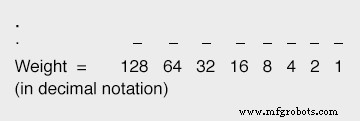
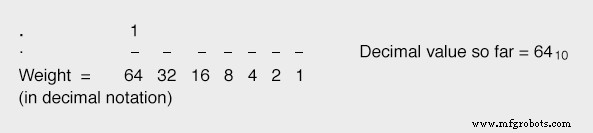
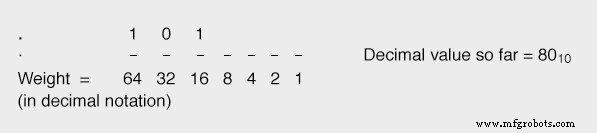
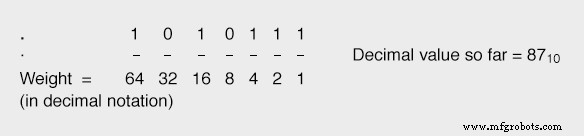
Since 128 exceeds 87, the 128‑bit is 0. The next weight, 64, fits, so we set that bit to 1. Adding 64 leaves 23 remaining. The 32‑bit would overshoot, so it remains 0. Continuing this process yields the binary pattern 1010111₂.
Trial‑and‑Fit for Octal and Hexadecimal
The same logic applies to base‑8 and base‑16. For 87₁₀, the highest octal place is 64. A 1 in this position gives 64, leaving 23. Testing 2, 3, etc., we find that 2×8=16 fits, leaving 7, which is exactly 7₁₀. Thus 87₁₀ = 127₈.
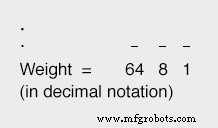
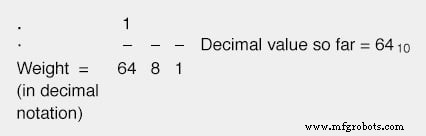
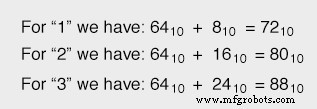
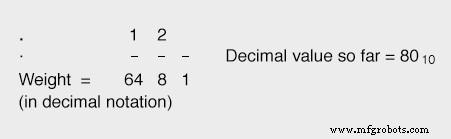
Alternatively, one can first convert 87 to binary (1010111₂) and then group bits into threes to obtain the octal equivalent, which confirms the result.
Repeat‑Division Technique
This mathematically equivalent method is often faster. Divide the decimal number by the target base, recording the remainder. Repeat with the quotient until it becomes 0. The remainders, read from bottom to top, form the target‑base digits.
Binary Example
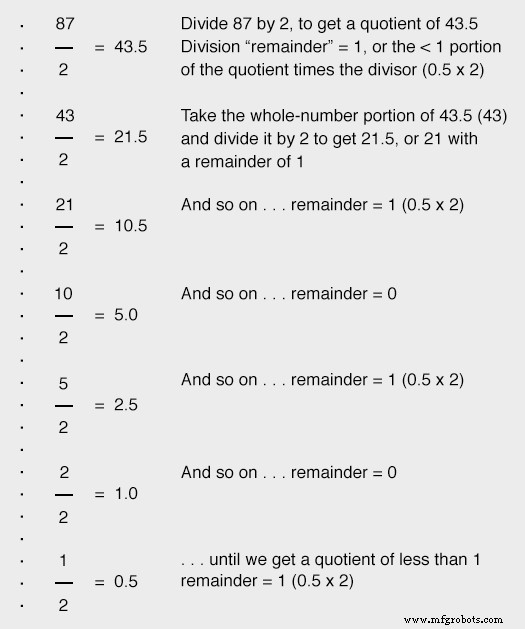
The remainders 1, 0, 1, 0, 1, 1, 1 give 1010111₂.
Octal Example
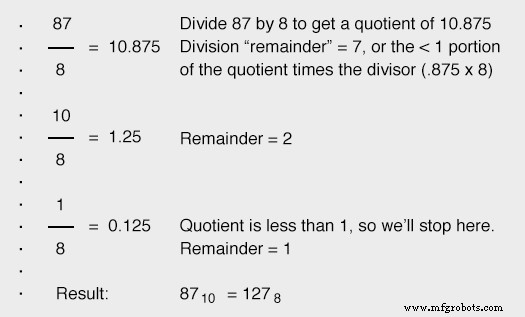
The remainders 7, 2, 1 read as 127₈.
Converting Fractional Decimals
For decimals less than 1, use repeated multiplication by the target base. The integer part of each product becomes the next digit to the right of the point.
Example: 0.8125₁₀ to Binary
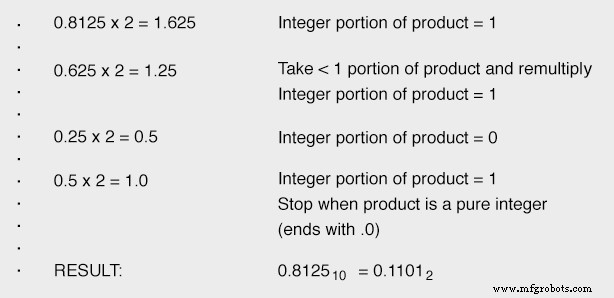
Multiplying by 2 repeatedly yields the binary fraction 0.1101₂.
Mixed Numbers (Integer + Fraction)
When the decimal has both integer and fractional parts, apply repeat‑division to the integer part and repeated multiplication to the fractional part. Combine the results with a binary point.
Example: 54.40625₁₀ to Binary
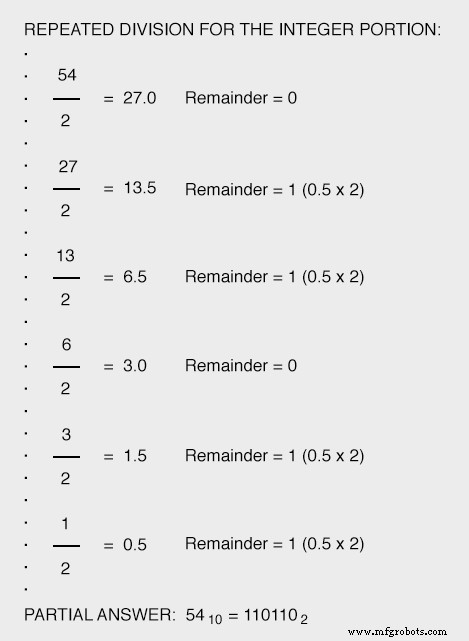
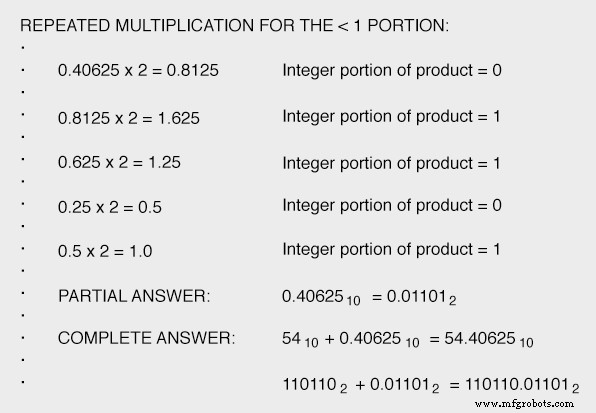
Putting the two halves together yields 110110.011001₂.
RELATED WORKSHEETS
- Numeration Systems Worksheet
Industrial Technology
- Understanding Numeration Systems: Roman, Place Value, Binary
- Decimal vs. Binary Numeration: Place‑Weight, Efficiency, and Conversion
- Converting Octal and Hexadecimal Numbers to Decimal: A Practical Guide
- Numbers vs Numeration: Understanding the Distinction and Its Practical Impact
- From Electric to Electronic: The Evolution of Control in Circuits
- Mastering C# Type Conversion: Implicit, Explicit, Parse, and Convert Methods
- Understanding C++ Type Conversion: Implicit, Explicit, and Casting Techniques
- Mastering Numbers, Type Conversion, and Mathematics in Python
- Understanding Type Conversion in C#: Implicit & Explicit Casting Explained
- Japan's Pioneering Journey into Robotics