



Revolutionary Materials Make Sustainable e-Roads a Reality
The transportation sector has been shown to contribute significantly to global climate change and CO2 emissions [1]. Electric vehicles (EVs) are considered of strategic importance in the transition towards a clean energy planet [2].
The adoption of EVs promises to bring numerous environmental, societal and economic benefits such as the minimization of air pollutants, cleaner city air, fewer noise emissions, and a boost in the economy [3]. EVs can significantly reduce energy consumption and greenhouse gas emissions, especially when the energy source is shifted to clean energy sources like wind and solar powers [4][5].
The benefits of a wide EV adoption seem remarkable, but the challenges to general acceptance remain significant. Although EVs have recently been significantly developed in terms of both performance and driving range, they still suffer from limitations like the weight, size and cost of batteries, small or non-existent charging infrastructure networks, long duration of charging, and their relatively high cost as compared to traditional vehicles [3].

The market share of full-electric vehicles is still low in many countries. www.openchargemap.org
The development of EVs’ infrastructures is a crucial issue to face to accomplish the EVs’ broad adoption. Within this context, electrified roads are playing an important role which could allow overcoming the limits to EVs’ diffusion.
Limitations of EVs’ batteries
In order to solve the crucial limitations of EVs, pushing the development and optimization of EV batteries further seems to be among the obvious solutions. But suppose that improvements in battery technology do succeed, there are still other challenges related to climate, environment or access to resources that are yet to overstep.
Sustainability concerns around EVs’ batteries are still to be fully resolved. Fundamentally, it is important to understand if lithium, cobalt and nickel, the key metals required for Li-ion traction batteries, can be extracted sustainably without contradicting the fundamental assumption of EVs as a means to sustainability [6].
For instance, cobalt mining is mainly concentrated in one of the world’s least developed countries, the Democratic Republic of Congo. This country has limited transparency in the cobalt value chain, over and above strong evidence of human rights abuses, dangerous working conditions, forced labor, and child labor [7][8]. Lithium suppliers must address ethical sourcing considerations. Besides, it is not guaranteed that the Lithium-ion battery demand will always be covered [9][10].
EVs’ Charging Technologies
Technological improvements concern even EVs charging technologies. The current EV charging technologies could be classified as plug-in, conductive and inductive.
Plug-in charging can charge almost all existing EVs, but the EV has to be parked and physically plugged into an energy source. On the other hand, with conductive charging technology, the EV would be in contact with power lines via a pantograph while it is moving, which allows for high transfer of energy in a short period of time.
In the more recent inductive technology, also known as Wireless Power Transfer (WPT), the power is transferred wirelessly to the EV via inductive coupling while travelling or during short-stops [2][11].
Shortly, the WPT technology could be described as follows:
- Electricity from the grid sends current through the transmitter coil;
- The current generates a magnetic field;
- The magnetic field induces a current in the receiving coil, which is tuned to the same frequency;
Although it is still not a mature technology, WPT could overcome many limitations that have hindered the diffusion of EVs [12].
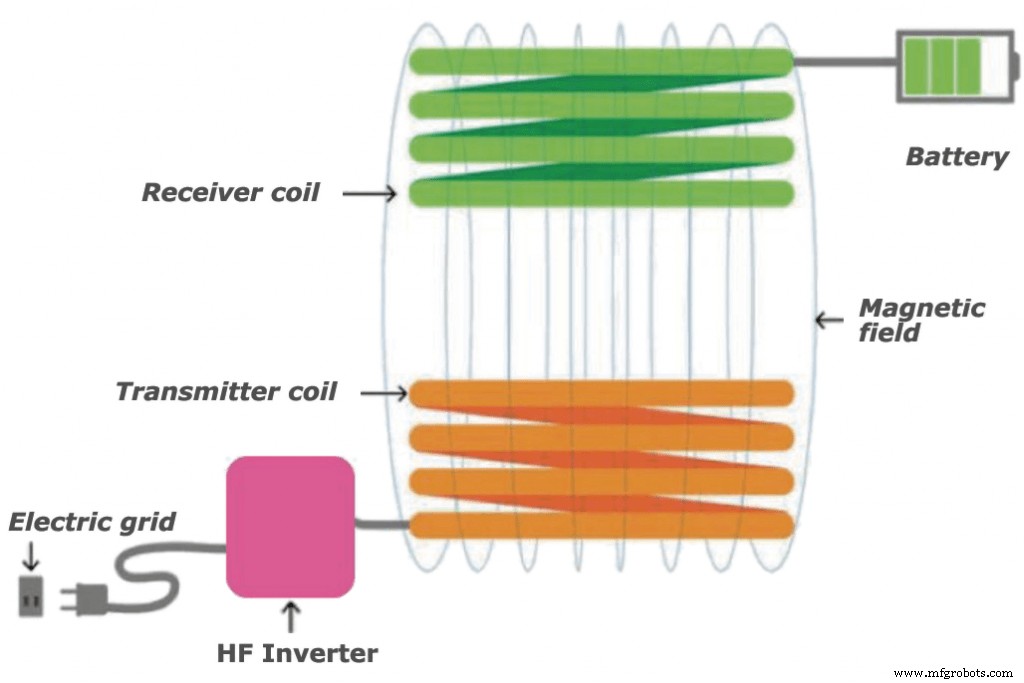
EVs’ Wireless charging (Adapted from Roberts & Zarracina, 2017)
The inductive technology can offer numerous advantages, such as [13]:
- An increased battery range, which implies reduced range anxiety;
- Smaller batteries and faster charging, which implies increased mobility;
- Drivers do not have to deal with dirty and potentially dangerous cables (rain, cable, vandalism, etc.), and the charging process is easier.
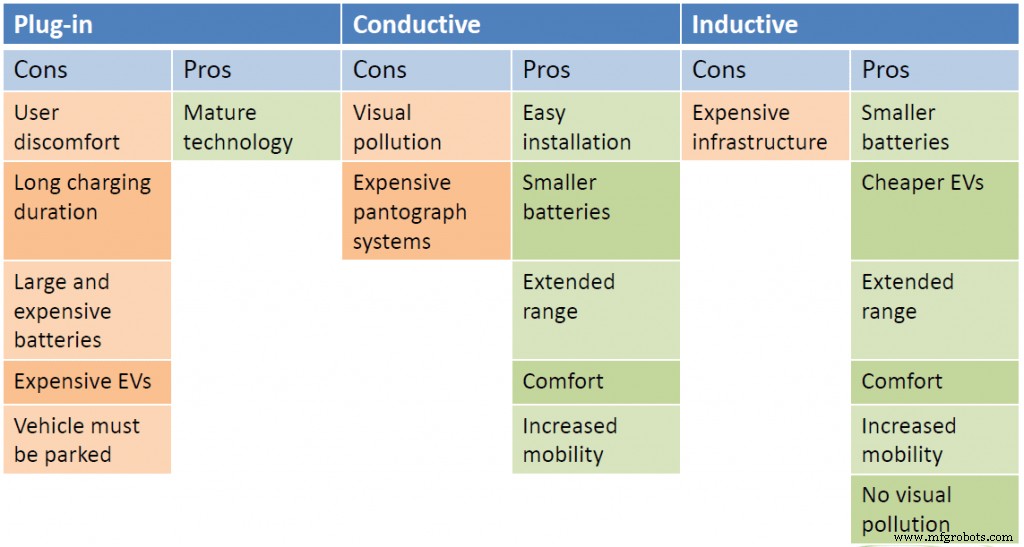
Comparative table of the three EVs common charging technologies
e-Roads for Wireless Charge
Electric roads (e-Roads) may seem just a sci-fi vision, but they are coming about faster than we think. e-Roads allow, theoretically, to wirelessly charge an unlimited number of EVs while in-motion, thus avoiding bottlenecks on charging stations [6].
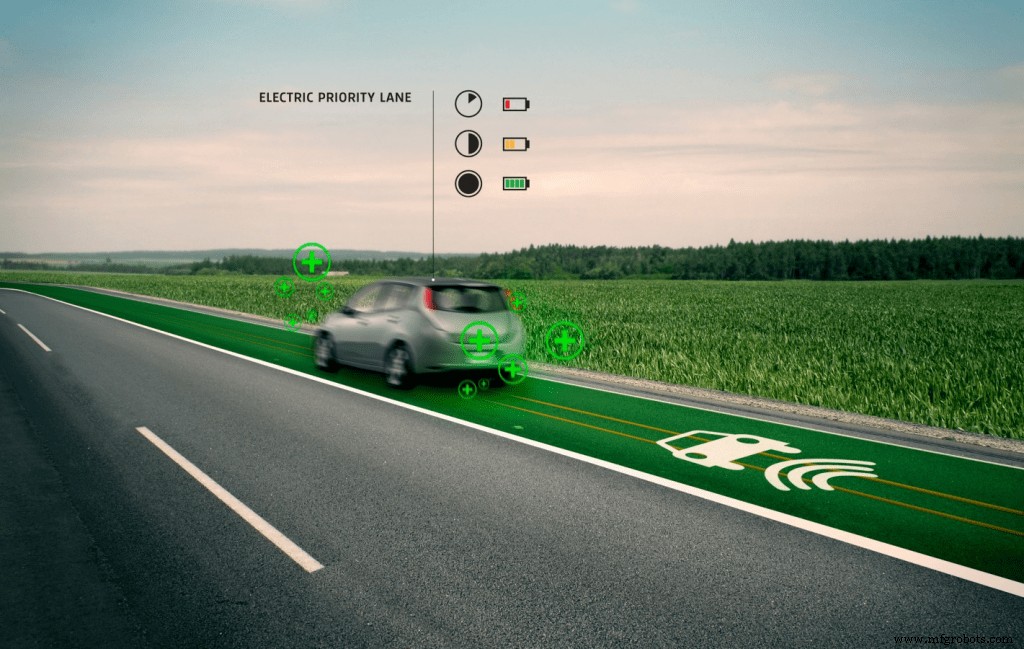
Smart coatings, energy harvesting, sensors and other media. Concept and Design by Studio Roosegaarde and the engineers from Heijmans
The near-field WPT technology implemented in e-Roads can inductively deliver electricity to a receiver device, with high power but limited air gap distance. Significant progress in terms of charging power, transfer distance, efficiency and safety of WPT systems has been made in the last decade, considerably pushing forward its practical implementation [14]. Furthermore, wiring roads for dynamic charging, at full scale, could be more sustainable than using large batteries in a multitude of electric vehicles [13].
e-Road construction technologies are under development, either in in-situ-based or prefabrication-based installations, and they are classified as [15]:
- Trench-based way (construction on subsurface layer or surface-flush);
- Micro-trench way (excavation on sub-surface only);
- Full lane replacement (full lane-width construction on sub-surface layer or surface-flush);
- Prefabricated full lane width (sub-surface layer or surface-flush).
The potential benefits of the trench-based and micro-trench based construction options include shorter installation periods (when compared with full lane width construction), lower volume of waste material excavated, and ease of access to the e-Road systems for maintenance [16].
Enabler materials for e-Roads
e-Roads are becoming a reality thanks to the magnetic properties of specific materials that are enabling the adoption of WPT as the EVs’ charging system. The use of magnetizable materials, concrete and asphalt, opens many opportunities in the transport sector [16].
“Talga” and “Betotech” solution to make the concrete conductive is possible using industry-standard cement with additions of pristine graphene, graphite and the silica-rich by-product of ore processing [17]. This Graphene-enhanced concrete is highly conductive with a low electrical resistivity of 0.05 ohm-cm. At a similar dryness, cement mortar has an astoundingly high general resistivity of around 1,000,000 ohm-cm.
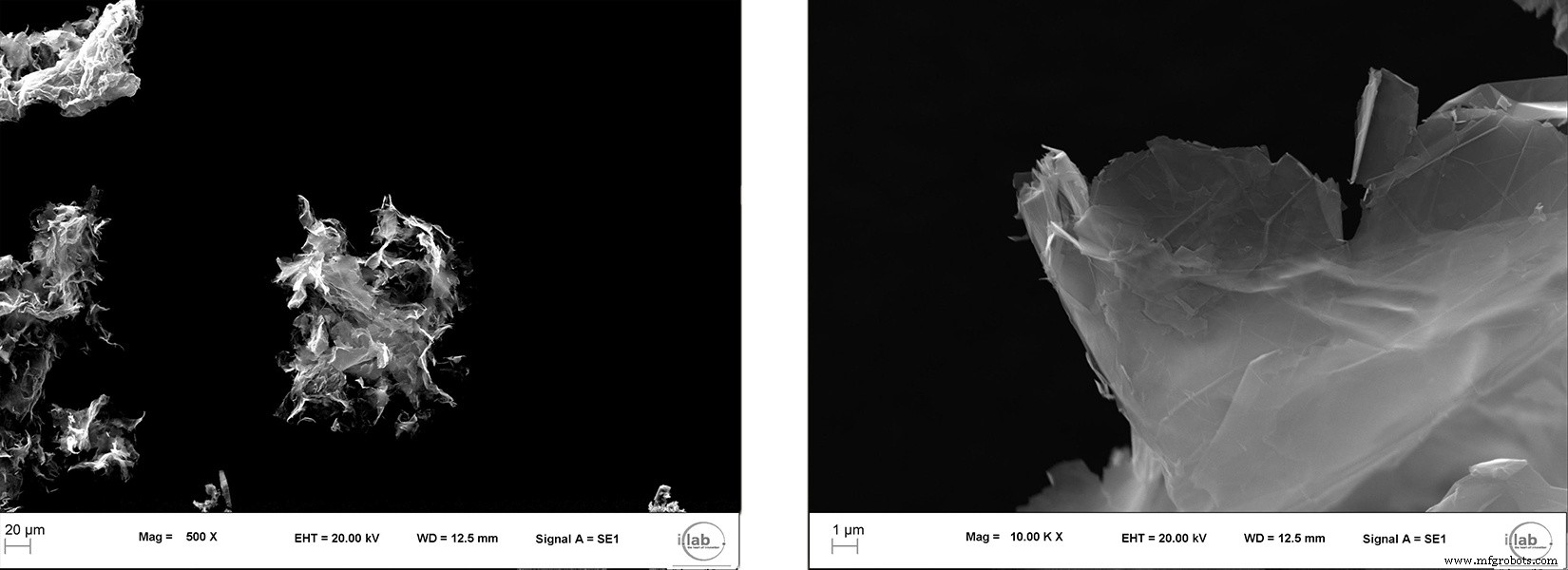
SEM images of graphene (Mag = 500x and 10,000x) (courtesy of i.lab Italcementi)
An interesting alternative to graphene is the solution proposed by “Magment”, which consist of magnetizable concrete materials, either cement-or asphalt-based, developed by using magnetic ferrite particles as aggregates, that acquires magnetic properties when a high-frequency electric current is induced. It is a patented technology that maintains the mechanical properties of conventional concrete in order to be fully compatible with conventional road construction practices.
WPT needs different magnetic layers for controlling the magnetic field, both to lead the field into the receiver’s direction and to restrict it towards the ground.
Using engineered metamaterials (MM), it’s possible to achieve superior efficiency of the transmitter coil by manipulating electromagnetic waves.

Classification of magnetic materials (courtesy of Magment.de)
In the particular case of Magment’s technology, a Diamagnetic Metamaterial (DM) layer is put below a magnetizable concrete substrate and a Field-Focusing (FF) layer above the coil [17].
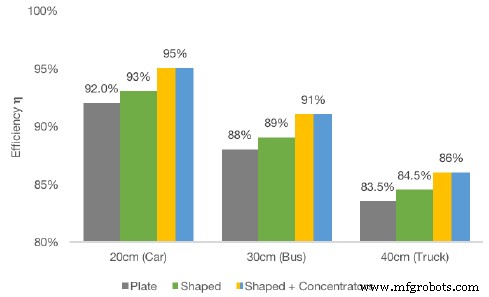
Efficiency vs. Transmitter-pickup coil distance for different electrical vehicles (courtesy of Magment.de)
This concrete consists of almost 87 percent of magnetizable aggregates which are waste products from the manufacture of ceramic ferrites and the recycling of electronic scrap. Ferrites are ceramic materials composed of iron oxides of various metal elements highly present in nature such as manganese, zinc, calcium and aluminum. The remarkable positive side is that ferrite particles are mainly obtained by recycled material from the ferrite industry and the rapidly growing amount of electronic waste, although their electromagnetic properties may be unknown [18].
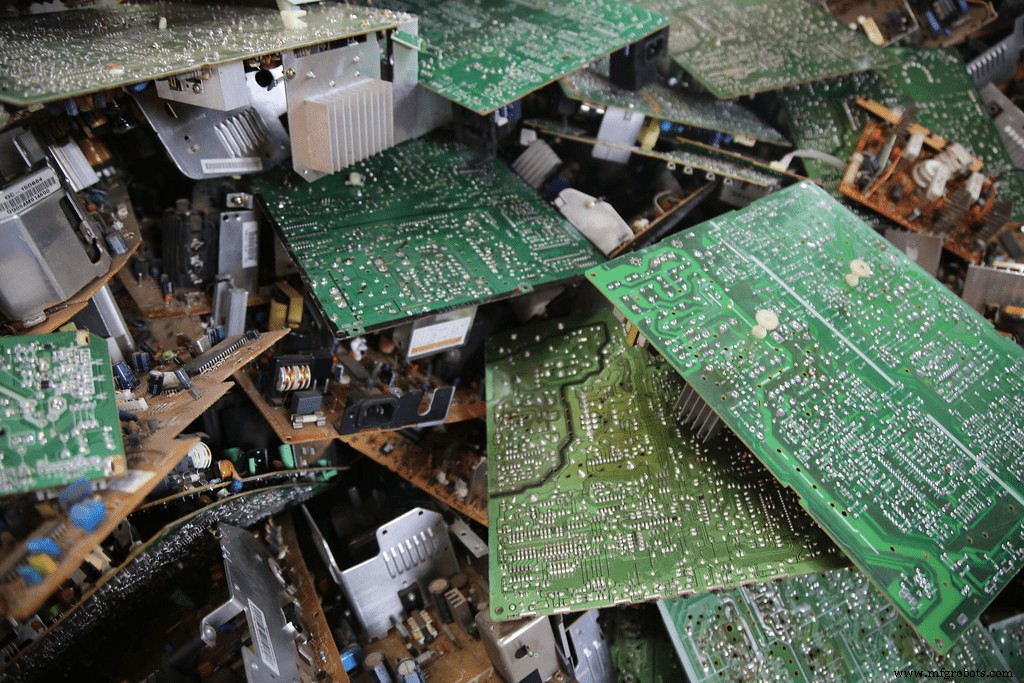
Rwanda E-Waste Recycling Facility
Technological aspects of e-Roads
e-Roads are structurally more complex than traditional roads, especially because of their embedded technological devices. The durability and minimum maintenance of e-Roads are crucial factors for e-Road implementation. The road surface must provide high mechanical resistance to deflection or rut. The concrete roads, with a performance life of 50-60 years, can satisfy the required long-term durability. But e-Roads will require further research for their optimization.
The most important components in WPT-based e-Road systems are the charging unit (CU) slabs that are made of a concrete module and power electronics. These include a charging system, such as conductive coils and magnetic ferrites.
Improvement in e-Roads’ structural integrity is of great importance. This includes uses of high-quality coatings, stress-relief membranes or fabrics, plug joint materials at the critical interfaces, reinforced materials, and gradation of asphalt overlay [15][16].
Application Scenarios
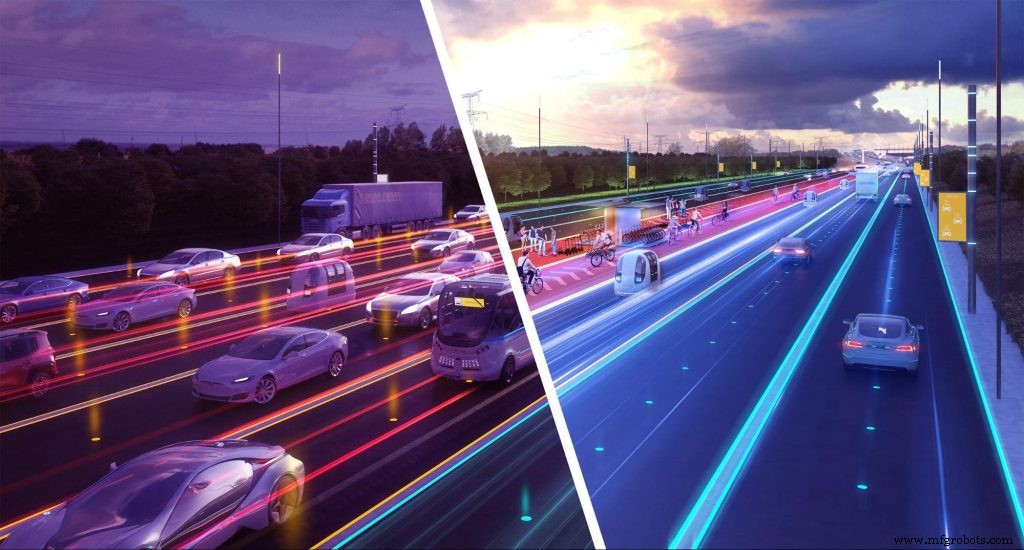
“New Deal, Les Routes du Futur du Grand Paris”, CRA-Carlo Ratti Associati
The inductive charging technology, static, stationary and dynamic, could be adopted in a variety of application scenarios.
The static charging technology could be adopted in car parking, bus parking at bus stations, and freight vehicles while loading or unloading. The stationary charging technology could be adopted in taxis queuing in a taxi rank, busses stopping at bus stops, and vehicles stopping at junctions. The dynamic charging technology could be adopted in highways and urban roads with dedicated charging lanes [2].
WPT is demonstrating to be a valid technology, as its adoption is most likely to happen in the near future, especially in the fields of public transportation and logistics.
The cost and autonomy of batteries are still relevant limitations in the adoption of the fleet of electric buses and freight vehicles. However, this kind of vehicles always follows the same paths, so that they can take full advantage of the WPT dynamic charging technology. Moreover, it is estimated that with this technology, the dimension of the battery could be reduced by up to 70%. This, consequently, reduces the overall vehicle weight and extends the battery performance.
Induction charging is already powering buses in Torino, Italy, since 2003 and in Utrecht, Netherlands, since 2010. South Korea, Israel and Germany have also successfully implemented the transportation network for the dynamic charging of public electric buses [12][13][19].
Whereas, Norway is focusing on the dynamic charging implementation for heavy goods transport over long distances, considering that the electrification of 5% of Norwegian roads will cut almost half of the emissions from heavy-duty vehicles [6].

“New Deal, Les Routes du Futur du Grand Paris”, CRA-Carlo Ratti Associati
Taxis usually need to be queued or parked in strategic places of airports, train stations, and hotels, to name a few. The plug-in technology forces the taxis to get stuck in parking for several hours. The wireless technology could successfully overcome this crucial limitation.
Oslo is about to become the first city in the world to implement a dynamic WPT, enabling charging of electric taxis while they are in slowly moving queues at taxi ranks [22][23].
Moreover, in the logistic sector, vehicles like electric forklifts and ground support equipment (GSE) could leverage the potential of the WPT through selected routes without needing to stop to charge [14][17].
Different implementation projects for electrifying highways are under development in different parts of the world, like in Sweden within the context of the “Smart Road Gotland” project, and in the U.K as a result of Highways England’s work.
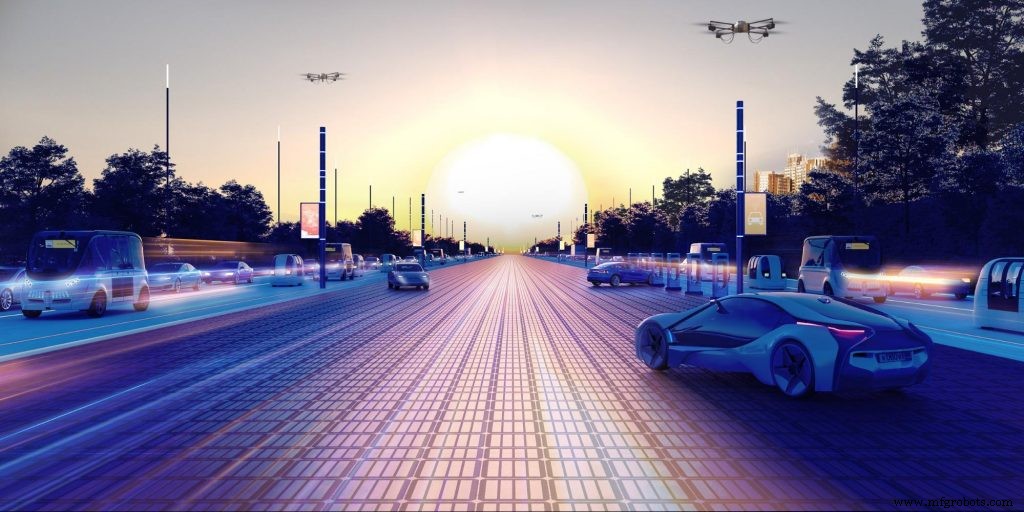
“New Deal, Les Routes du Futur du Grand Paris”, CRA-Carlo Ratti Associati
Industrial Technology
- Materials That Build Reliable O‑Rings: Silicone, Neoprene, Aflas & More
- Electronics: A Hands‑On Science for All
- From Star Trek to Reality: Si‑Ware’s Handheld NeoSpectra Sensors Transform Material Analysis
- Turning Industry 4.0 into Reality: From Shopfloor to Data Center Alignment
- RapidDirect: Turning Your Product Ideas into Reality
- Manufacturers Drive Efficiency: How Digital Transformation Fuels Better Decision‑Making
- Five Key AI Innovations Elevating Intelligent Automation
- Brake Shoes Explained: Their Role in Industrial Safety
- Bilfinger UK Drives Digital Transformation in the Process Industry
- Revolutionizing Material Cutting: Latest Robotics Innovations