



Zinc Explained: Key Facts, Uses, and Chemical Properties
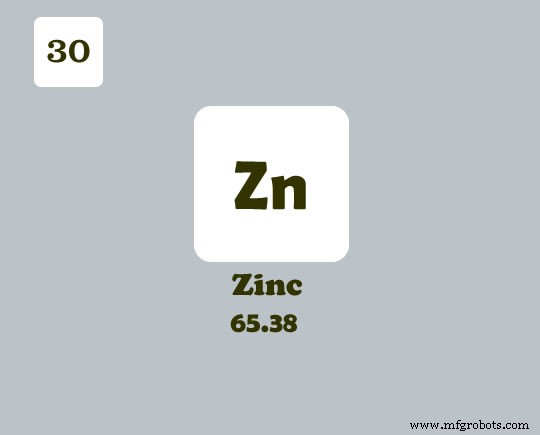
In the periodic table, zinc is designated with the chemical symbol of Zn and an atomic number of 30. The number of electrons per shell is 2, 8, 18 and 2. The two valence electrons of zinc are in charge of shaping bonds with different atoms, which is determined by its electron affinity, electro-negativity and ionization energies. Zinc effectively responds with oxygen to make zinc oxide. It additionally forms alloys with other metallic elements and are used for industrial purposes.
1. How did the zinc get its name?
The name for the element zinc originates from the German word "Zink". According to the Royal Society of Chemists, it is originated from the Persian word "Seng", which implies stone. Zink could likewise infer "Tin-like" as a result of its connection to German word zinn signifies tin. The metal was also called Indian Tin, tutanego, calamine, and spinter.
2. Occurrence of Zinc on earth.
Zinc makes up around 75 parts per million (0.0075per cent) of Earth's crust, making it the 24th most abundant component. Soil contains zinc in 5–770 parts per million with a normal 64 parts per million. Seawater has just 30 parts per billion and the air, 0.1–4 µg/m3. The component is typically found in association with other base metals, for example: copper and lead in minerals.
Distinguished world zinc assets add up to around 1.9–2.8 billion tons. Vast deposits are in Australia, Canada and the United States, with the biggest reserves in Iran. Moreover, zinc is acquired from its minerals by concentrating and roasting the ore, at the point lessening it to zinc by heating with carbon or by electrolysis. World’s production is more than 11 million tonnes per year.
3. Common uses of Zinc (Zn)
• Most zinc is utilized to galvanise (to stimulate with electric current) other metals, for example: iron, to prevent rusting. Galvanised steel is utilized for automobiles, street light and security hindrances.
• Large amounts of zinc are utilized to produce die-castings, which are essential in the automobile, electrical and hardware businesses. Zinc is additionally utilized as a part of alloys, for example, metal, nickel silver and aluminium bind.
• Zinc oxide is generally utilized to manufacture paints, rubber, cosmetics, pharmaceuticals, plastics, inks, cleansers, batteries, textiles and electrical materials. Zinc sulphide is utilized as a part of making glowing paints, bright lights and x-beam screens.
• Zinc has solid hostile to destructive properties, which make it resistant to the form rust. At the point when consolidated with iron and steel, it is utilized to make things that need to withstand the components.
4. What are the chemical properties of zinc?
-
Non-bonded atomic radius of 2.01.
-
Covalent radius of 1.20
-
Electronegativity of 1.65 on the basis of Pauling scale
-
Zinc is a transition metallic element.
-
It is a reasonable conductor of power, and burns in air with a bright bluish-green flame producing white clouds on oxide.
-
Zinc exposed to air will form a layer of zinc carbonate by reacting with carbon dioxide This layer protects the metal from further reactions with air or water.
Industrial Technology
- Unique Facts About Niobium: Properties, Uses, and Global Significance
- Key Insights: Choosing the Right Batch Coding Machine for Your Business
- Essential Mechanical Properties Every Mechanical Engineer Must Master
- Zinc Explained: Key Facts, Uses, and Chemical Properties
- 5 Essential Insights into CNC Machining for Modern Manufacturing
- Galvanized Sheet Metal: Essential Facts & Best Practices for Durability and Corrosion Protection
- Essential Bolt Facts: What You Must Know
- Essential Machining Accuracy Principles Every Machinist Should Master
- Six Essential Rivet Types Every Design Engineer Should Master
- Key Design Factors Influencing PCB Thickness for Reliable Performance