



White Paper: Shaping Tomorrow’s Manufacturing – The Smart Factory Blueprint
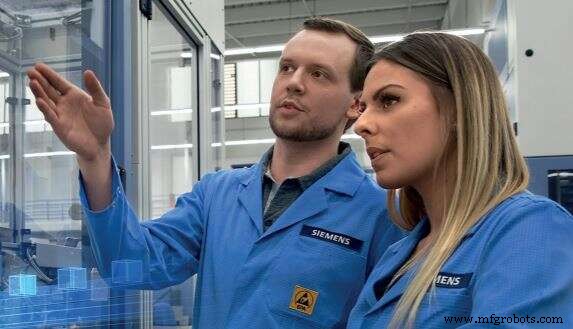
In a recently published white paper, Siemens Digital Industries Software details many of the common elements that are needed in order to make a normal factory a smart factory.
From the paper’s description:
Developed countries are investing a lot of effort in advancing the concept of the smart factory. They expect it will enable them to maintain superior production efficiency and keep production jobs. But what is a smart factory?
This white paper focuses on the details and reviews some of the concepts that help make a factory smart. Learn how smart technology in the electronics industry will maximize operations performance, reduce cost and help edge out the competition. The breakthrough strengths and technologies of the smart factory include shop-floor connectivity, advanced robotics, flexible automation, automation standards, virtual and augmented reality and energy management.
The following is an excerpt from the paper:
A smart factory is based on a set of manufacturing concepts such as full connectivity, flexibility, agility, lot size of one, parts, subassemblies and products moving on automated-guided vehicles (AGVs).3 With no predefined route, the AGV moves from station-to-station based on the manufacturing process plan, but can re-plan its next location based on the availability of production, a production machine, or assembly inspection station.
At any point in time and on-the-fly the AGV recalculates the trip to its next production location, while the necessary electronic work instructions are dynamically sent to that new location. Robot, machine or 3D printer instructions will upload to the next station and wait for the new job to arrive. The same is true for cutting tools, fixtures, jigs or any other production resource needed for the next production step.
All production devices will be fully connected and at a minimum will communicate their location, status (working, waiting or blocked), temperature, humidity, etc. In cases in which the production system is a computercontrolled machine or station, the information could be much richer. In cases in which the station is a manual station, or based on an older machine, the information is collected via attachable sensors.
Read the white paper in full by clicking on the link below:
The Smart Factory: Defining the factory of the future
Industrial Technology
- How Digital Transformation is Reshaping the Paper Industry's Future
- How 5G is Transforming Smart Factories into High‑Performance Powerhouses
- Airbus Unveils the Factory of the Future: Smart Production and Advanced Robotics
- Could Smart Factories Restore U.S. Manufacturing Productivity?
- How Smart Manufacturing Software Is Shaping the Future of Production
- Transform Your Business: Why Every Company Must Embrace Smart Factory Solutions
- Smart Factory Connectivity: Advancing Industrial IoT Efficiency
- Leading the Transition to Smart Factories: Strategies for Successful Change Management
- Factory of the Future: Mastering Industry 4.0 and Smart Manufacturing
- Distributed Manufacturing: The Future of Production Efficiency