



Sheet Metal Fabrication 101: Mastering the Basics of Metal Sheet Production
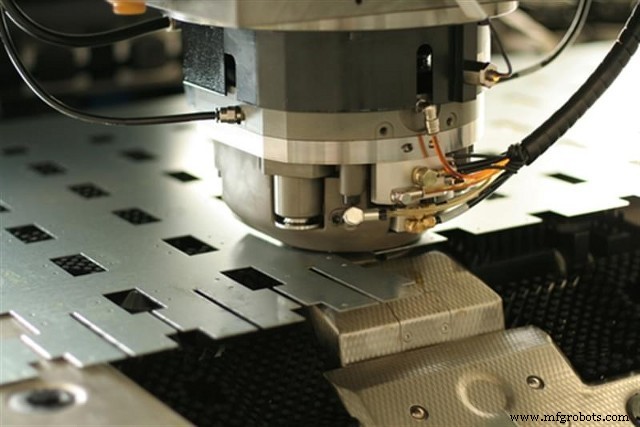
Before choosing to work with a new manufacturing process, it is important to understand the fundamentals of the technology. That is, you need to get familiar with what it is, how it works, and its various advantages. In this article, we will cover sheet metal fabrication basics. We aim to shed light on this metal production technique with numerous applications across many industries.
What is Sheet Metal Fabrication?
Sheet metal fabrication refers to the turning of flat metal sheets into metal products and structures. Typically, sheet metal processing methods involve transforming different types of sheet metals into parts and components. Therefore, it is helpful to think of this metal forming process not as a single manufacturing process but as a collection of forming techniques.
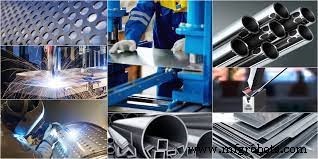
These techniques often work in tandem with one another to produce the required part. The basic sheet metal fabrication techniques include cutting, bending, punching, stamping, welding, and finishing. We will dive into the details of these techniques shortly.
Sheet metal manufacturing is suitable for a range of metal materials. At RapidDirect, for instance, we produce sheet metal components made from Aluminum, Steel, Stainless Steel, Copper, and Brass. The manufacturing process is so common that you are unlikely to go about your day without encountering a sheet metal fabricated product. Whether it’s a home appliance or smaller parts like brackets or enclosures, you’ll find these products everywhere.
A Guide to Sheet Metal Design Process
Many people tend not to understand the basic steps involved in the sheet metal manufacturing process. The absence of fundamental knowledge can make it difficult to have realistic requirements and expectations for a project. The sheet metal processing methods often involve a multi-step process, requiring several skilled experts and tools for successful job completion.
From start to end, the metal fabrication design process involves:
The Idea
Every rapid prototyping process begins with an idea, and sheet metal design is no exception. It begins with basic concepts of what you want as a designer. You can put these ideas down roughly to provide realistic requirements for your project. It may also involve the designing of a 3D model of the desired sheet metal component. The model often includes requirements for wall thickness, bend radii, hole orientation, bend allowance, and more.
Creating Engineering Drawings
After the completion of a 3D model, there is a need to create drawings for manufacturing. Before any work can begin, engineers need to develop blueprints. These blueprints will determine the specifications of the sheet metal needed to make initial drawings.
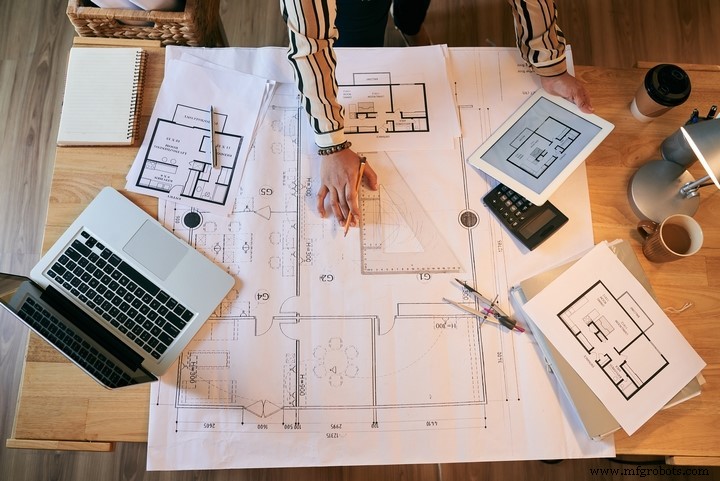
The drawings are what will be sent to the machine shop. The drawings often include all manufacturing information such as material selection, surface finishing, and more.
Manufacturability Analysis
Along with other related calculations, the drawings will be rechecked to ensure they follow requirements and specifications. Following a DfM strategy helps to focus on simplifying the designs and possible reduction of part counts. Such analysis suggests standardizing parts for various applications.
Furthermore, engineers will get insights into developing designs that can be easily manufactured. Once the manufacturability analysis is complete, there will be a final shop drawing with in-depth calculations of stress/strain levels and load limitations. The information available therein will determine the sheet metal fabrication process.
Prototype Development
Once there is a sheet metal design model, engineers carry out several processes to maintain the component’s geometry. These methods include cutting, bending, punching, stamping, and welding. Surface finishes also help to improve the aesthetics of the created prototype. It is important to carry out these steps one after the other. Rushing through the process or skipping one step may compromise the quality and integrity of the final product.
Prototype Testing
After developing the prototype, clients then evaluate the prototype to ensure that it meets their requirements. The testing may also involve using such components in real-life conditions. Also, evaluation can be done with users giving feedback on the products.
Full-Scale Production
A prototype that passes testing and meets the required specification will go into full part production.
Sheet Metal Fabrication Methods
To understand the formation of different parts using sheet metal fabrication, it is imperative to know the different types of techniques used. These sheet metal processing methods help to transform flat sheets of metal into three-dimensional, functional components. Below are the most common sheet metal processing techniques.
Cutting
Cutting is typically the first step in sheet metal manufacturing. As the name clearly indicates, it consists of cutting the metal sheet. In other words, manufacturers start with a rectangular metal sheet and, based on the customer’s part design, the material is cut to size. There are various methods for cutting sheet metals.
For instance, cutting metal sheets is possible using shear, which uses shear forces to cut through the metal. There are three options involved in this type of cutting – shearing, punching, and blanking. On the other hand, fabricators also carry out cutting without shear. This is the ideal process for industrial projects requiring precision cutting and faster lead times.
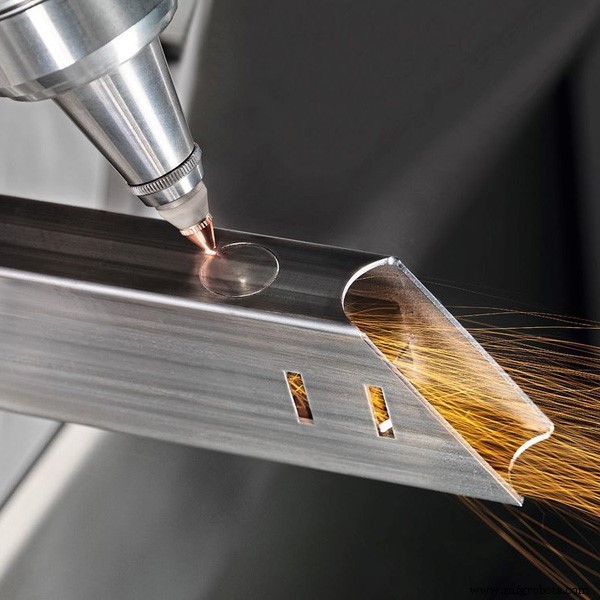
At RapidDirect, we leverage sheet metal laser cutting, with is a shear-less process. We consider this process better suited to industrial applications. Laser cutting enables a high degree of precision (+/- 0.1 mm) and is time-efficient. We also offer plasma cutting and waterjet cutting, which also offer high precision cutting.
Stamping
Stamping is a cold-forming method that transforms flat metal blanks into various shapes. The process uses a tool and die, which, when impacted, change the form of the metal through the use of shear pressure.
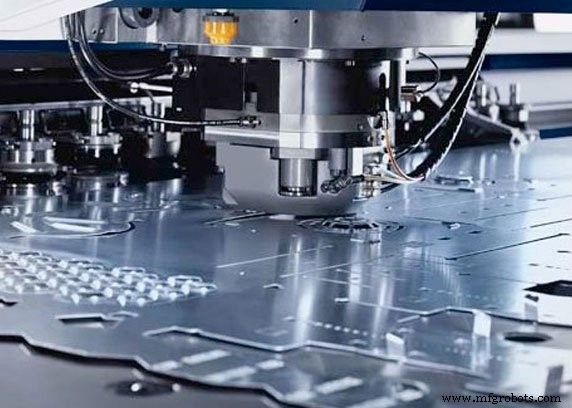
Stamping is a broader term within sheet metal manufacturing. It encompasses punching, bending, as well as embossing. It also incorporates flanging, which entails swiping the sheet of metal in such a way as to form flanges.
Bending
Bending is another critical step in sheet metal fabrication. As the name implies, it consists of bending the metal sheets. Metal fabricators carry out sheet metal bending using press brakes, rolling machines, and other equipment. The sets of equipment create standard shapes such as U-bends or V-bends.
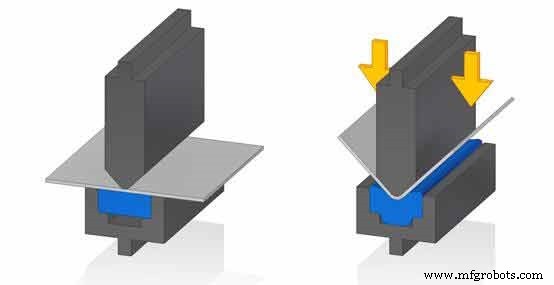
Despite how simple bending may seem to the untrained eye, it is a rather complex process that requires a highly skilled manufacturer. This is due primarily to the occurrence of “spring back,” which is the term for when metal inevitably tries to regain its original flat structure after bending. To overcome this sheet metal fabrication problem, operators must overbend the part so that its spring-back angle is the desired angle.
Punching
Punching is a technique used to create holes in a metal sheet. The method relies on a punch and die (often made from a hard metal). The materials use shear force to perforate holes into the metal sheet. The die then collects the scrap material created from the hole. Punching also helps to make an indentation in the metal sheet. At RapidDirect, our CNC punching capability can create holes up to 50 mm in diameter.
Welding
Welding is one of the final stages in sheet metal fabrication. It is a sheet metal fundamental process for joining metal pieces together into a single part. A wide range of welding techniques is available, including stick welding, MIG, and TIG.
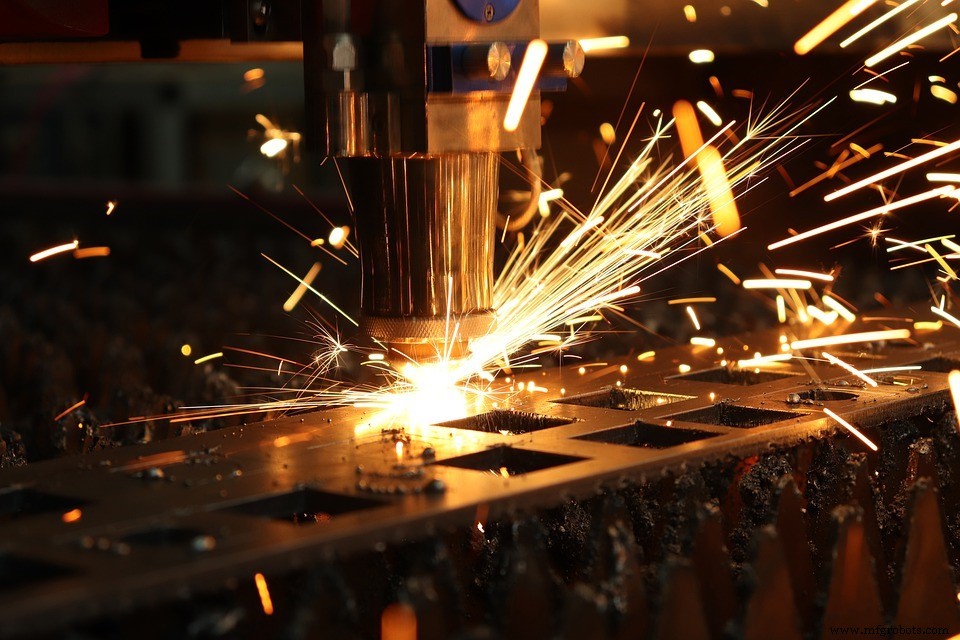
Though varied in their approach, all three have the function of joining metal together by melting the edge of the part and adding filler. This creates a metallurgical bond between the pieces, strongly fusing them together. Welding is only necessary, of course, if a product comes with two or more separate components.
If you need sheet metal fabricated components, contact RapidDirect now.
Material Selection for Sheet Metal Fabrication
There is a wide range of materials used in sheet metal engineering. It is important to make the best choice for your product to ensure optimal quality.
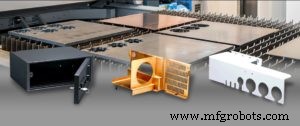
Your choice should depend on your desired end product and overall expectations for it. Here are some of the sheet metal materials used in fabrication:
- Stainless Steel – There are several stainless steel types that you can choose from. They can be austenitic stainless steel. These are non-magnetic metals with high nickel and chromium levels. They are widely used due to their resistance to corrosion and formability. Ferritic stainless, on the other hand, are magnetic. They are good for non-structural or decorative applications. Martensitic stainless also give strong and corrosion-resistant products.
- Hot Rolled Steel – A type of steel produced when a series of roll processes (at over 1700 degrees Fahrenheit) create steel. You can easily form such steels into large pieces due to their flexibility.
- Cold Rolled Steel – This is essentially hot-rolled steel with further processing. They are smoother and come with better tolerances.
- Pre-Plated Steel – These are also referred to as galvanized sheet metal materials. They come with a protective coating to prevent them from rusting. They also support easy sheet metal processing methods due to increased ductility.
- Aluminum – Another popular choice for the manufacturing sectors. It comes with an excellent strength-to-weight ratio. It also comes with many characteristics that help it meet many application requirements.
- Copper/Brass – Working on brass is easy, thanks to its lower zinc content. Copper metals also come with protective oxide layers to prevent corrosion. Both materials are desirable in architectural products for aesthetically pleasing looks.
Surface Finish Selection for Sheet Metal Fabrication
Surface finishing is another important aspect of custom sheet metal fabrication. The metal surface finishes have both aesthetic and functional benefits.
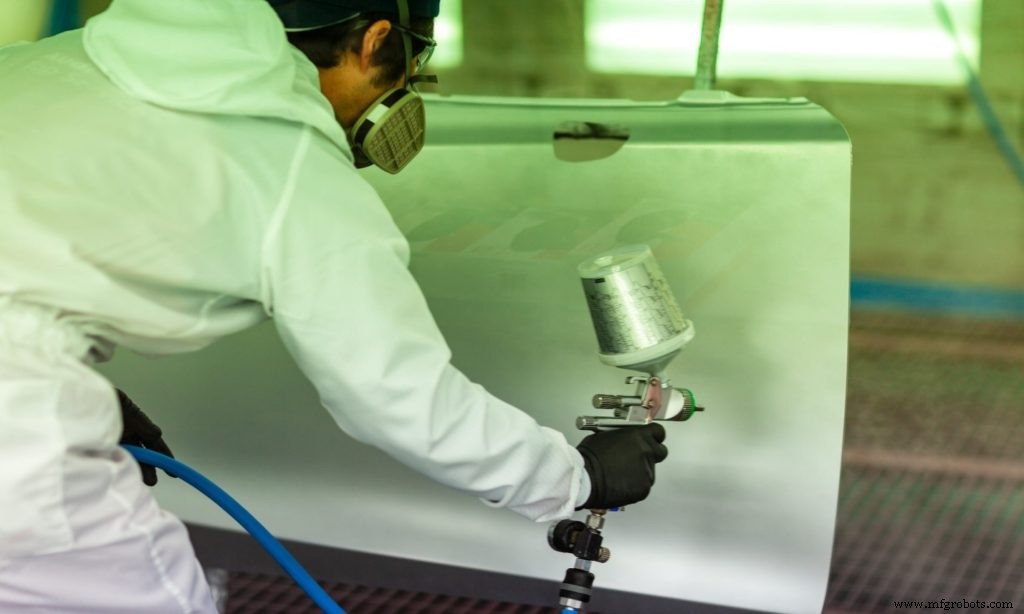
Some of the surface finishes you can apply on sheet metal are:
- Sand Blasting – This method involves the shooting of sand or other abrasives against the sheet metal at high speed. Thus, it gives the sheet metal a matte texture to prepare it for coating.
- Buff Polishing – In this method, a cloth wheel is used to buff the metal surface, making it look shiny.
- Powder Coating – This involves the direct spraying of powdered paint onto the metal part. This is followed by baking the part in an oven to form a wear-resistant layer.
- Anodizing – Anodizing helps to give a component with excellent rust resistance properties. It also improves the hardness and durability of the surface.
- Chemical Films – These are finishes that provide good conductivity and corrosion resistance. This coating process best serves as a base for paint, and it gives a golden surface finish.
Design Considerations for Sheet Metal Fabrication
Here are some of the important design features to consider when modeling a sheet metal part:
- Wall Thickness: Uniform thickness is very important for any geometry. Geometries with more than one wall thickness will require sheet metals of different thicknesses. Therefore, the alignment and orientation of parts may be inaccurate or take time.
- Bend Radii: It is important to keep the inside bend radius of sheet metal at least equal to its thickness. This will help to avoid distortions and fractions in the final parts. Maintaining the bend radii consistently across the part ensures cost-effectiveness and good orientation.
- Bend Allowance and Deduction: Bend allowance is the material needed to be added to the actual lengths of the parts to help develop a flat pattern. Bend deduction is the material needed to be removed from the length of flanges to help get a flat pattern.
- K Factor: K factor is the sheet metal process is the ratio of neutral axis to material thickness. This value changes with respect to the various physical properties and thickness of materials used.
- Holes and Slots Orientation: These factors are also very important. Holes and slots diameter should at least be as large as the thickness of the sheet metal. Also, holes should be reasonably spaced. They should never be too close to the edge of the material.
Other additional features to consider include hems, notches, tabs, curls, fillets, countersinks.
Some DfM Tips for Sheet Metal Fabrication
It is important to note some effective sheet metal fabrication design tips for a better and rapid creation of components.
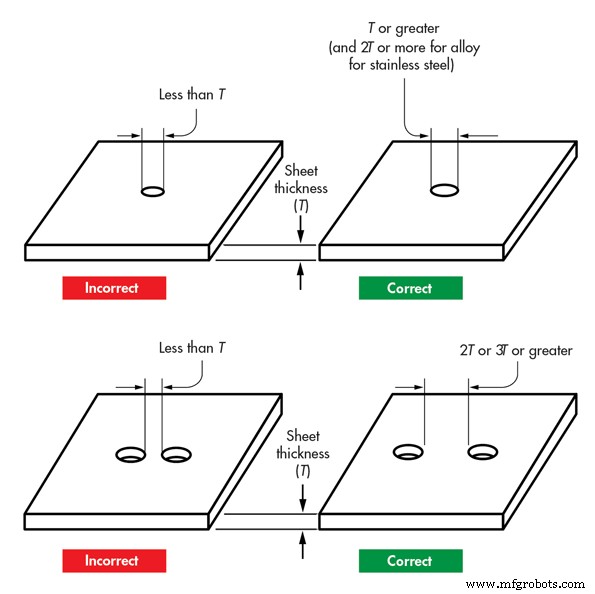
It is vital to specify hole sizes, alignment, and locations in a sheet metal design. Hole diameters lesser than the thickness of sheet metal may result in long burnish, high punch loading, and excessive burr. Therefore, hole diameters should be greater than the sheet metal’s thickness.
Also, the distance between holes should be at least twice the sheet metal thickness. In cases where there must be a hole near the edge, spacing between the hole and the edge should be at least the sheet thickness.
Collars and bend relief near pierce areas help to strengthen sheet metal parts. Grain structures are also important to avoid cracks in parts with tabs or lugs. Lugs should not be parallel to the grain direction. This may lead to the formation of cracks. Rather, they should be perpendicular or a little less than 45 degrees towards the grain direction.
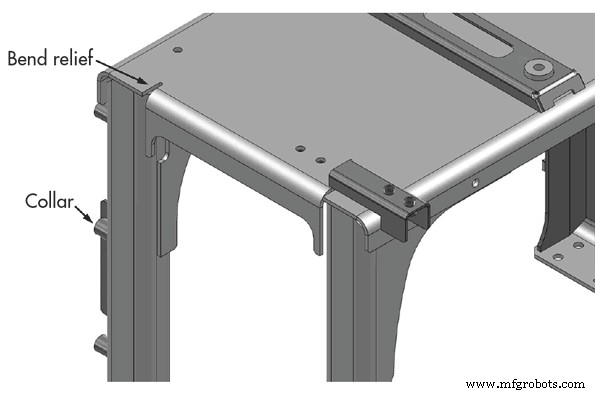
You should also keep the punch-to-die clearances large to avoid premature wearing out of the punch. Also, you tend to increase stiffness by putting beads on bends and chamfers at corners. This way, you can reduce the spring-back effect. A sheet metal part can easily maintain its flatness and strength by coining around flared holes.
RapidDirect’s Sheet Metal Fabrication
Sheet metal fabrication is a science and an art. Its extensive range of nuances and techniques makes it important for a skilled metal fabricator to handle every project. Since you know the sheet metal design basics, let a professional service take care of the rest!
With RapidDirect, you can reap the benefits of the sheet metal processing methods as well as our automated and highly streamlined production service. With our service, you can expect a sheet metal fabrication quote within 12 hours and lead times as quickly as three days.
Our rapid prototyping offering also includes a solid and reliable manufacturing capability (led by our expert team with 20+ years of experience) and technical and quality assurance, including SGS and RoHS material certifications, in-process quality reports, and First Article Inspection.
Industrial Technology
- Understanding Sheet Metal Fabrication: Techniques & Applications
- Master Electronic Enclosure Design: A Comprehensive Sheet Metal Guide
- Mastering Sheet Metal Fabrication: Cutting, Bending, and Advanced Techniques
- Sheet Metal Fabrication 101: Mastering the Basics of Metal Sheet Production
- Sheet Metal Brakes Explained: How They Bend and Shape Metal
- Expert Sheet Metal Fabrication Services Tailored to Your Project
- Professional Sheet Metal Fabrication: Cutting, Forming, and Pressing for Industrial Applications
- Master Sheet Metal Bending: A Practical Guide & Expert Tips
- Sheet Metal Stamping Explained: A Beginner's Comprehensive Guide
- Mastering Sheet Metal Fabrication: Your Complete Guide