



Understanding Sheet Metal Fabrication: Techniques & Applications
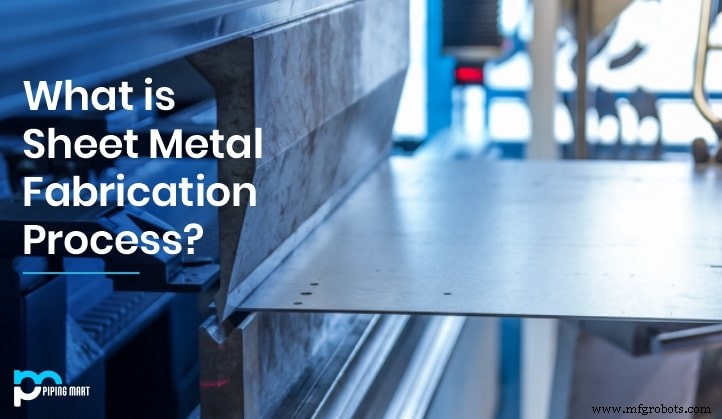
Sheet metal fabrication turns flat sheets of steel, aluminum, or other metals into functional components by cutting, bending, and assembling. With precise control, virtually any shape can be achieved, enabling the production of everything from structural panels to intricate architectural elements.
Resistance Welding
Resistance welding joins metal pieces by applying pressure and passing electric current through the contact area for a short duration. Because it relies solely on the metals’ own resistance, no filler material is required, reducing cost and simplifying the process. The technique is especially valuable for high‑volume, high‑strength applications such as automotive frames and pressure vessels.
Expanded Metal
When open‑space designs are needed, expanded metal offers a lightweight, high‑strength alternative to wire mesh. Sheets are drawn through a specialized expansion die, creating a lattice of symmetrical holes—typically diamond‑shaped but also hexagonal or square—without material loss. The resulting product is stronger than comparable wire mesh, lighter than solid sheet, and more material‑efficient than laser‑cut perforations.
Bending
Bending remains one of the most straightforward yet essential fabrication steps. By applying controlled force—often through a die or press—metal is shaped into precise angles or curves. Modern press brakes can bend up to 6 mm thick sheets with a tolerance of ±1°, making it possible to create complex assemblies that combine cutting, bending, and welding in a single workflow.
Laser Cutting
Laser cutting delivers clean, stress‑free edges for complex geometries that cannot be achieved with traditional punch or shear tools. The focused beam removes material with minimal heat‑affected zones, preserving the structural integrity of the surrounding metal. This method is ideal for producing intricate patterns, tight tolerances, and high‑precision components across a variety of industries.
Shrinking
Shrinking corrects oversize or distorted sheets by applying heat, allowing the metal to contract to its intended dimensions upon cooling. A complementary technique, tucking, involves manually bending the sheet to reduce surface area and form rounded edges. These methods are commonly employed to remove defects and achieve final shape accuracy.
Stretching
Stretching, whether by hammering, rolling, or using a stretch machine, thins the metal and expands its surface area. The process is effective for correcting dents, smoothing bunched regions, and extending the sheet beyond the limits of conventional bending. Both shrinking and stretching alter the metal’s microstructure, so they are typically followed by heat treatment to restore desired mechanical properties.
Metal
- Sheet Metal Screws Explained: Types, Features, and Proper Use
- Sheet Metal Fabrication: From Design to Delivery – A Complete Process Guide
- Deep Drawing Process Explained: How Sheet Metal is Formed into Complex Shapes
- Sheet Metal Forming: Techniques & Applications for Modern Manufacturing
- Choosing the Right Sheet Metal Fabrication Method for Your Project
- Professional Sheet Metal Fabrication: Cutting, Forming, and Pressing for Industrial Applications
- Understanding Sheet Metal Punching: Process, Tools, and Applications
- Straightening Sheet Metal: What It Is & Why It Matters
- Understanding Steel Fabrication: Processes, Materials, and Applications
- Mastering Sheet Metal Fabrication: Your Complete Guide