



CNC Milling vs. CNC Turning Explained: Which Method Suits Your Project?
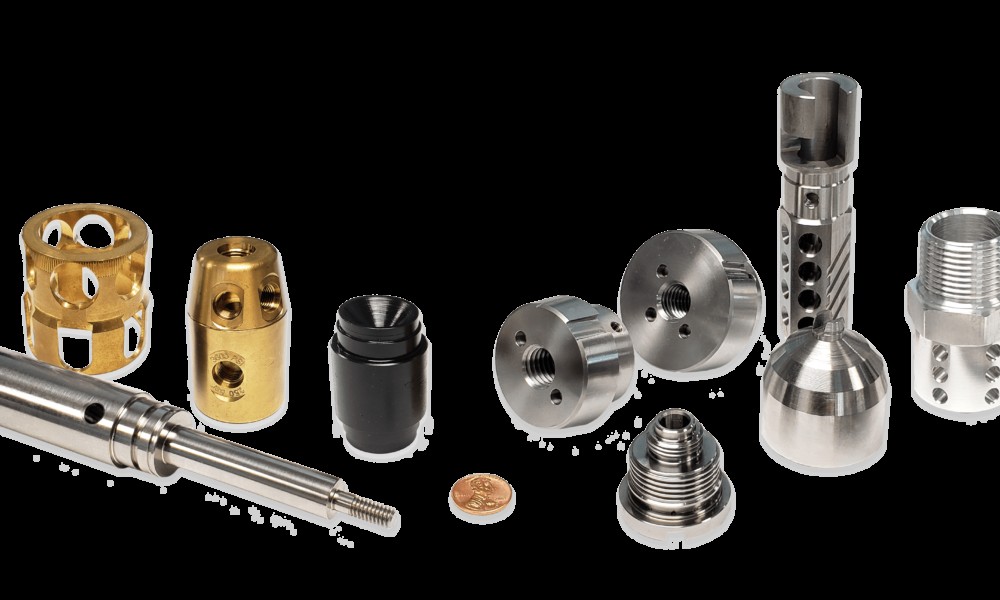
CNC machining is a rapid manufacturing process that turns digital 3D designs into plastic or metal parts by selectively cutting away material. Many companies require CNC machining services to make parts and prototypes, and many industries use versatile technology.
But CNC machining comes in various forms. Although all CNC machining technologies follow a similar workflow — software turns the digital design into machine instructions, which instruct the CNC machine to cut material — the hardware for cutting material can differ greatly between machines.
This article discusses the main differences between two of those machines: CNC mills and CNC turning (or lathes centers).
In the article we discuss the essential features of CNC milling and CNC turning while also presenting the main advantages of each technology and a selection of common parts that companies can manufacture using each process.
What is CNC Milling?
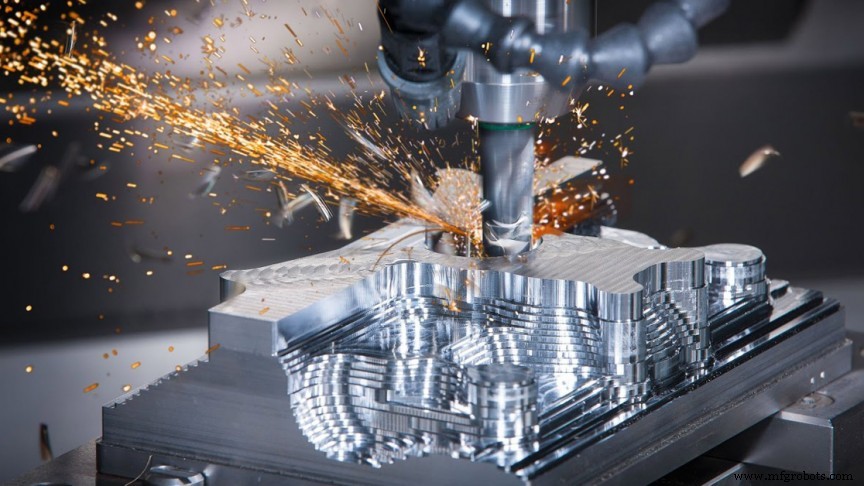
CNC milling is one of the most common CNC machining services, and machinists can use it to make a wide variety of CNC machined parts. Prototype companies often use CNC mills to make one-off functional prototypes.
CNC mills use computer instructions to move a rapidly rotating cutting tool along three or more axes. When the spinning cutting tool makes contact with the workpiece, it removes material in a controlled manner. The cutting tool makes a succession of passes against the surface of the workpiece until the workpiece resembles the desired part.
Most CNC mills keep the workpiece stationary, holding it down on the machine bed with a vice. However, multi-axis CNC mills may rock or rotate the workpiece to create a greater number of cutting angles. This allows the machinist to create more complex parts without having to manually reorient the workpiece.
Providers of rapid prototyping services use CNC milling because it is a one-stop, end-to-end process with short lead times.
What is CNC Turning?
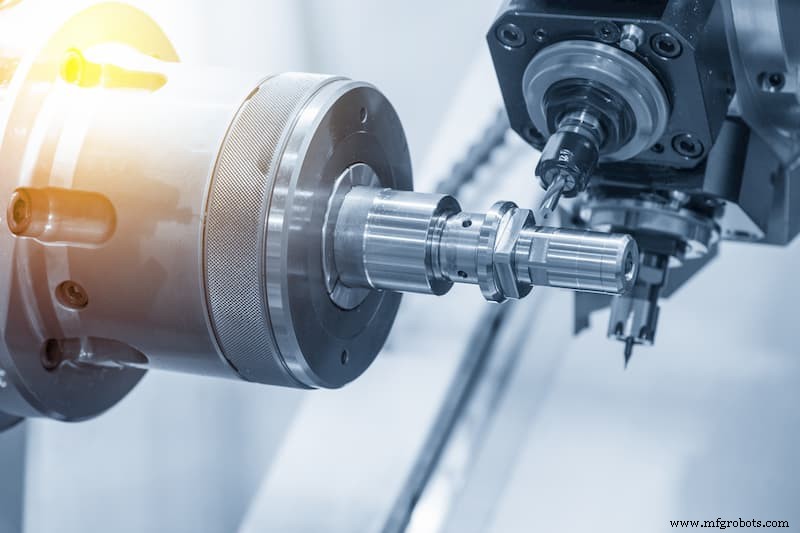
CNC turning is a form of CNC machining that machinists use to make rounded, cylindrical, and conical parts. Although it is less versatile than CNC milling, it is one of the most popular CNC machining services and rapid prototyping services.
Machines that carry out CNC turning are called CNC lathes or CNC turning centers. They are different from CNC mills in that they rapidly rotate the workpiece in a chuck but do not rotate the cutting tool. The cutting tool, affixed to a turret, moves towards the spinning workpiece under computer instructions and removes material where necessary.
A CNC lathe can cut the outside of the workpiece or bore through the inside to create tubular CNC machined parts.
The turret of the machine may have multiple cutting tools that can be individually engaged as required.
Advantages of CNC Milling
CNC mills offer numerous advantages to manufacturers and prototype companies. Unlike lathes, mills are versatile machines capable of creating a range of different shapes. Furthermore, a variety of cutting tools can be used to serve different operations such as roughing and end-milling.
Although they are manufacturing machines in their own right, mills are also useful for post-machining. For example, they can be used to add details to turned, molded, or 3D printed parts.
CNC milling is also fast, repeatable, and inexpensive in low volumes — partly because it does not require tooling. It is therefore found among manufacturing services and rapid prototyping services.
Advantages of CNC Turning
The biggest advantage of CNC turning is its ability to create round profiles. It is much more difficult to achieve perfect roundness using other CNC machining services like CNC milling or CNC routing.
CNC turning is also highly accurate, which makes it a valuable technology for boring holes of precise dimensions with set tolerances.
CNC milling and CNC turning can be combined to reap the benefits of both processes. In most cases, CNC turning takes place first, allowing the machinist to mill further (asymmetrical) details on the part.
Parts made with CNC Milling
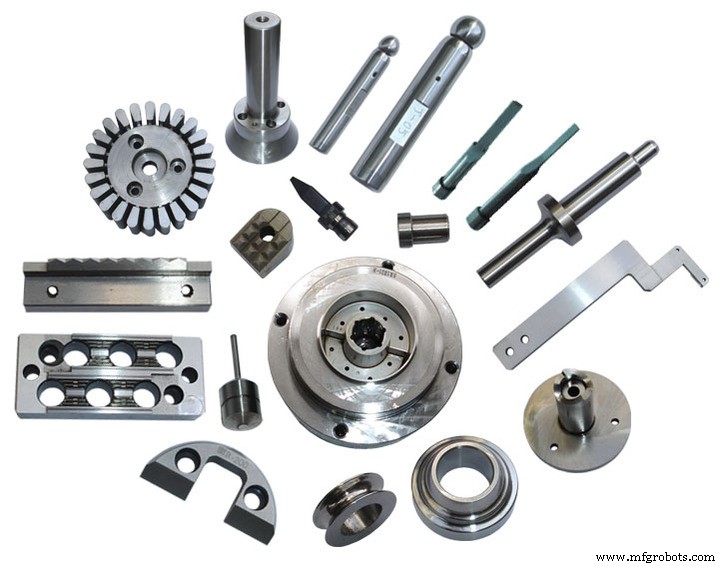
Example parts made with CNC milling include:
- Fittings: Milled fittings connect two or more parts together
- Enclosures and housings: Electrical devices and other products can use custom-milled enclosures to protect internal components
- Brackets: Milled brackets can contain custom threads and holes and may be more complex than sheet metal brackets
- Gears: CNC milling can produce straight and spiral gears for mechanical devices
- Mold tooling: Milled tooling, made of steel or aluminum, allows for rapid prototyping of molded parts
- Engine parts: Automotive engineers use CNC milling for engine blocks and other parts
- Medical devices: CNC mills can produce implants, surgical instruments, and other medical devices
- Water pumps: Multi-axis mills can create reliable impellers for hydraulic equipment
- Forming punches: CNC mills can create other manufacturing equipment, such as forming punches for sheet metal fabrication
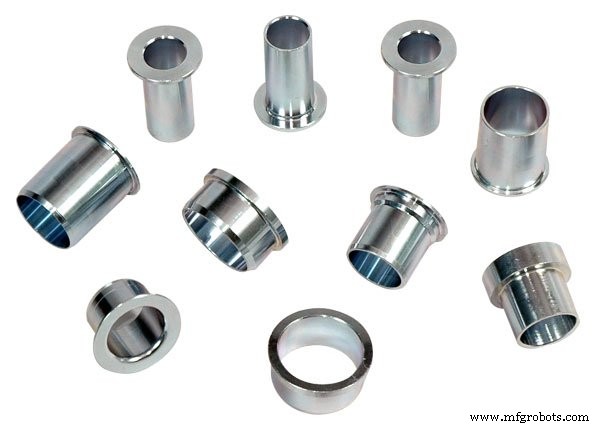
Parts made with CNC Turning
Example parts made with CNC turning include:
- Rollers: CNC lathes can fabricate rollers with tight tolerances for industrial use
- Ball joints: CNC turning is ideal for rounded connective devices like ball joints
- Nuts and bolts: The accuracy of turning makes it suitable for tolerance-critical items like nuts and bolts
- Shafts: Shafts with rounded profiles are highly suited to CNC turning
- Flanges: CNC turned flanges can strengthen beams and pipes
- Nozzles: Nozzles are typically cylindrical or conical with hollow insides, making them suitable for CNC turning
- Turbines: CNC turning can produce round turbine blades for the energy industry
- Firearms: A CNC lathe can produce the tubular shape required for a firearm barrel
Which should you choose?
As a rule of thumb, CNC turning is best for parts with round, cylindrical, or conical profiles, and CNC milling is best for everything else. If in doubt, a machining expert can guide you to the right CNC machining service for your unique project.
That being said, CNC milling and CNC turning can be combined to good effect. If a part has a predominantly round shape but also requires asymmetrical cuts or features, CNC milling can follow CNC turning in sequence. And although it is less common, CNC turning can also follow CNC milling — if a boxy or irregular-shaped part requires a large hole bored through its center, for example.
Finally, sometimes you don’t have to choose: CNC milling-turning centers integrate both technologies into a single production device.
Industrial Technology
- Boring vs. Turning: Expert Guide to Metal Fabrication Processes
- Simplify Custom Car Parts with 3D Printing: Your Comprehensive Guide
- Everything You Must Know About Wi‑Fi 6E: The Next‑Generation Wireless Revolution
- Battery Separators Explained: How They Keep Your Devices Safe and Efficient
- Power Transistors Explained: Key Features, Benefits, and Applications
- 1N5402 Diode Explained: Specs, Applications, and Performance
- Essential CNC Milling Basics: Mastering Contour & Profile Machining
- CNC Turning vs CNC Milling: How to Choose the Right Process
- Comprehensive CNC Milling Guide: Techniques, Materials, and Best Practices
- CNC Machining for Aerospace: 5 Essential Insights Every Engineer Should Know