



Future Workforce in Industry 4.0
Sure you already know what is Industry 4.0, its benefits, its applications and how it fits into the Industrial automation. In this post we tell you how the worker of the future (and the present) will be, since he will have to be knowledgeable about 4.0 technologies in depth.
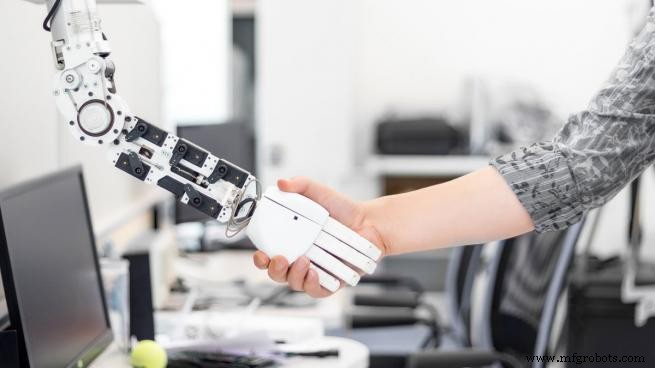
How does Industry 4.0 affect workers?
Industry 4.0 affects differently depending on the job. While it is true that many positions will be automated, new ones will be created as programmers, developers, automation and systems engineers, among others, where speed, intuition and judgment of people are needed, and added value is provided.
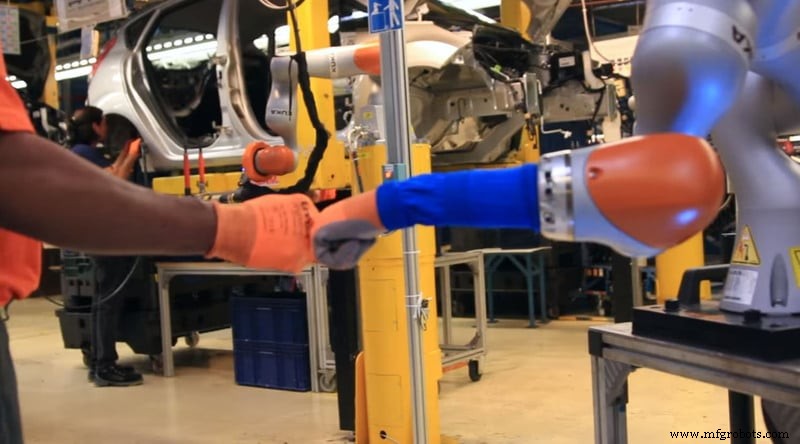
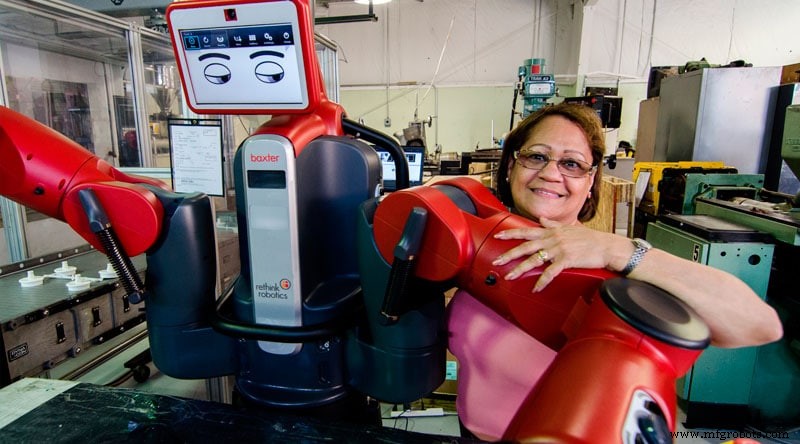
There is another large group of applications, in which there is a close collaboration between new technologies and traditional line operators, such as collaborative robots, which help with tedious, not very ergonomic and repetitive work. So they will make tasks that require of the faculties previously indicated.
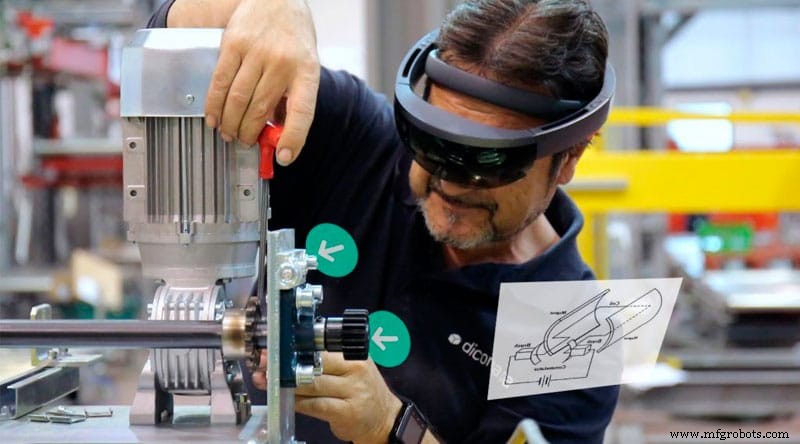
Another related concept is “operator digitization”, where a series of new tools allow him to do his tasks more efficiently. For example, Augmented Reality can guide in the operations and assemblies that the operator has to carry out, indicating the steps to follow and checking that he implements them correctly. Here an example of this type of Projects carried out by us.
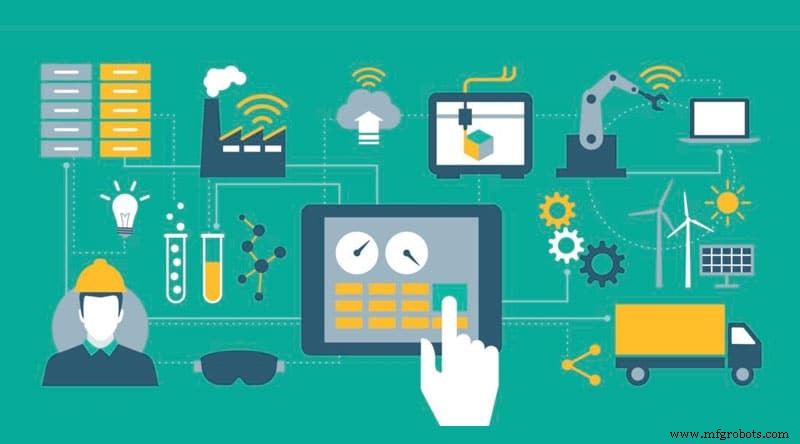
What is required of a 4.0 worker? New skills and knowledge
Industry 4.0 workers require new skills and knowledge.
To developers, programmers, computer vision engineers and automation and systems engineers the key is to know different programming languages and / or environments. Depending on the Project, the requirements of the company and how “open or closed” they want to have the code, one or another will be used.
Here is a list of the most common (not all have the same level of programming and use, but they are all very useful tools), but there are many more:
-
Java
-
Python
- C++
- SQL
- Lab View
- Halcon
A very valuable knowledge for an Industry 4.0 application developer is the ‘deep learning’ or neural networks. Knowledge of this type of network is necessary in cases where we require the system to learn from the data provided to it. The applications that are installed increasingly perform more complex tasks, so this type of networks are usually necessary. Examples that we use in our day to day of neural networks are Siri, Cortana or Google translator.
Among the ‘soft’ skills are the following:
- Adaptability: programming languages and environments change rapidly and it is necessary to continuously recycle to use the best tools at our disposal at all times.
- Coordination with the team: these applications are usually developed in teams and it is essential to have a good communication and fluency at work in order to coordinate programming modules, system communications, and their coupling with other technologies.
- Creativity: in order to develop new applications, usually complex, it is necessary to think creatively and look for non-obvious alternative solutions.
- Be critical: to solve the challenges that arise, the ability to be critical and not stay with the first idea is very necessary.
- Emotional intelligence: it is necessary to generate empathy and communication with the work team, as well as with the technology users, so that the Project can be successfully implemented and used.
For line operators who will be in contact with a collaborative robot, computer vision system or assembly guidance system, specific application training will be required. This training should allow the operator to know the security of the system, how the work sequence should be or what to do in case of error. In this way, the operator will be able to use the system with security and confidence, avoiding misuse or systems shut down due to ignorance.
For example, sequential and repetitive tasks are a good opportunity to introduce augmented reality into the process. In this way, it becomes a guided process reducing, in most cases, execution time and errors, increasing the quality of the final product. Using augmented reality, information can be projected in the form of text, images or videos that facilitate the task and reduce training time. On the other hand, it is important to provide the tools and means to use this system and the adequate training to understand it and know how to get the most out of it. In this link you can learn more details of a Project in which we carry out this work.
The introduction of new technologies in manufacturing processes requires an investment of time and resources by companies, both in the proper development of this type of applications and in the training of their workers. However, if it is done in the right way, it can report great improvements in terms of product quality, worker efficiency, and benefit to the company.
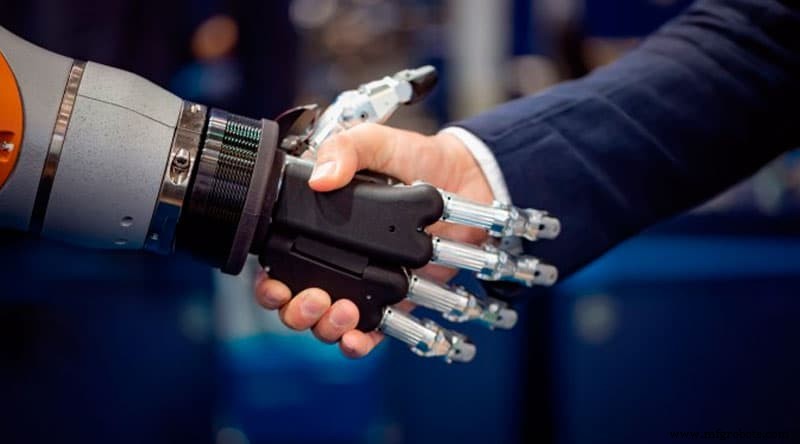
Do you want to apply Industry 4.0 in any of your Projects? Contact us!
Related Projects:
- Augmented reality for packaging placement
- Augmented reality and assembly of electronic boards
- Picking with vision and two-arm collaborative robot
Industrial Technology
- What Does SFM Stand For in CNC Machining?
- Exploring Industrial Automation: Types, Benefits, and Role in Industry 4.0
- Discover Hyperspectral Cameras: Advanced Material Identification & Precision Detection
- Revolutionizing Industry 4.0: How Computer Vision Drives Smart Manufacturing
- Industrial Drones: Revolutionizing Infrastructure Inspection & Logistics
- Essential 5 Steps to Successfully Deploy Industry 4.0 in Your Company
- Harnessing Machine Learning for Industrial Innovation
- Apply for Connected Industry 4.0 Grants—up to €300,000 for Industrial Innovation Projects
- Industry 4.0 Explained: Key Technologies & Benefits
- Unlocking Industry 4.0: Key Advantages for Modern Businesses