



Choosing the Right Barcode: 1D vs 2D Symbologies & Industry Standards Explained
Barcode labels are useful tools for tracking assets and inventory across organizations and through the entire supply chain, but what type of barcode is most suitable for your needs? A myriad of barcode symbologies exist, some of which are better suited to different types of applications than others. Additionally, some industries have standards that aim to regulate the labeling of assets and physical inventory in order to establish universal practices for industry-wide consistency, making it easier to transfer assets and data to other organizations. 
Making sense of all this information is no simple undertaking. We’ve put together this comprehensive guide to help you gain an understanding of the various barcode types as well as the standards and the different formats that apply to barcode labeling across a range of industries.
Jump to a specific section using the links below:
- The Main Types of Barcodes
- How Many Types of Barcodes Are There?
- What is a Standard Barcode Format?
- Numeric-Only Barcode Symbologies
- Alpha-Numeric Barcode Symbologies
- Two-Dimensional Barcode Symbologies
- Barcode Standards and Specifications
Image via Pixabay by RomanoWilly
The Main Types of Barcodes
The many different barcode symbologies can be grouped in one of a few primary types:
- Numeric-only barcodes
- Alpha-numeric barcodes
- 2-dimensional barcodes
Numeric-only barcodes, as the name suggests, are barcodes consisting of only numbers. Alpha-numeric barcodes, on the other hand, contain a combination of numbers and alphabetic characters (letters). Both of these types of barcodes are considered one-dimensional barcodes. Two-dimensional barcodes, often referred to as 2D barcodes, are in the shape of a square or rectangle and contain many small dots arranged in a unique pattern.
The main benefit of 2D barcodes is that they can hold much larger amounts of data in a small space, and they remain legible even when printed or etched into a product in small sizes. 2D barcodes are used in a variety of industries ranging from manufacturing and logistics to warehousing and healthcare. A QR code is just one example of a 2D barcode that most people have encountered.
Image via Pixabay by geralt
How Many Types of Barcodes Are There?
With a large number of scanners and barcode printers available on the market, there are potentially hundreds of different barcode configurations available. These barcodes can be customized for unique needs and specific workflows being used in various industries throughout the world. However, since many barcodes are used to transfer items between locations, organizations and systems some important standardization has occurred. There are about 30 major barcode formats that are commonly used today based on the linear numeric, linear alpha-numeric, and 2-dimensional designs. Each of these major formats has seen adoption in particular applications that can take advantage of their unique qualities.
The best way to identify a particular barcode is to compare it with a list of common barcode formats. For example, the Postnet format used by the United States Postal Service has a very distinguishable linear format of long and short lines that is easy to identify. In addition, a 2D barcode is often very easy to distinguish versus a linear barcode due to its use of squares instead of lines. With many other linear barcode formats, it can be difficult to differentiate between a numeric versus an alpha-numeric barcode as the printed design can look similar in some cases and characters are not always printed beneath the barcode.
What is a Standard Barcode Format?
While no single standardized barcode format exists, there are a few important specifications that define how they are designed and created. Barcode labels can differ in their size, capacity, linearity, material, and whether or not a checksum is required. The size of a label is often dictated by the specifications of the scanning equipment and the intended application. In some cases, a particular label orientation may be required to accommodate scanning hardware or other process equipment.
The linearity of the barcode measures the length of the scannable area and is a function of the barcode capacity depending upon the particular style. The capacity of a barcode, meaning the number of potential character combinations, is based on the barcode density and the character set that is supported. One measurement of the barcode density is referred to as the x-dimension and in the case of a linear barcode refers to the width of the narrowest bar. For 2-dimensional labels, the x-dimension is the size of each square.
A checksum is a standardized portion of some barcode formats which is used to verify that the information scanned from the code is correct. In a linear configuration, this is always the number at the far right of the barcode and the scanner will perform a series of calculations on the digits that proceed it and compare that result to the last digit. If the sum is correct the scanner will often beep to verify that the scan has proceeded correctly. Being familiar with these similarities and differences between barcode formats can help you select the best barcode formats for your specific needs.
Numeric-Only Barcode Symbologies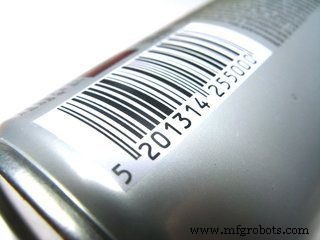
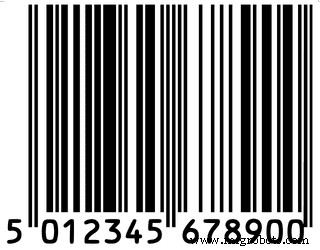
Numeric-only barcodes are one-dimensional barcodes that encode only numbers. “One-dimensional, or 1D barcodes, systematically represent data by varying the widths and spacings of parallel lines, and may be referred to as linear or one-dimensional,” explains Scandit. “These include some of the traditional, or most well-recognized barcode types such as the UPC and EAN code types.” There are about a dozen different types of numeric-only barcode symbologies:
- UPC codes – One of the most commonly used barcode symbologies, and arguably the most recognized barcode type by consumers due to the widespread use of UPC codes in retail settings. 12-digit UPC codes (UPC-A) contain basic information about the manufacturer’s identity and the identification number for the product, but more information can be gained by looking up UPC codes with a service such as UPC Database or GTIN, which is the official bar code assignment organization in the United States. Each digit’s position reveals the type of information those numbers refer to, a standardized process that makes it possible to decipher UPC codes that did not originate within a specific company. There are also more basic UPC-E variations containing only 6 digits.
- EAN codes – Similar to UPC codes, EAN codes are used to identify consumer products worldwide and are designed for Point-of-Sale (POS) scanning. Interestingly, while many retail locations scan product UPC codes, scanners typically convert UPC codes to the 13-digit EAN format. There are a few different variations of the EAN barcode, including EAN-13, EAN-8, JAN-13, ISBN, and ISSN.
- Industrial 2 of 5 codes – These barcodes are not as commonly used as other types of 1D barcodes. Industrial 2 of 5 barcodes contain two thick bars and three thin bars, and the space between bars is a fixed width. Once a widely used barcode, Industrial 2 of 5 codes may have become less popular due to their low density. Industrial 2 of 5 codes are still in use in some warehouses today, however.
- Interleaved 2 of 5 – A newer and slightly more sophisticated variation of the Industrial 2 of 5 code, the Interleaved 2 of 5 barcode has the same basic format, but the spaces between bars do not have a fixed width. Thus, both the bar and space width is used to encode information in the Interleaved 2 of 5 barcode. Characters in even positions are encoded in bars, while characters in odd positions are encoded in spaces. Interleaved 2 of 5 codes can encode any even number of numeric characters.
- Standard 2 of 5 – An older variation of the Interleaved 2 of 5 is the Standard 2 of 5, w
 hich is similar to the Industrial 2 of 5 code in that the space between bars is of a fixed width. Once used for airline ticketing, photo finishing, and warehouse sorting, the Standard 2 of 5 is not commonly used today.
 - POSTNET – POSTNET codes, or Postal Numeric Encoding Technique, is used by the United States Postal Service to encode ZIP codes and ZIP+4 codes to assist in efficiently directing mail and flagging errors. POSTNET codes have a variable length ranging from 32 to 62 bars, which vary in height with both short and tall bars to encode information. Each digit is encoded in a set of five bars.
- Code 11 – Developed by Intermec in 1977, Code 11 is most commonly used in the telecommunications industry for labeling equipment. A high-density symbology that encodes digits 0 through 9, Code 11 is considered a low-security symbology as even slight printing imperfections can cause bars to render as an alternate, yet valid, character. To overcome this challenge, one or two check characters are typically included. Code 11 is also known as USD-8.
- Codabar – Developed by Pitney-Bowes in 1972, Codabar is a barcode symbology also known as USD-4 and ABC Codabar. Capable of encoding up to 16 characters plus an additional four start/stop characters, Codabar is often used by blood banks in the U.S., photo labs, and on FedEx airbills. While the four possible start/stop characters include A, B, C, and D, the primary characters are numeric, so we’ve categorized Codabar as a numeric-only barcode symbology.
Images via Pixabay by OpenClipart-Vectors, PDPhotos
Alpha-Numeric Barcode Symbologies
- Plessey code – The Plessey code is most often used for retail grocery shelf marking and in libraries. It originated in Europe, and from it, several variations have emerged including the MSI, Anker, and Telxon barcodes. The MSI Plessey code continues to be used in the United States. While the Plessey code is sometimes grouped with numeric-only barcodes, we’ve included it in the alpha-numeric group as it is capable of encoding digits 0 through 9 as well as the letters A through F.
- Code 39 – Code 39 barcodes are primarily used in the automotive and defense industries and may also be referred to as Code 3 of 9. It was the first alpha-numeric code developed, according to WhichBarcode.com, and it’s the most commonly used barcode in non-retail applications. Code 39 codes are variable in length, but the standard version encodes 43 characters including letters from A to Z, numbers from 0 to 9, spaces, and special characters: -.$/+%. You’ll find Code 39 in use for name badges, inventory, and industrial applications, among others.
- LOGMARS – LOGMARS (Logistics Applications of Automated Marking and Reading Symbols) is the same as Code 39, but the name refers to the U.S. Department of Defense application for this symbology. LOGMARS is regulated by Military Standard MIL-STD-1189B, which outlines the acceptable range for variables such as density, bar height, ratio, and the human-readable interpretation line.
- Code 128 – Code 128 is frequently selected in newer applications over Code 39 due to its good density and broader character set. “The Code 128 character set includes the digits 0-9, the letters A-Z (upper and lower case), and all standard ASCII symbols and control codes,” explains MakeBarcode.com. “The codes are divided into three subsets A, B, and C.” A distinct start code indicates which subset will be used, and there are also control characters for switching to a different subset in the middle of a barcode. Standards for Code 128 are maintained by AIM (Automatic Identification Manufacturers).
- Code 93 – A more compact variation of Code 39, Code 93, also known as USS-93, encodes the same characters as Code 39, although it uses 9 barcode elements per character instead of the 15 used in Code 39. Additionally, Code 93 supports a Full ASCII version with less ambiguity. Code 93 offers variable length, although two checksums are required for each barcode. According to WhichBarcode.com, “While the requirement for two separate checksum calculations for each bar code requires more resources, the ability to intermix Full ASCII characters in bar code 93 is a distinct advantage over bar code 39.”
Two-Dimensional Barcode Symbologies
Two-dimensional barcode symbologies, otherwise known as 2D barcodes, are graphical images that store information on both the horizontal and vertical planes. This design enables 2D barcodes to encode up to 7,089 characters – substantially more than any 1D barcode is capable of encoding. 2D barcodes offer the ability to store more data in a single code and result in fewer errors deciphering codes thanks to the ability to build in redundancies or self-checking mechanisms, possible because of the greater information-storage capacity of 2D codes. 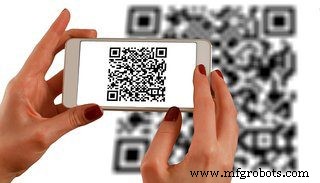
2D barcodes are often used in conjunction with smartphones. The user simply photographs a 2D barcode with the camera on a phone equipped with a 2D barcode reader, which also makes them easier to transmit accurately via SMS and other messaging services. Finally, 2D barcodes are more secure, as the information stored in a 2D code is easily encrypted. There are several types of 2D barcode symbologies.
- QR codes – QR codes, which stands for ‘quick-response code,’ are among the most widely recognized two-dimensional barcodes thanks to their widespread use for bridging the gap between the digital world and the real world. QR codes were first developed in 1994 by Denso, a company that’s part of the Toyota group of companies. The QR code is capable of encoding up to 2,509 numeric or 1,520 alphanumeric characters and has three levels of error-detection built-in. QR codes are a minimum of 21×21 cells but can increase in size in increments of 4×4 cells up to a maximum size of 105×105 cells. You’ll find QR codes on everything from cereal boxes to posters, advertisements, and even museums, beverage cups, library books, and more.
- Data Matrix – According to JPGraph.net, data matrix barcodes “can encode up to 3,116 characters from the entire 256 byte ASCII character set.” It’s a high-density 2D barcode, offering greater data density compared to PDF417 barcodes. Data matrix barcodes are configured in a square grid with a finder pattern around the edges of the symbol that enable scanners to identify the barcode and to read it regardless of the code’s orientation. Like other 2D barcodes, data matrix barcodes contain built-in error correction measures to ensure the integrity of the data even if the code is damaged physically. Data matrix codes are used primarily in the U.S. and Europe, most frequently for applications such as direct part marking and laser marking in the aerospace, electronic, and automotive industries, although data matrix codes are also used for logistics, document management, postal services, and healthcare applications.
- PDF417 – As TEC-IT explains, “PDF417 is a 2d barcode (stacked symbology) used in a variety of applications, primarily transport, identification cards, and inventory management. PDF stands for Portable Data File and was developed by Symbol Technologies. PDF417, or Portable Data File 417, uses built-in error correction to ensure better readability.” PDF417 barcodes can encode one to two hundred characters per symbol, or more than a kilobyte of data per label. PDF417 was developed by Symbol Technologies (1989-1992) and is currently maintained by ISO/IEC. PDF417 barcodes are used in logistics applications, transport systems, identification for items such as driver’s licenses and passports, and document management applications. With a slightly different composition compared to other 2D barcodes, PDF417 barcodes can be described as a set of linear barcodes stacked on top of one another, thus why they are sometimes described as a “stacked linear symbology.”
- Aztec – Aztec codes are predominantly used in the transportation industry for applications such as tickets and airline boarding passes. These codes are not as widely supported by open-source software as QR codes, however, so they should be used only in circumstances in which they are supported by proprietary software systems. Compared to QR codes, Aztec codes require less space yet can store more information, but because they are not as widely supported by readily available software, they can be more difficult to read and generate efficiently. Notably, however, Aztec codes are better for being displayed on mobile devices such as smartphones, making them a suitable choice for fast-paced transportation services where rapid scanning is a must.
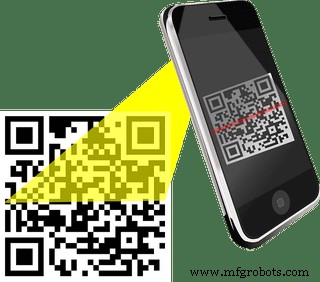
There are a few other types of 2D barcodes, but they aren’t used as frequently as QR codes, Data Matrix, and PDF417, which make up the primary types of 2D barcodes used today. A few of these two-dimensional barcodes include MaxiCode, a fixed-length barcode used by the United Parcel Service to streamline and automate package sorting, Code 49, Code 16k, Codablock, and others.
Images via Pixabay by geralt, OpenClipart-Vectors
Barcode Standards and Specifications
With such a variety of barcode symbologies and applications, companies and organizations around the world are generating barcodes all the time. But as goods flow through the supply chain and parts and products make their way from one company to another, consistency is necessary to streamline the flow of information. Standards are developed for precisely this purpose – some by industry regulators, others by entities that focus on the standardization of certain symbologies.
AIM (Automatic Identification and Mobility) explains that there are a few types of standards including official, ad hoc, and de facto, but for the purposes of labeling parts, products, and items, the discussion centers on official standards which are sanctioned by an accredited standards body, such as the entities described below. Technology standards outline specifications on how things work, and application standards define how a technology is used, rather than how it works.
The International Organization for Standardization (ISO) states, “A standard is a document that provides requirements, specifications, guidelines or characteristics that can be used consistently to ensure that materials, products, processes and services are fit for their purpose.” Below, listed in alphabetical order, are a selection of the standards-developing organizations that aim to globalize standardization in various industries related to the manufacture, data collection and sharing, transfer, and quality of products in the global supply chain.
- AIM Global (Association for Automatic Identification and Mobility) – AIM is a leading “international trade association and worldwide authority on automatic identification, data collection and networking in a mobile environment.” Many AIM standards are routed through the ANSI for consideration and are then recommended to become ISO standards.
- American National Standards Institute (ANSI) – ANSI is “the voice of the U.S. standards and conformity assessment system,” with a focus on the global economy, the safety and health of consumers, and the protection of the environment. ANSI participates in both national and international standards activities.
- Automotive Industry Action Group (AIAG) – The AIAG brings together industry volunteers to achieve a consensus on a variety of standards and practices. These decisions are published as AIAG Publications, making updates and new specifications readily available industry-wide.
- Defense Logistics Agency – The Defense Logistics Agency oversees the development of standards related to the procurement of materials, parts, and supplies, communicating requirements, moving and transferring materials, and other activities that streamline the operation of the Department of Defense’s (DoD) logistics system. The Defense Logistics Standard Systems (DLSS), along with supporting directives and publications, are managed by the Defense Logistics Management Standards (DLMS). Much of this information is outlined in publications found in the Defense Logistics Manuals, while specific standards can be found in the Military Standards/Handbooks. Pertinent standards related to item identification and marking include MIL-STD 129R (Military Standard Marking for Shipment and Storage), MIL-STD-130 (Identification Marking of U.S. Military Property), MIL-STD-2073 (DoD Standard Practice for Military Packaging), and ANSI/AIM BC1 (Linear and Two-Dimensional Bar Code Symbologies). More information on Item Unique Identification (IUID) can be found at the Defense Procurement and Acquisition Policy (DPAP) website.
- The Environmental Protection Agency (EPA) – The EPA issues myriad standards, regulations, and best practices aimed at the preservation of the environment. One such set of best practices is related to Leak Detection and Repair (LDAR), focusing on Method 21 requirements and describing practices that improve the effectiveness of LDAR programs. This best practices guide is “intended for use by regulated entities, such as petroleum refineries and chemical manufacturing facilities, as well as compliance inspectors.” Additionally, the EPA oversees a multitude of compliance monitoring programs from air compliance to water compliance and waste, chemicals, and cleanup compliance, all of which may have impacts on the tracking of assets and materials used in these sectors.
- The Federal Highway Administration (FHWA) – The Federal Highway Administration develops and oversees a multitude of regulations related to the standardization of traffic and highway signs and other assets. The Manual on Uniform Traffic Control Devices (MUTCD) outlines requirements for retroreflectivity and standard markings, among other requirements.
- Financial Accounting Standards Board (FASB) – The FASB is an “independent, private-sector, not-for-profit organization based in Norwalk, Connecticut, that establishes financial accounting and reporting standards for public and private companies and not-for-profit organizations that follow Generally Accepted Accounting Principles (GAAP).”
- Government Accounting Standards Board (GASB) – The GASB is an independent organization that works to improve financial accounting and reporting standards for both state and local governments. While the standards issued by the GASB don’t relate directly to marking assets, many government entities turn to asset tracking methods in order to streamline compliance with GASB reporting requirements.
- GS1 – GS1 manages the barcode standards used by the retail sector, manufacturers, and suppliers. GS1 actually introduced the barcode in 1974. A global, non-profit standards organization, GS1 has more than one million members and works toward achieving consensus that aids organizations in exchanging critical data. GS1 establishes general standards as well as specific barcode standards pertaining to identification, data capture, sharing, and use to improve global collaboration.
- Health Industry Business Communications Council (HIBCC) – The HIBCC is the entity responsible for developing standards for information exchange and communication among healthcare partners that meet the unique needs of healthcare providers globally. HIBCC is the organization that developed the Unique Device Identifier (HDI) standards widely recognized and utilized across the healthcare industry today and required for compliance with certain FDA regulations.
- International Organization for Standardization (ISO) – The ISO is the world’s largest developer of voluntary international standards. Founded in 1947, the ISO has developed more than 21,000 standards encompassing every facet of technology and business. ISO standards ensure that products are safe, reliable, and of good quality.

- International Warehouse Logistics Association (IWLA) – The IWLA represents the warehousing and logistics industry, particularly third-party warehousing and logistics services providers. Today’s IWLA is the result of a “1997 merger between the then nearly 80-year-old Canadian Association of Warehousing and Distribution Services (CAWDS) with the American Warehouse Association (AWA).” The IWLA also maintains a helpful list of a variety of other industry-specific organizations and associations, many of which contribute to the development of industry standards pertaining to the marking of items and tracking of data throughout the supply chain.
- Japan Auto Parts Industries Association (JAPIA) – JAPIA promotes the advancement and development of the auto parts industry through improving the specifications and standards related to automotive parts, improving production technology, providing research and information on the production of auto parts, promoting collaboration, and other activities.
- Japan Automobile Manufacturers Association (JAMA) – JAMA is a non-profit industry association with a membership comprised of Japan’s 14 automobile manufacturers. Once three separate entities, a 2002 merger between JAMA, the Japan Motor Industrial Federation (JMIF), and the Japan Automobile Industry Employers’ Association (JAIEA) created what today is JAMA. Aiming to streamline and improve on processes in the Japanese automotive industry, which is one of Japan’s core industrial sectors, JAMA also deals with the manufacture and shipment of motor vehicle parts and components worldwide. The website makes available publications, news and notices, and an Active Matrix Database System which “allows the user to obtain production, export, registration and other data tailored to the user’s needs as to category, company and time period.”
- Material Handling Industry of America (MHI) – “MHI is the nation’s largest material handling, logistics and supply chain association. MHI offers education, networking and solution sourcing for members, their customers and the industry as a whole through programming and events.” MHI consists of more than 800 members and 17 industry groups representing leading providers in several equipment and system solution categories.
- National Property Management Association (NPMA) – A non-profit membership association, the NPMA is the leading association for personal property and fixed asset professionals. NPMA brings together “professionals who are responsible for the effective and efficient management of equipment, materials, and other moveable and durable assets for their organization.”
- Organization for Data Exchange (ODETTE) – The Organization for Data Exchange brings together “supply chain professionals and technology experts to create standards, develop best practice and provide services which support logistics management, e-business communications and engineering data exchange throughout the world.”
With multiple influences involved in the development and establishment of industry-wide standards, maintaining compliance is a key challenge for organizations spanning every facet of the global economy. In many cases, barcodes and asset tracking systems aid companies in maintaining compliance with strict industry regulations related to reporting and monitoring. Education in the industry standards that impact your business is essential for long-term success, coupled with a partnership with a barcode label and asset tracking supplier well-versed in these industry specifics.
Asset Tracking Solutions from Camcode:
- Custom Asset Tags
- 50 Asset Tracking Tips
- Utility Pole Identification Tags
- 53 Asset Tracking Software Tools
- Custom Warehouse Hanging Signs
- Warehouse Label Solutions
- Durable Floor Labels
- Rack Labels for Every Occasion
Industrial Technology
- Choosing the Right Pump Coupling: A Practical Guide for Reliable Performance
- Non-Traditional Machining: Requirements, Types, Benefits & Drawbacks
- Mastering PCB Design for the Internet of Things: A Comprehensive Guide
- Mastering IPC Standards: A Comprehensive PCB Quality Guide
- Explore Rivet Types and Their Ideal Applications: A Comprehensive Guide
- Warehouse Barcode Implementation: A Proven Step‑by‑Step Blueprint
- Understanding 2D Barcodes: Definition, History, and Capabilities
- MIL‑STD‑129 Explained: Barcode Standards, Compliance Tips & Best Practices
- Master Inventory Tags: Expert Guide to Uses, Types, and Best Practices
- The Definitive Guide to Vibration Sensors: Types, Applications, and Integration