



Master Tolerance Stacking: Save Time & Money in Manufacturing
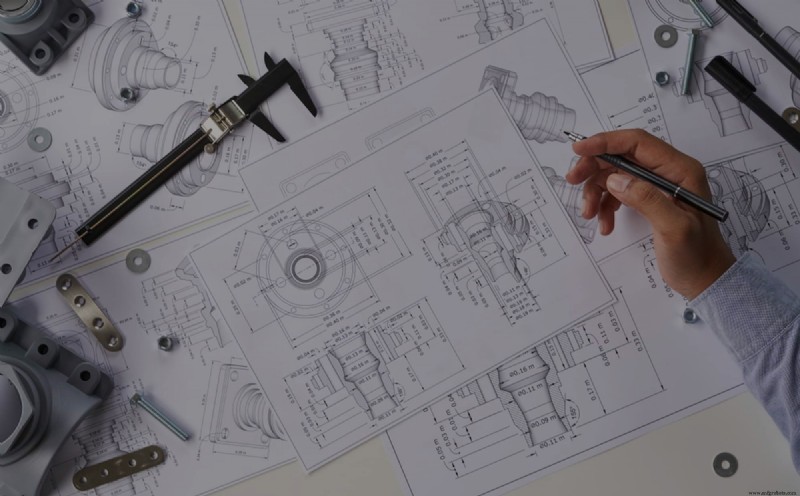
Correct tolerancing for your parts will help save time, money, and resources during the manufacturing process. As you design new parts, it’s important to consider not just overall geometric dimensioning and tolerancing best practices but also the impact of tolerance stacking on your parts. Get a deeper understanding of how to analyze the tolerance stack-up on your parts in our latest Fast Minute video from Staff Engineer Megan Behnke.
Transcript:
Tolerance stacking is a crucial engineering concept most of us have to learn on the job.
Proper tolerance stack analysis ensures your part is manufacturable and will interact correctly with other components. Think of it like putting away blocks. Each block needs to be the right size. If some are off even a little, they won’t fit.
The tighter the tolerance, the more difficult and expensive your part will be. So make your tolerances as large as allowable. To do this, only explicitly define tolerances for features that truly need them. Undimensioned features will be controlled by a general tolerance applied to the whole part.
You should also evaluate manufacturing limitations and performance requirements to figure out how large or small your tolerances can be without compromising success. We often receive designs with extremely tight tolerances, and when we dig into our customer’s requirements, we realize that relaxing tolerances will save them time and money.
Could you use assistance on your tolerance stack-up? Reach out to our team to get started.
Learn more about tolerance stacking in our resource center or log into your Fast Radius dashboard to start your next project.
Industrial Technology
- Mastering Tolerance Stacking: Proven Best Practices for Precision and Cost Efficiency
- Engineering Tolerances Explained: Definition, Types, and Practical Applications
- Understanding Waterjet Cutting Tolerances: Precision and Accuracy in Modern Manufacturing
- Mastering Tolerance Design: Key Strategies for Precision and Cost Efficiency
- Mastering Tolerance Stacking: A Practical Guide
- Fast Minute: 3‑Axis vs 5‑Axis CNC Machining – Which Is Best for Your Parts?
- Fast Minute: Mastering Stress Concentration in Part Design
- How Tolerances Impact Design, Production, and Cost
- Avoiding Conflicts: How Multiple Tolerances Impact Cost and Quality
- Avoid Hidden Costs: How Tight Tolerances Impact Part Pricing