



Detecting and Preventing Fluid System Leaks: A Comprehensive Guide
Common Causes and Costs of Fluid System Leaks
Nick Iverson, Field Engineer, North America
Fluid system leaks are a common occurrence in most plants. Because you’re charged with maintaining your plant’s safety and profitability, even the smallest leak can present an issue. That’s why it’s helpful to understand how and why leaks occur, how to locate and test for them, and ultimately how to develop a strategy to address and reduce leaks plantwide.
The Cost of Leaks
While leaks are a common occurrence in plants, there are many financial reasons to address leaks promptly and develop a plan to prevent future ones.
- Each year, it’s estimated that millions of gallons of hydraulic fluids are wasted. A single gallon of hydraulic fluid costs approximately $40 USD.
- Loss of fluid lubrication can lead to costly equipment damage such as premature wear and machine failure.
- Plants reduce their production output potential every time they shut down a process to fix a leak. This downtime can result in significant profit loss.
- Your team may inadvertently produce an off-spec product due to improper instrument calibration or operation because of a leak. That material must then be reworked, sold at a reduced price, or discarded.
- Oil drips from leakage can lead to an unsafe work environment, causing slips and accidents. Fugitive emissions can also be expensive to repair and dangerous to the health of your employees.
- Leaks can lead to serious fines for noncompliance if systems and equipment violate safety regulations.
- It takes time and money to locate and repair leaks. You may need to hire a special team to manage toxic chemical leaks, potentially facing the cost of a system shut down for thorough inspection.
Three Common Causes of Fluid System Leaks
It may be surprising to learn most leaks aren’t the result of substandard parts. Rather, they occur due to human error—whether from the installation of a component or from the component selection itself. Choosing the right components and installing them correctly can enhance plant safety and save significant time and cost.
To help your team better understand and mitigate leaks at your plant, Swagelok’s Field Engineers have documented the following three most common causes of leaks:
- Unreliable Metal-to-Metal Seals: Making and keeping highly reliable metal-to-metal seals can be difficult, especially over time. Manufacturer guidelines must be followed precisely to avoid leaks when using these seals. In some cases with valves, you may even want to replace the component with one featuring a soft seat seal, especially when repetitive gas shutoff is required.
- Improperly Installed Tube Fittings: Properly assembling tube fittings will greatly reduce the likelihood of experiencing leaks and enhance your plant’s safety. Be sure your technicians are trained in how to properly make up a fitting, including orienting the ferrules properly and using a gap gauge to verify the right amount of pull-up.
- Poor Tubing Selection, Handling, and Preparation: Your tubing selection and preparation can also increase your leak potential. Tubing materials that are incompatible with the process fluid or external environment will be prone to corrosion, premature failure, and leaks. In addition, unevenly cut tubing or tubing that has been dented, scratched, or has not been deburred may compromise the sealing ability of the fitting.
Three Types of Leaks
Understanding the type of leak will help your team determine the appropriate corrective measures to address it. Below, Swagelok engineers identify the three types of leaks commonly encountered in fluid systems:
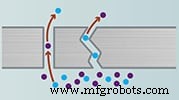
Real Leak: A leak resulting from the failure of a pressure barrier to contain or isolate a system fluid from the surrounding environment. This occurs due to cracks in the material or gaps between sealing surfaces.
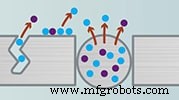
Virtual Leak: A release of internally trapped fluid into a fluid system due to material outgassing, absorbed or adsorbed fluids, entrapment in crevices, or dead legs.
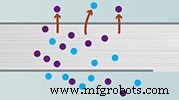
Permeation: A passage of fluid into, through, and out of a pressure barrier that does not have holes large enough to permit more than a small fraction of the molecules to pass through any one hole.
Leak Detection Methods
In general, most leak testing is performed on a pressurized system – either with actual process fluid or with a surrogate fluid like water, air, nitrogen, or helium. For practical purposes, test methods can be segmented in to those which are typically performed on installed equipment versus those which are more commonly performed on a benchtop (or in lab).
- Visual Testing: This is the most fundamental type of leak testing for a liquid system. Leaks are indicated by actual drips or surface wetting below the leaks. It is most commonly performed on installed equipment however it is also commonly used on benchtop to test hose assemblies.
- Bubble Testing: This is a simple, cost effective test for gas systems. This test uses either a thin film surfactant (like Snoop) or submergence in a water bath. It’s a common test on both installed equipment and on benchtop. It is used more to indicate the presence of a leak rather than measuring the quantity and it requires observation for bubbles.
- Pressure Change Testing: This test is used for both liquid and gas. The equipment under test is pressurized in an isolated condition at a prescribed pressure for a prescribed duration. Leakage results in a gradual pressure drop that is measureable. A common type of Pressure Change test is Pressure Decay. It is more commonly performed on benchtop however it can be performed on installed equipment with careful considerations to test design. This test requires minimal equipment and may be automated.
- Airborne Ultrasonic Testing: This test is used on gas systems. It requires an airborne ultrasonic measurement device that can be used to locate the presence of a leak. For pressurized systems this test can be used to approximate the rate of leakage. This test can also be performed on non-pressurized systems by using an additional, inboard, sound generating device. Airborne Ultrasonic testing is commonly used on installed equipment.
- Mass Spectrometry Testing: This test is used on gas systems. A mass spectrometer is used to detect the presence of trace amounts of leaked gas and quantify the leakage. It is almost exclusively performed using helium as a surrogate, in which case it is referred to as Helium Leak Testing. Outboard testing is used for pressurized systems while inboard testing is used on vacuum systems. This method is most commonly used on benchtop to identify very small leaks.
Prioritizing Leaks
While it’s not possible to address every type of leak in a plant right away, your team can work to categorize leaks to help prioritize maintenance and repair opportunities.
- Dangerous Leaks: Any leak that presents a safety issue should be a top priority. This includes leaks of noxious gases and caustic chemicals, as well as leaks that create slip/fall hazards. Have your risk managers identify these safety issues first, and then send your best maintenance technicians to fix them right away.
- Costly Leaks: Collectively, all the leaks in your plant may add up to a significant cost. However, some leaks—even small ones—can be responsible for a sizable percentage of that cost. Fixing a small leak of expensive argon gas, for example, may offer drastically greater savings compared with stopping a large leak of lower cost compressed air. Learn how leak savings can add up quickly.
- Nuisance Leaks: Finally, you may have a wide variety of minor leaks that don’t present safety hazards and are not responsible for major losses. You can wait to address these low-priority leaks when your maintenance staff is not crunched with other more critical duties.
We find it helpful to train—and retrain—engineers and technicians in a variety of topics to enhance their skills in identifying and addressing different types of leaks. Training may include everything from education on proper material selection to hands-on, skill-building courses in tube bending and tube fitting installation procedures. Fortunately, Swagelok offers many specialized training and education programs to ensure your plant is operating safely and efficiently. When your trained team has its focus on identifying and stopping leaks, your plant will realize safer, more cost-effective operations.
To learn more about how to identify and address leaks, as well as train your team on best practices, contact your local Swagelok sales and service center.
Industrial Technology
- Build an Offline AI Model that Detects Diabetic Retinopathy Stages with Edge‑Impulse
- 5 Cutting-Edge Technologies to Detect and Stop Pump Cavitation
- Understanding Welding Porosity: Causes, Detection, and Prevention Techniques
- Preventing Fluid System Leaks: Cost‑Saving Strategies for Your Facility
- Maximize Efficiency: Proven Strategies to Boost Fluid System Performance
- Why Auditing Your Offshore Fluid System Is Critical: 3 Key Reasons
- Prevent Fluid System Leaks: Expert Tips for Optimal Tube Preparation
- Effective Leak Detection and Repair for Industrial Air Systems
- The Critical Role of Fluid Cleanliness in Hydraulic Systems
- Boost Hydraulic System Reliability: Proven Maintenance Strategies