



Why Auditing Your Offshore Fluid System Is Critical: 3 Key Reasons
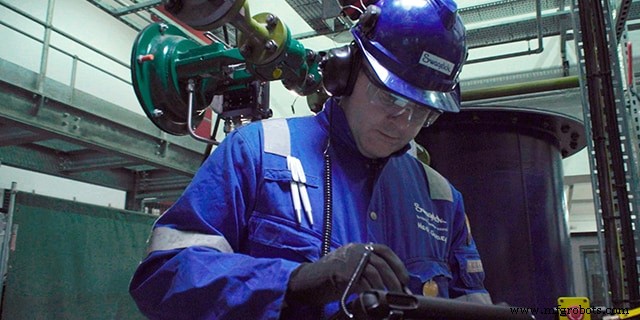
3 Reasons to Audit Your Offshore Fluid System
 Mark Garvey, Field Engineer, Swagelok Scotland
“Is that really the state of my rig?”
If you are the operator of an offshore hydrocarbon platform, this is a phrase you do not want to find yourself saying.
But in my work as a field engineer for Swagelok Scotland, these are words I have heard from hydrocarbon executives after I have presented an audit of their small-bore tubing systems on offshore platforms. Leaky valves, bad fluid system connections, and mismatched specifications are common findings. Each of these things could be actively costing the operator money and risking crew safety—and the operator has no idea they are happening.
Want to have a clearer picture of the state of your rig? Here are three reasons why offshore hydrocarbon platforms benefit from a third-party audit, and you could, too:
 Isolation can breed complacency.
A third party presents an objective viewpoint—and sometimes that is needed in the offshore environment.
Despite the high stakes of offshore drilling, complacency can always begin to set in. Crews are working in isolation, and it is not uncommon for some unsafe practices to develop. Perhaps unexpectedly, this is sometimes more likely to occur if the crew has a lot of experience.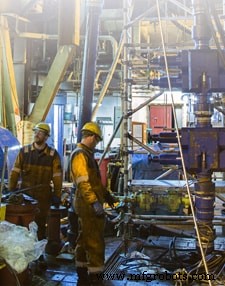 Technicians who have always done something a certain way—a technique for installing tube fittings, for example—may not be aware that a safer or more effective alternative exists. And operating offshore, there is less opportunity for someone to demonstrate a better method.
Elsewhere, growing complacency could result in crews downplaying obvious issues. Here is another quote you probably do not want said about your offshore rig:
“Oh, that? It always smells a little bit like gas around here.”
This is something else I have heard, this time from an offshore technician on the platform. The smell of gas is a red flag, almost certainly indicating a leak—and potentially a significant one. A third-party auditor can identify these sorts of problems, and further, may help renew the crew’s sense of urgency.
 Leaks may be going unnoticed.
Leaks are common in just about every industrial environment. It could be something as benign as compressed air or some other nonhazardous gas—comparatively minor annoyances, but ones that can still lead to lost dollars.
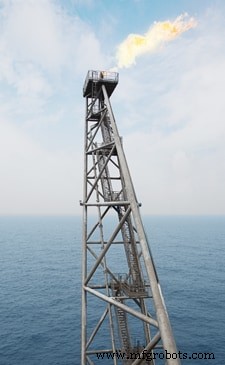 Complacency about the smell of gas is one thing, but other leaks may be unnoticed entirely. Undetected leaks in systems carrying sour or otherwise hazardous gases, common on offshore platforms, can have more significant consequences. Consider that small- bore tubing systems on offshore platforms represent one of the highest-opportunity areas for leaks and potential hydrocarbon safety incidents, primarily due to tube fitting under-tightening, incorrect or mismatched components, or incorrect installation. For these reasons, training is a massively important subject in the deepwater hydrocarbon industry. Up-to-date and ongoing training competencies are a necessity to work in the industry.
Nevertheless, based on Swagelok’s evaluation of numerous offshore platforms in some harsh environments, including the North Sea and the Gulf of Mexico, it is not uncommon to find small, undetected leaks that have gone unnoticed. Depending on the system fluid, undetected leaks can lead to inefficiency, downtime, or potential safety hazards.
Periodic third-party assessments can help uncover any leak issues that may be going unnoticed. An outside partner whose sole job is to find and identify leaks (or other performance issues), often utilizing state-of-the-art equipment that may be unavailable in-house, may be better equipped to assess and enhance system performance than rig crews who are already juggling numerous responsibilities.
 Your specification may have become convoluted.
For any critical fluid or sampling system, it is recommended that all small-bore tubing and associated tube fittings be provided by the same manufacturer. Why? Because products that are designed to work together simply perform better together.
But any system evolves over time. An initial specification may indicate the use of a specific brand of tube fitting. Later, a new turbine from a different manufacturer may be installed. Then, a new skid is incorporated—made by yet another OEM.
This can not only lead to performance issues due to product intermix, but it also adds unnecessary complexity to inventory and ordering processes. For these reasons, it is worth a periodic check-in to ensure consistency. Revise specifications if necessary. Products designed to work together not only perform better together—they can help streamline your operation, too.
Once a third party has identified any of these or other issues that could be occurring on your offshore platform, operators need a plan of action to fix them. A good, thorough audit of any application, be it an offshore platform or any other fluid system, should result in a list of realistic recommendations so operators are able to take immediate corrective action.
Through its evaluation and advisory services, Swagelok provides just that to its offshore customers. And because we do not perform corrective services ourselves, we work to report out the true state of the systems we evaluate, identifying only the most impactful improvements that can be made to help you stay safe, efficient, and profitable.

Interested in learning more about offshore audits and how you might benefit? Contact us today.
Industrial Technology
- Why Your Company Needs a Data Acquisition System: 10 Compelling Reasons
- Preventing Hydraulic Fluid Leaks: Expert Strategies for Reliability and Cost Savings
- Preventing Fluid System Leaks: Cost‑Saving Strategies for Your Facility
- Eliminate Fluid System Leaks in Tire Facilities for Safer, Cleaner Operations
- Oil & Gas Safety Checklist: Secure Your Industrial Fluid Systems
- Certified Fluid System Training: Verify Your Trainer’s Expertise
- Detecting and Preventing Fluid System Leaks: A Comprehensive Guide
- Why Standardizing Fluid System Components Boosts Oil & Gas Project Success
- Prevent Fluid System Leaks: Expert Tips for Optimal Tube Preparation
- Elevate Efficiency: Conduct a Comprehensive System Audit Today