



Titanium Investment Casting: Key Techniques, Benefits, and Expert Insights
Titanium is a metal valued for its high strength-to-density ratio, corrosion resistance, and temperature resistance. Despite the fact that titanium is one of the most common naturally occurring elements on the planet, it’s expensive to separate from other elements into its fundamental metallic form. Titanium bonds easily with oxygen, which creates an oxidized layer for enhanced corrosion protection in finished products; however, this same characteristic makes it difficult to manufacture into metal products. In fact, particular processes must be used to prevent it from being exposed to and bonding with other elements.
Due to its unique properties, titanium is often used to create aerospace, medical, and industrial parts, as well as consumer products and sporting goods. One of the most common methods for creating titanium products is investment casting. Titanium investment casting can produce highly detailed and complex parts with a smooth surface and minimal need for finishing work. This blog examines the titanium investment casting process, properties of titanium castings, and their wide range of uses.
What Is Investment Casting?
Investment casting is a versatile process used with a variety of materials to create intricate components with a smooth surface finish. Due to the highly reactive nature of titanium, investment casting with this metal requires modifications to the overall process. Titanium investment casting follows these basic steps:
- A pattern of the desired part is created from easily melted wax or resin.
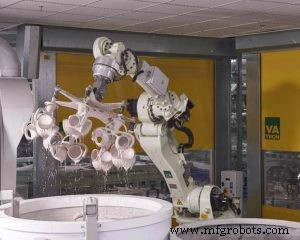
- The pattern is coated with multiple layers of a temperature resistant ceramic. in a temperature resistant material, usually ceramic. For titanium investment casting, standard ceramic molds are not viable, as melted titanium will react with the ceramic. Therefore, the mold used for titanium must be made from special ceramics, such as zirconium oxide or yttrium oxide.
- Once the ceramic shell mold is complete, the wax is melted and drained, leaving a hollow mold.
- Titanium is melted using induction or arc melting processes in a water cooled copper crucible in a specialized heating apparatus that prevents exposure to other elements, especially nitrogen and oxygen.
- The melted titanium is poured into the ceramic mold. Centrifugal processes aid in the filling of thin walls.
- The titanium freezes into a solid upon contact with the ceramic mold, thereby creating the desired component.
Properties & Advantages of Titanium Castings
Titanium offers numerous distinct advantages over other metals, including:
- Lightweight Strength: It exhibits the highest strength-to-density ratio of any metal, for lightweight strength and durability.
- Corrosion Resistance: When exposed to oxygen, titanium reacts, creating a thin layer of titanium oxide on the surface of the metal. This layer protects the titanium surface from corrosion and rust that could affect other metals such as steel and aluminum.
- Durability: Titanium is extremely durable, so it is more resistant to wear and tear, and enhances the service life of equipment in which it is used.
- Temperature Resistance: Titanium has an extremely high melting point, and exhibits minimal creep when exposed to temperature fluctuations. This makes it particularly valuable for aerospace and industrial components that require exposure to extreme temperatures.
Titanium Casting Applications
The unique properties of investment cast titanium parts make them particularly useful in a wide range of industries and applications. The most common include:
- Aerospace Industry: Titanium appears in rotating and static components in aircraft engines including compressor blades, rotors, and nacelles, as well as in structural applications, frames, landing gear, and hydraulic components.
- Military and Defense Sectors: Titanium can withstand extreme forces and is corrosion resistant, making it ideal for military and defense applications that include aircraft and submarines, armored weaponry, missiles, tank armor, and battlefield tanks.
- Medical Industry: Due to its high strength-to-weight ratio and biocompatibility with the human body, titanium is the number one metal for use in biomedical applications and appears in reconstructive pins, hip and knee implants, pacemaker cases, dental implants, and prosthetics. It is also used for surgical instruments, wheelchairs, and crutches.
Other industries and applications where titanium casting is found include pharmaceutical and chemical production, oil and gas, marine, automotive, transportation, construction, and consumer products and sporting goods.
Although titanium is versatile, the purification and production processes make it more expensive to manufacture than some other metals, like aluminum and steel.
Titanium Investment Casting Services at Impro
With more than two decades of experience in specialty investment casting, Impro offers the highest quality investment casting services for an array of industries and applications. Our titanium investment casting facilities are specially designed to ensure superior quality titanium castings at competitive prices. Have any additional questions or want to get started with titanium investment casting? Reach out to us today.
Industrial Technology
- SLA vs. PolyJet: Choosing the Right 3D Printing Technology for Your Project
- Metal Additive Manufacturing: Key Insights for Modern Production
- Polyurethane Foam: From WWII Innovation to Everyday Essentials
- SCR Demystified: How Silicon Control Rectifiers Power Modern Electronics
- D880 Transistor Explained: Features, Specs, and Use Cases
- 4‑Layer PCBs Explained: Key Insights for Advanced Circuit Design
- Essential Insights into Metal Casting: Techniques, Applications, and Advantages
- MJF vs. FDM: A Comprehensive Comparison for 3D Printing Professionals
- Generative Design Demystified: Key Insights for Engineers and Designers
- Understanding Bronze Casting: Key Insights & Applications