



How Freight Cars Become Intelligent IoT Assets with Bosch’s Condition Monitoring System
Every modern device—from cars to ovens—is increasingly connected. Bosch Engineering is now turning freight cars into intelligent, network‑enabled assets. The core of this transformation is a robust condition‑monitoring system that turns rail freight into a digital logistics asset. The lightweight hardware, sourced from automotive series production, is coupled with advanced sensors that capture a railcar’s exact position, interior temperature, vibration patterns, and more. This data is streamed to a secure server, analyzed, and made available to operators via a dedicated data portal. In the sections below, I explain why connectivity matters for freight cars, the tangible value digital functions bring, and how the system is engineered for real‑world use.
Why Do Freight Cars Need Connectivity?
In Germany alone, 40,000 km of track moved roughly 365 million metric tons of freight in 2014—figures that are rising steadily. Heavy commodities such as steel, gravel, and coal, as well as vehicle shipments to major seaports, rely on these trains. Yet traditional freight cars lack their own power sources or onboard sensors, as any technology on board must endure extreme vibration, temperature swings, dust, and moisture. By equipping cars with Bosch’s intelligent condition‑monitoring system, operators gain real‑time visibility across the rail‑road‑water logistics chain, simplifying management of increasing freight volumes.
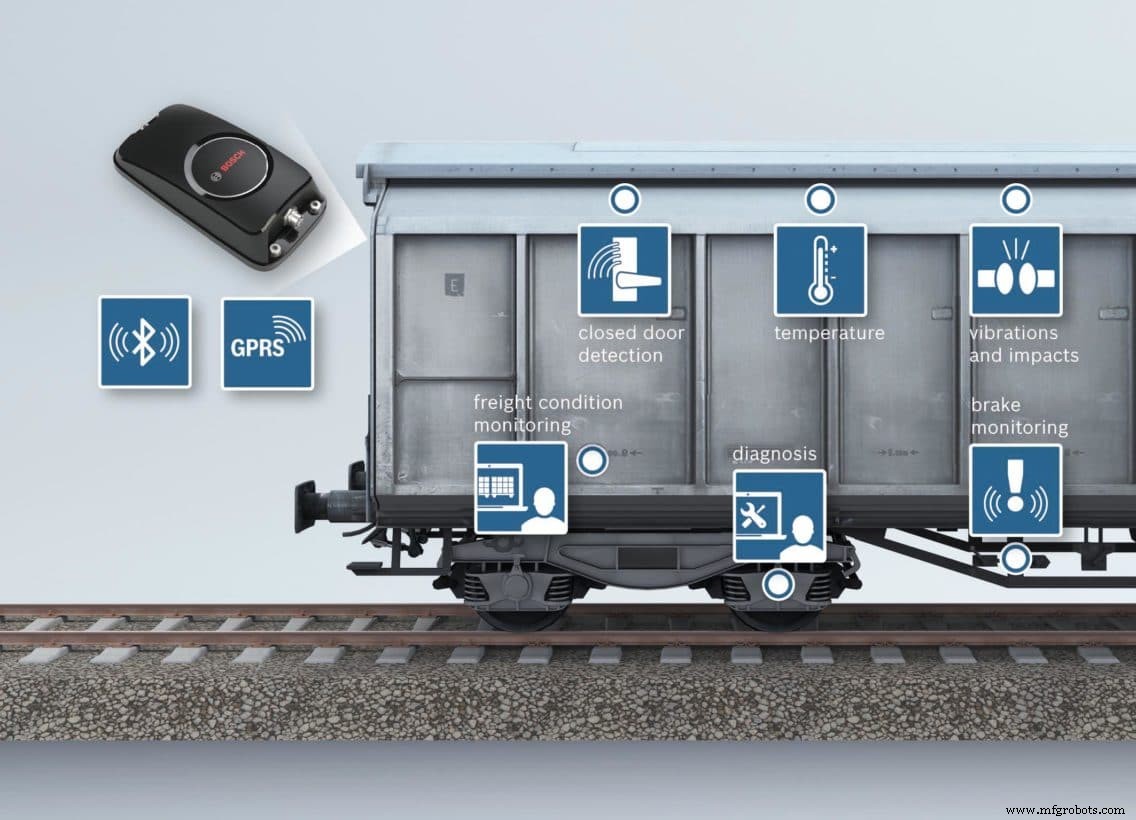
With this system, a freight train becomes a fully digital, autonomous mode of transport. New capabilities include precise railcar positioning, real‑time freight condition monitoring, vibration detection during shunting, and mileage logging for predictive maintenance.
How Digital Functions Add Value
The system aggregates extensive data while the train moves, sending it to a cloud‑based server for real‑time analysis. Key benefits include:
- Location Transparency: GPS data lets operators track each railcar’s exact position, enabling precise scheduling and dynamic routing.
- Cold‑Chain Integrity: Temperature sensors ensure that perishable goods remain within safe limits throughout transit.
- Vibration Insight: Detecting shunting‑induced vibrations helps prevent damage to both cars and cargo.
- Automated Logistics: Integrated data streamlines dispatch, improves capacity utilisation, and reduces manual paperwork.
- Predictive Maintenance: Mileage and condition data inform maintenance schedules, extending asset life and cutting downtime costs.
System Architecture and Deployment
Weighing only 700 g, the system consists of compact, automotive‑grade hardware featuring temperature, vibration, and GPS sensors. Bosch supplies not just the components but also an integrated IoT gateway that ensures secure, reliable data transmission to the cloud. The device runs on an autonomous battery capable of up to six years of operation, making it ideal as a retrofit solution for existing fleets. It can also be installed as an original equipment feature during freight car production.
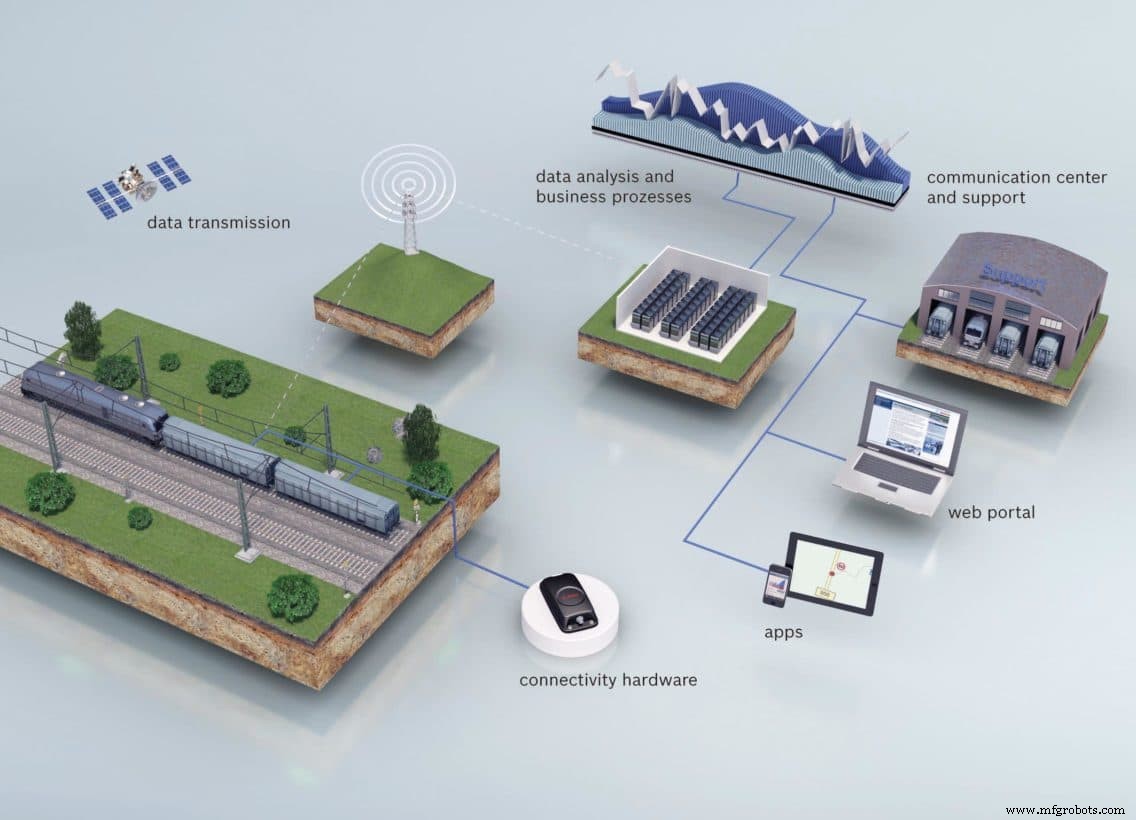
Data collected is visualised in a user‑friendly portal and can be fed directly into customers’ enterprise systems. This integration enables real‑time decision‑making, from dispatch optimisation to maintenance planning.
Early adopters such as SBB Cargo in Switzerland began rolling out the system in February 2015. Continuous testing and refinement across fleet operations have paved the way for full‑scale production later that year. With Bosch’s condition‑monitoring solution, freight trains transition from static carriers to proactive, data‑driven transport assets—reducing transit times, cutting costs, and moving the industry closer to a fully connected logistics ecosystem.
Intelligent freight cars are the next step toward a seamlessly connected world.
Industrial Technology
- The Internet of Things and 5G: Driving the Future of Connected Vehicles
- Revolutionizing Education: Leveraging IoT to Enhance Learning and Teaching
- IoT: Revolutionizing Modern Manufacturing
- How Manufacturers Leverage Automation to Scale E‑Commerce Fulfillment
- Unlocking Supply Chain Visibility with IoT
- How Customer Insights Are Shaping Tomorrow's Supply Chain Planning
- Retailers Transforming Online Returns for Seamless Customer Satisfaction
- Internet of Robotic Things: The Future of Integrated IoT & Robotics
- AI-Driven Internet Networks: Transforming Tomorrow's Connectivity
- Proving the ROI of a Robotic System: A Guide to Justifying the Investment