



Industry 4.0: Security, Standards, and Expert Collaboration
In my inaugural post, Industry 4.0 software solutions: Who knows better than the users?, I explored the needs of production managers across Germany, Austria, and Switzerland. A Bosch.IO (formerly Bosch Software Innovations) survey of over 180 manufacturing professionals in these countries shed light on the challenges they face.
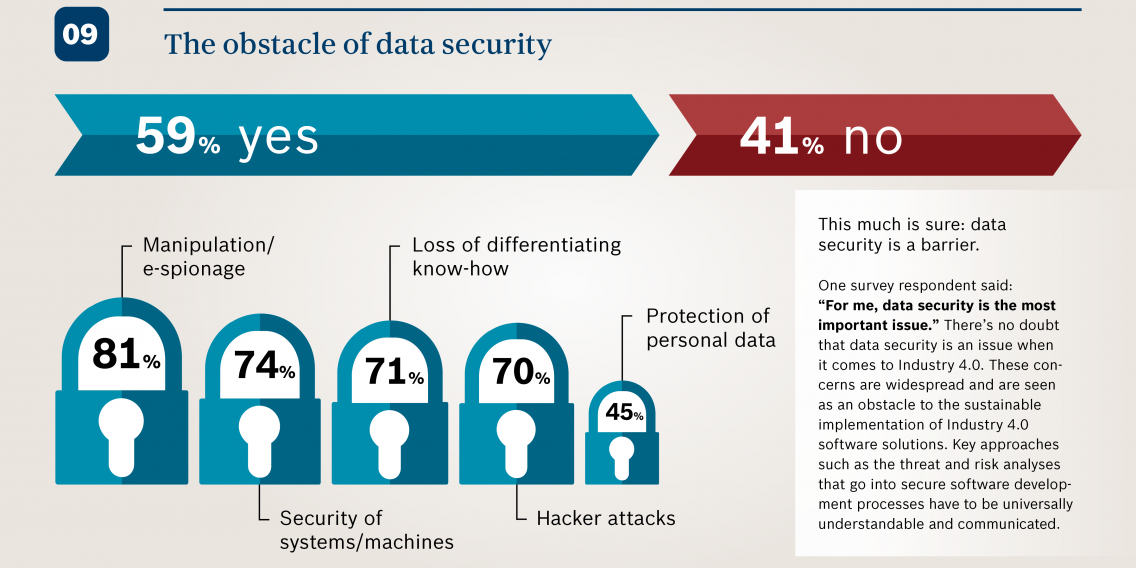
The 2015 market study also highlighted the most pressing roadblocks to Industry 4.0 adoption. Data security emerged as the dominant concern—ranging from protecting intellectual property against espionage, hacking, and tampering to safeguarding personal data and ensuring overall system integrity. One respondent summed it up: “For me, data security is the most important issue.”
Industry 4.0 best‑practice guidelines, such as secure software engineering processes that incorporate threat and risk analyses, already exist. Sharing these practices is essential to build the trust production experts need.
 Source: Bosch.IO
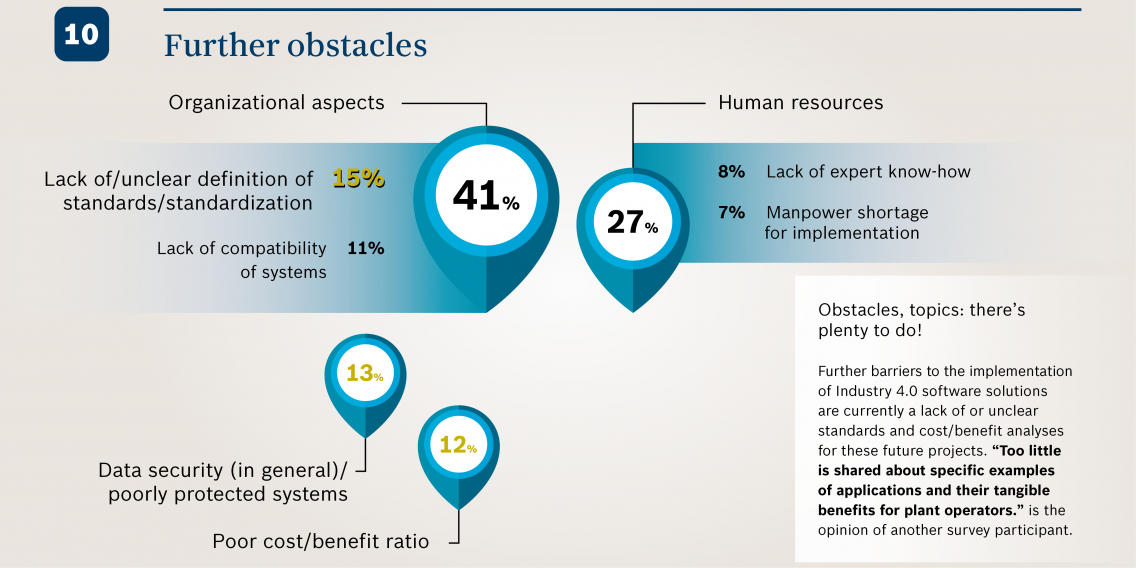
What other hurdles did respondents identify? To clarify their concerns, we grouped the answers into thematic clusters.
Organizational and Human‑Capital Concerns
Unclear standards and incompatibility between legacy and new systems are being tackled by organizations such as Plattform Industrie 4.0, the Industrial Internet Consortium, the Eclipse Foundation, and the OSGi Alliance. Bosch actively participates in these groups, adopting a “learning through specific projects” approach—discovering the necessary standards by implementing solutions across partners worldwide.
Another key challenge is the lack of interdisciplinary expertise. One participant noted: “The success of Industry 4.0 projects depends on IT experts and engineers speaking a common language.” My colleague Marc Schnadinger has called this a “new career profile for Industry 4.0.” IT professionals must gain insight into core production processes to identify how software can drive performance. At Bosch.IO, we address this by training IT experts in lean production and Bosch’s production‑system principles.
Respondents also highlighted two additional critical points:
- Production managers struggle to identify the most promising Industry 4.0 projects. They reported a lack of real‑world case studies and tangible benefits for plant operators. Consequently, they lack concrete cost‑benefit data.
- As Werner Struth, board member at Robert Bosch GmbH, emphasized, data is the raw material of Industry 4.0. Managers highlighted the need for actionable insights derived from production data and advanced analytics, such as data mining.
 Source: Bosch.IO
Industrial Technology
- Industry 4.0 & IoT: Key Market Trends Shaping the Next Two Years
- U.S. IoT Security Law Sets New Standards and Liability Requirements
- How the 2010s Transformed Maintenance—and What’s Next
- Key Challenges & Proven Solutions for Furniture Manufacturers
- Navigating Post-Pandemic Challenges: What Manufacturers Should Focus on Next
- Asia’s Future After Trade War and COVID-19: Challenges and Opportunities
- Industry 4.0 and Distributed Manufacturing Drive Sustainable Production
- Synergizing Industry 4.0 and IIoT: Driving Digital Transformation in Manufacturing & Beyond
- Industrial DataOps: Driving Competitive Edge with Advanced Analytics in Industry 4.0
- Ensuring Safety & Compliance: Standards & Regulations in the Compressed Air Industry