



Industry 4.0 Accelerates Across Asia‑Pacific: Market Growth, Adoption Challenges, and POC Strategies
Cyber‑connected manufacturing systems – commonly referred to as Industry 4.0 – drive efficiency, unlock operational insights, and can transform how manufacturers compete. While Europe and North America have long grappled with the Industrial IoT, Asia‑Pacific is now emerging as a key arena for digital manufacturing. As the business head for Bosch.IO in the region, I’ve engaged with dozens of factories across China, India, Japan, and beyond, deploying Industry 4.0 solutions that deliver measurable ROI. In this article we explore the current state of the Industrial IoT in Asia‑Pacific, the challenges that manufacturers face, and how a focused proof‑of‑concept (POC) can mitigate risk and accelerate adoption.
Industry 4.0 readiness in Asia‑Pacific
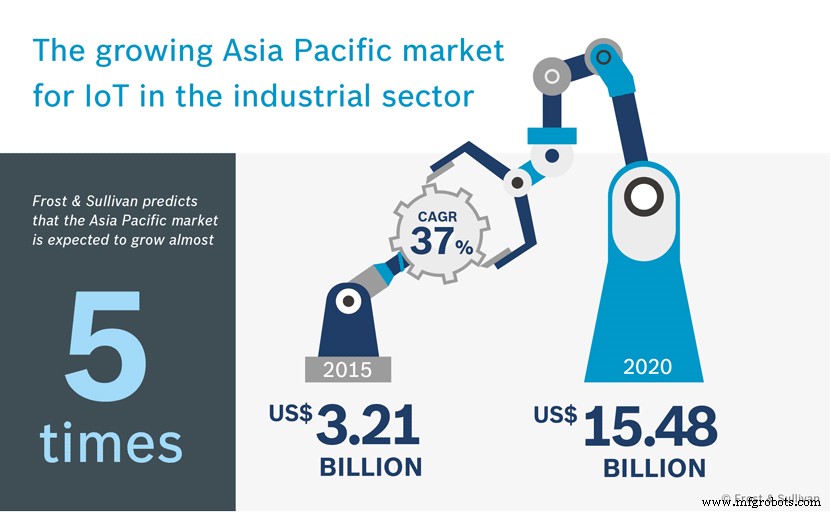
The Asia‑Pacific market is highly heterogeneous, ranging from technologically advanced, high‑cost manufacturers to low‑cost, low‑productivity producers. According to Frost & Sullivan, the region’s Industrial IoT market is poised to grow nearly fivefold between 2015 and 2020. China is projected to lead spending, accounting for 49% of the market by 2020, followed by Japan, South Korea, India, and others. These figures underscore the region’s status as the world’s manufacturing hub, striving to maintain its edge amid rising labor and energy costs.
Four key factors for defining Industry 4.0 readiness
- Availability of reliable connectivity
- Maturity of IT and cybersecurity infrastructure
- Skilled workforce with Industry 4.0 expertise
- Government or industry initiatives driving adoption
Perceptions of Industry 4.0 in mature vs. emerging markets
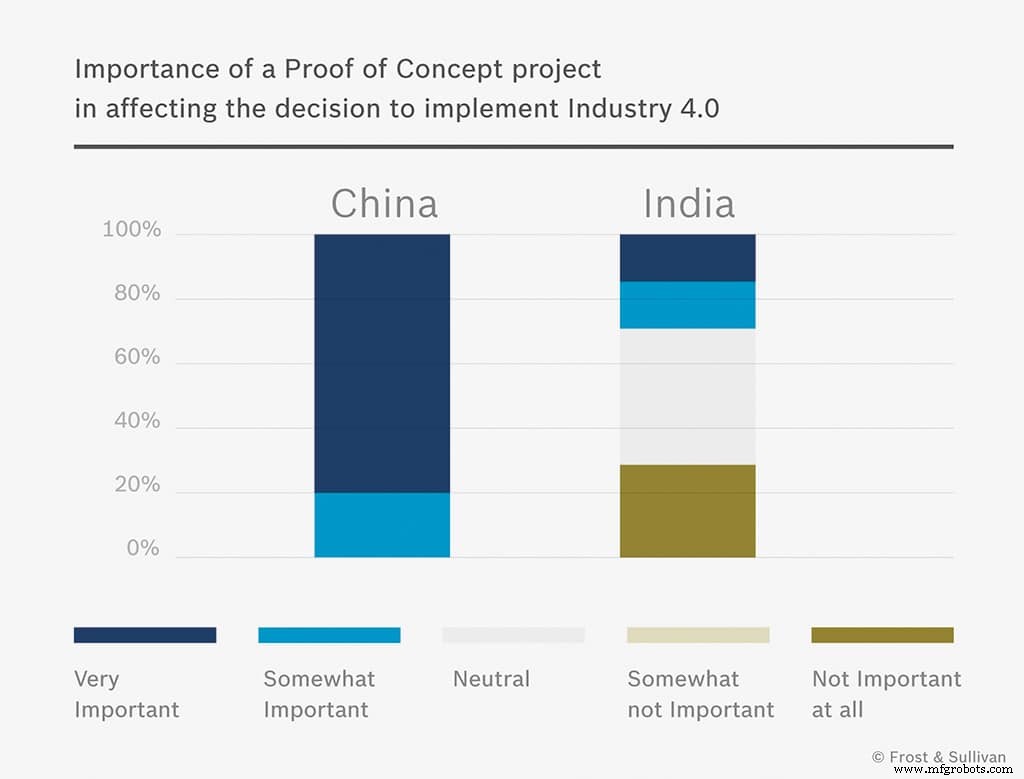
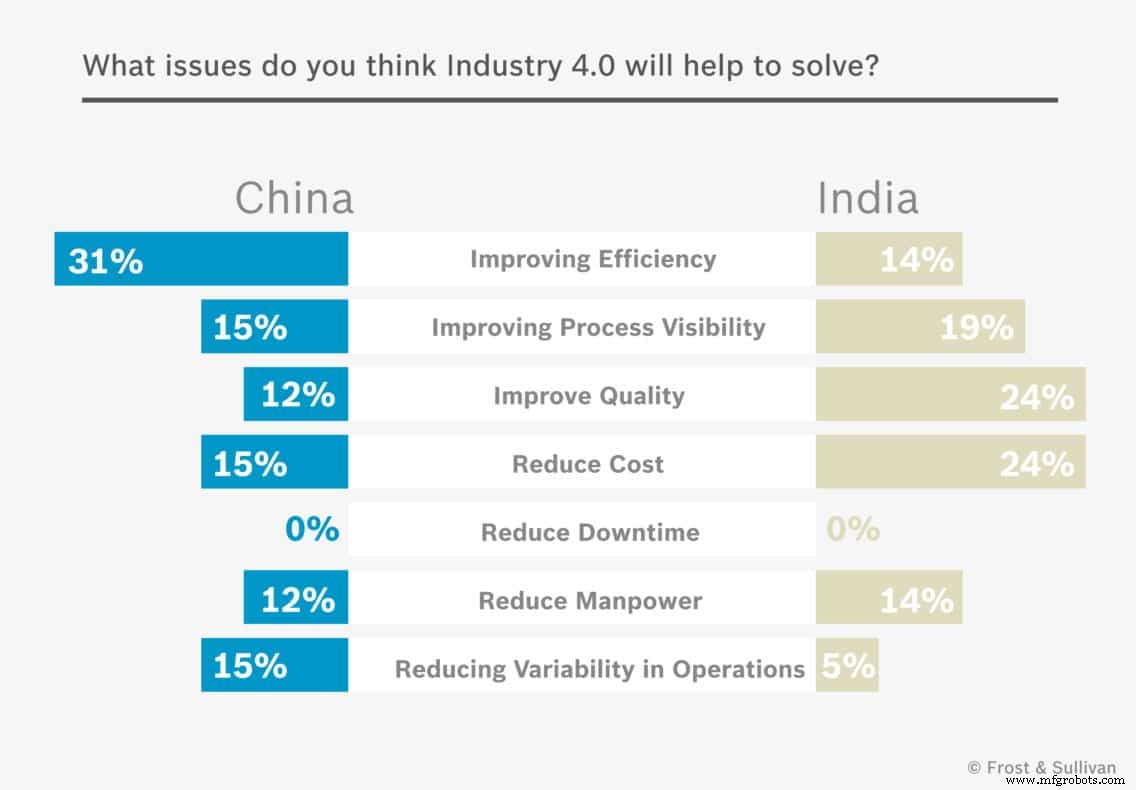
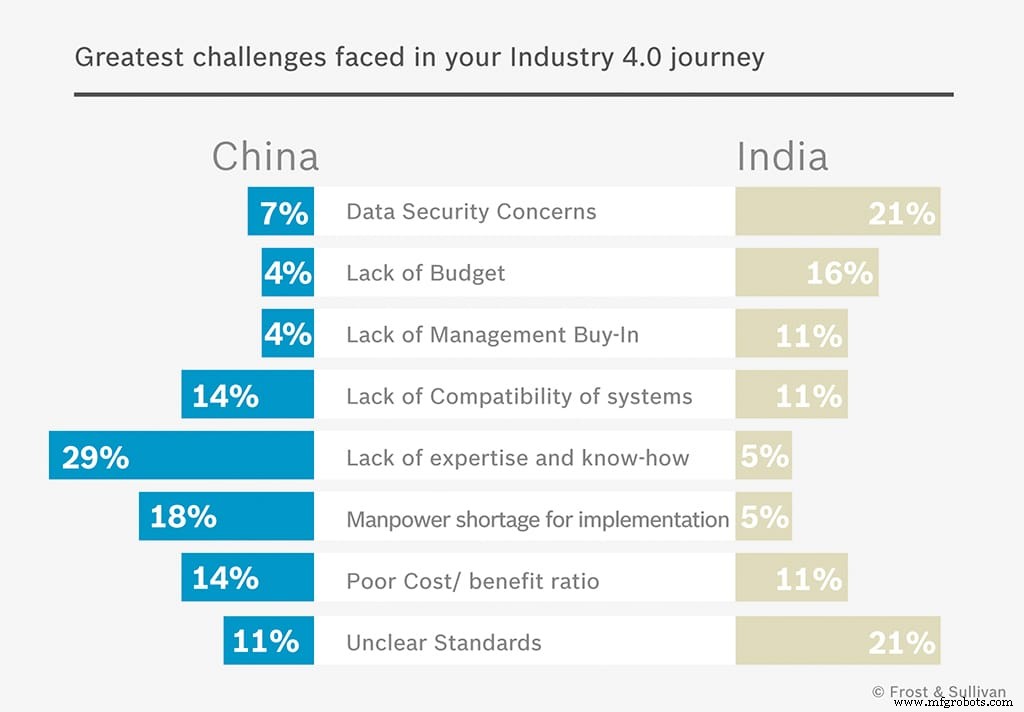
Frost & Sullivan’s analysis of China (a mature market) and India (an emerging market) reveals stark differences in readiness and priorities. In China, 100% of respondents consider a POC project “somewhat or very important,” whereas only 29% of Indian respondents share that view. Chinese manufacturers prioritize efficiency, variability reduction, cost savings, and process visibility, while Indian firms focus on quality, cost, and visibility. Labor concerns dominate China’s challenges—shortage of qualified staff, high attrition, and lack of compatible standards—whereas India grapples with unclear standards, data security, and interoperability.
How Industry 4.0 Meets Business & Operational Objectives
Digitalization is reshaping manufacturing. Industry 4.0 delivers:
Greater transparency for informed decision‑making
Connected sensors and equipment enable real‑time condition monitoring across entire plants, giving plant leaders a holistic view without interrupting operations.
New business models that generate value
The Internet of Things opens avenues for “Things‑as‑a‑Service” and other revenue streams that extend beyond traditional product sales.
Enhanced efficiency
Integrated data across machines provides shop‑floor visibility, allowing managers to pinpoint inefficiencies and optimize throughput.
Improved quality and defect reduction
Sensors test every unit at each assembly stage, catching defects at the source and elevating overall quality.
Predictive maintenance to avoid downtime
Aggregated operational data is analyzed centrally, enabling pre‑emptive servicing before failures occur.
Reducing Implementation Risk with a Proof‑of‑Concept Project
Margins are tightening amid escalating competition and rising input costs. Senior leaders in the region therefore demand rapid, clear ROI. A well‑executed POC demonstrates tangible benefits without disrupting existing workflows, allowing companies to validate technology in a controlled environment.
Road to a POC Project
By leveraging low‑cost sensors, a cloud‑based IoT platform, and rapid development tools, a POC can be launched swiftly. These experiments confirm ROI, reveal technology limits, and inform strategic decisions—without replacing core production equipment. Importantly, a POC gathers data for analytics, identifies efficiency opportunities, and minimizes production line disruption.
Industrial Technology
- Industrial Internet of Things vs Industry 4.0: What You Need to Know
- Implementing Industry 4.0: Practical Steps for Machine and Component Manufacturers
- Industry 4.0 Insights: Q&A with Bosch.IO’s Verena Majuntke on IoT, Automation, and the Future Factory
- Integrating Lean Production with Industry 4.0: A Path to Sustainable Efficiency
- Building a Skilled Workforce for Industry 4.0 Success
- Industry 4.0 Explained: What It Means for Smart Manufacturing
- Industry 4.0 Adoption: Spain vs Global Landscape
- Industrial Automation 4.0: Revolutionizing Production Efficiency
- Optimizing Work Instructions for Industry 4.0: Enhancing Efficiency and Compliance
- Steel Industry Trends 2019: Market Overview & Future Outlook