



Understanding Welding Defects vs. Discontinuities: Key Differences and Quality Impact
Every good welder takes pride in his or her work. This innate pride and the desire to meet production quality standards makes welding discontinuities and defects a major concern to any professional welder. Even though both terms sound menacing, they aren’t necessarily synonymous.
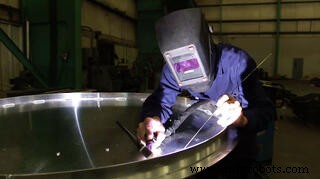
A Welding Discontinuity
Technically, a welding discontinuity is the lack of a mechanical, physical or metallurgical harmony in the weld. This could be manifested in terms of
- Varied porosity
- Incomplete fusion or joint penetration
- Unacceptable profiles
- Subtle tears and cracks
Welding Defects
All welding defects are developed discontinuities. If a discontinuity renders a weld incompetent or lowers its quality, it would be classified as a defect. Defects make the product risky to use or substandard. It is up to the quality control to decide whether the discontinuity qualifies as a defect or not.
The Differences Between Discontinuities and Defects
Since the line between discontinuities and defects varies from one industry to another, only a generalized explanation can give a good guide to isolating defects from discontinuities.
- Any weld would be a defect if the welder or the quality control department rejects it and blacklists the product.
- A defined list of acceptable discontinuities will list the number or type of discontinuities allowed on a product before labelling it a defect.
- A discontinuity will survive a field test while a defect won’t. A crack on a water pipe would be a defect since the water will leak while an unacceptable profile could pass as a discontinuity as long as the pipe doesn’t leak.
Discontinuities can be ignored since they are always well within the acceptable production error margins. Defects, on the other hand, must be repaired. If the defect is irreparable, the product should get a red reject tag and head to the junk bin.
It’s important to understand the distinction between a weld defect and discontinuity to understand the quality of a weld, and if an imperfection is a safety concern or merely cosmetic. A perfect weld is a precarious achievement that requires meticulous care in the preparation of materials, a work area and careful adherence to welding techniques.
Industrial Technology
- Python 2 vs Python 3: Key Differences and Choosing the Right Version
- AC vs DC Generators: Key Differences Explained
- Carbon Steel vs Stainless Steel: Key Differences Every Fabricator Should Know
- Industry 4.0 vs Industry 5.0: What’s Changing and Why It Matters
- Fillet vs Chamfer: Key Differences Every Designer Must Know
- Understanding DC vs AC Motors: Key Differences and Buying Guide
- CNC vs NC: Understanding the Key Differences in Numerical Control Technology
- Die Casting vs. Stamping: Key Differences Explained
- Jigs vs. Fixtures: Key Differences and Impact on Manufacturing Efficiency
- Understanding Pressure vs. Flow in Compressed Air Systems