



4 Proven Strategies to Strengthen Manufacturing Marketing During a Recession
Overcome the challenges impacting B2B manufacturing in 2023
B2B manufacturing businesses are navigating a unique recession marked by supply‑chain disruptions, parts shortages, soaring input costs, geopolitical uncertainty, sustainability mandates, and labor shortages. Yet many manufacturers have built resilience through digital transformation, workforce reskilling, IIoT adoption, and supply‑chain restructuring.
Proactive action—before, during, and after a downturn—drives long‑term success. Deloitte finds that firms that invest heavily in capital and asset efficiency before a recession see higher returns when the economy recovers. Likewise, a robust marketing strategy is essential for weathering a slump.
Below, we outline the biggest obstacles facing B2B manufacturers today and practical solutions.
We spoke with John Edelmann, Executive Director of Innovation and Client Development, who brings 25 years of experience in manufacturing marketing strategy.

Top trends shaping manufacturers in 2023
Supply‑chain disruption
Uncertainty in the supply chain is expected to persist throughout 2023. A recent surge in demand, coupled with supply‑chain bottlenecks, has left many manufacturers over‑ordering raw materials and parts. Some are stuck with excess inventory they may have to sell at a loss, while others wait for backorders to clear.
Supply‑chain volatility exerts enormous pressure on production planning, product mix decisions, and parts procurement.
- AI and ML. Modern material‑requirements planning (MRP) and enterprise‑resource‑planning (ERP) systems now embed artificial intelligence, machine learning, and automation to monitor raw‑material levels, inventory, and production in real time. This removes manual guesswork, boosts productivity, cuts costs, and highlights operational risks, gaps, and overages so manufacturers can adjust swiftly.
- 3D printing. Forward‑thinking manufacturers are using additive manufacturing to produce parts that are otherwise scarce or unavailable, reducing dependence on traditional supply chains and lowering freight costs.
- Smart factories. Facilities that still run legacy equipment can retrofit or augment their machines with new technologies to automate and accelerate production. This approach lets them pivot to new product lines without purchasing new equipment, minimizing costs and avoiding supply‑chain delays.
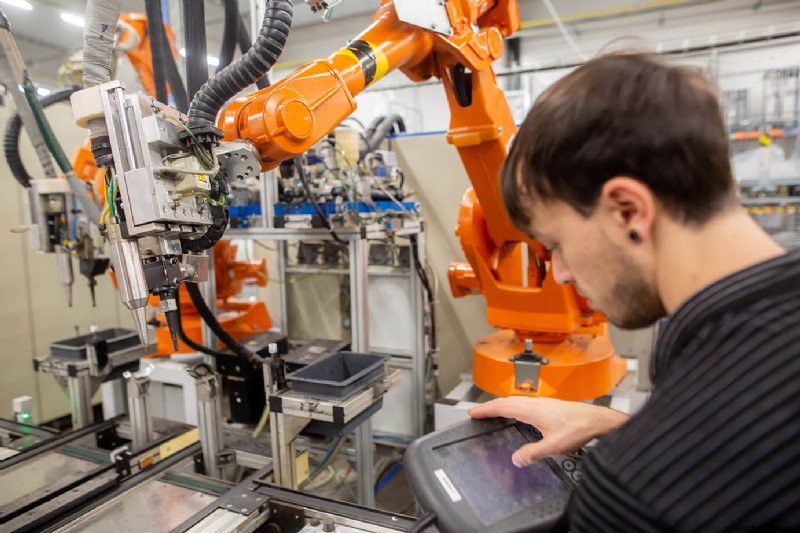
Workforce shortages
The Great Resignation and “quiet quitting” have exacerbated skill gaps in manufacturing. Manufacturing USA reports that manufacturers must fill over 800,000 open positions and develop a workforce capable of handling robotics, automation, and AI.
- Intelligent hiring. Automated, AI‑powered recruiting tools help identify candidates who fit current and future needs, speeding onboarding and improving retention.
- Virtual and augmented reality, coupled with workforce‑development platforms, enable rapid up‑skilling in advanced manufacturing, offering clear career paths and competitive compensation that keep talent engaged.
- Workplace safety. AI‑driven safety systems that combine cameras and analytics monitor employees in real time, identifying hazards, predicting injuries, and fostering a culture of safety. This reduces liability, insurance costs, and OSHA violations.

Marketing challenges and solutions to survive the 2023 recession
“To thrive during a downturn, manufacturers must pair operational technology with a forward‑thinking marketing plan. Buyers need to see that you’re leveraging cutting‑edge tech to deliver real value,” says John.
1. Cutting marketing to save costs
Many firms slash marketing budgets in a recession. While this offers short‑term savings, it erodes brand visibility, reduces market share, and hampers post‑recession recovery.
Don’t trim your marketing spend. Treat marketing as a growth engine, not a cost center. During a downturn, a well‑executed marketing strategy drives sales and protects margins. In this article we explain why marketing is essential to weathering a recession.
2. Misaligned digital efforts
The pandemic forced a rapid, sometimes chaotic, digital transformation. Some manufacturers opted for cheap, quick fixes rather than strategic solutions, leading to siloed, ineffective processes.
Align your martech stack. Digital initiatives that support operations must also serve marketing goals. Synchronize sales and marketing technology with each stage of the customer journey to maximize ROI.
In an economic downturn, precision is key. Accurate attribution—measuring ROAS and ROI—requires aligned touchpoints and a correctly configured martech ecosystem.
3. Off‑target marketing
Recession‑driven shifts in customer behavior and longer B2B sales cycles demand tighter targeting. Relying on pre‑recession personas often leads to wasted spend.
Build data‑driven personas. Combine internal insights with external research and analytics to capture current decision‑maker motivations. Update personas regularly to reflect value‑centric buying.
Craft on‑target messaging. Tailor communications to each persona and vertical, using evidence‑based case studies and statistically significant results to build credibility.
Adopt accounts‑based marketing (ABM). ABM delivers hyper‑personalized outreach, enabling precise ROI measurement and minimizing wasted spend—exactly what B2B manufacturers need in a downturn.
Partner with a B2B manufacturing‑focused agency
Collaborate with a seasoned B2B agency that specializes in manufacturing marketing. With over two decades of industry experience, Elevation helps you target the right audience, craft compelling messages, and align sales and marketing. Our ABM expertise delivers measurable results. Contact us to learn how our services can elevate your manufacturing business.
Industrial Technology
- Comprehensive Guide to Precision Grinding Machines
- Expert Guide: Material Selection for Sour Oil & Gas Field Operations
- Design & Fabrication of Large-Scale Ductwork for Industrial HVAC Systems
- Machining Coolants: Gain a Competitive Edge Through Superior Fluid Management
- Fishbowl Inventory Manufacturing Option: Powerful Tools for Streamlined Production Management
- Hartley Oscillators: Reliable, Tunable Solutions for Consistent Amplitude
- Cutting-Edge Toolholding & Workholding Solutions Boost Productivity & Quality
- AM Radio Circuit Blueprint: Mastering Simple Transistor-Based Receiver Schematics
- Master Modern Manufacturing: 16 Expert Articles
- Optimizing Photodiode Measurement Circuits for Low‑Light Sensitivity